
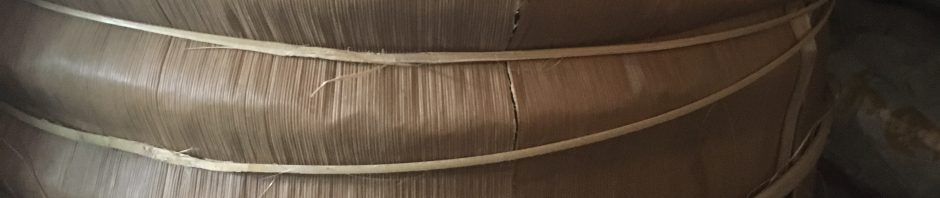
In past videos I’ve described a 357g cake as a weird awkward amount. It’s quite a bit of tea to drink through, ~50-70 sessions depending on your dose but a cake is also far from a lifetime of tea. Because 357 grams is the traditional cake size it’s the quantity we often end up stuck with. If you could customize cake size every time you bought a cake I suspect everyone’s stashes would look dramatically different. Instead many of us end up with this odd quantity of 357 grams, and occasionally some odd fraction of 357g in split cake situations.
Stamp Collecting
Stamp collecting is a term used to describe someone who buys lots of singles of cakes. It’s an effective way to start out in the exploration phase and don’t have a lot of tea. Samples are usually preferred but sometimes they’re not offered. With a cake you get enough tea to get as many repetitions as you want. There are also a lot of teas people do not want to consume the required 50-70 times to finish before another cake catches their eye, so many inevitably end up with a sort of unwieldy stash of partly consumed cakes, some which will go neglected.
Through experience, people learn the sort of tea that they will drink through and the ones that will not be drunk and will naturally gravitate towards buying what they will actually drink. This is all simple enough and there’s absolutely nothing wrong with buying as you go.
Long-Term Thinking & The Case For Tonging
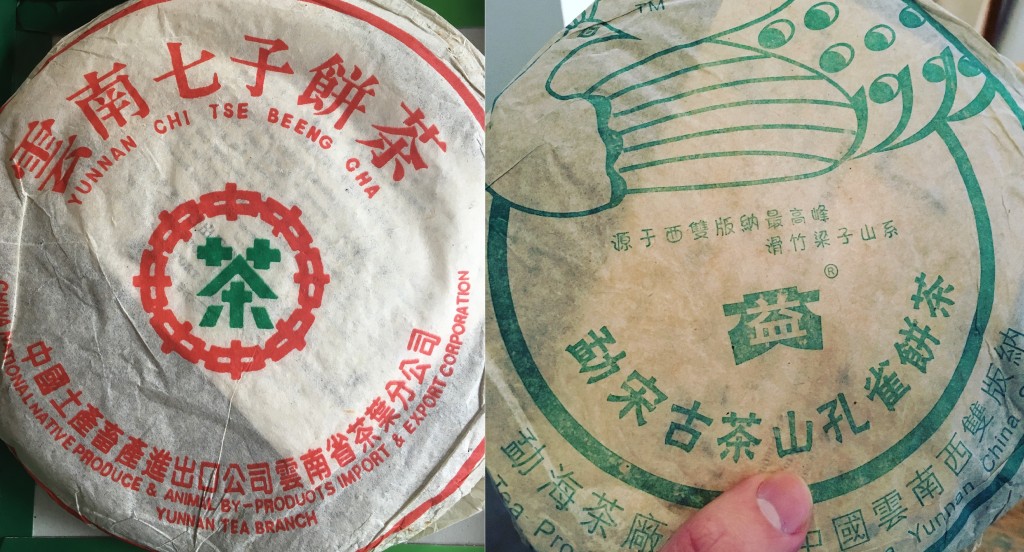
Stamp collecting is good for the short term but if you are a pu’erh person in for the long haul you sometimes want a tea to be around for a couple decades or the rest of your life, stamp collecting isn’t going to cut it. And single cakes, especially if you are drinking it are going to be consumed before they have undergone significant transformation.
Some math with a standard 357g cake. Assume 5g sessions. You’ll likely have a 10% loss in terms of dust. This leaves you with about 65 sessions. Seems like a lot. But if you drink this tea semi-regularly once per month, you’ll finish it off in 5 years. Not exactly a lifetime of tea. A popular strategy about 10 years ago, was the double cake. One to drink and pick away at, and another for later. Even buying like this, your tea will not last in the regular rotation. If you drink that tea once per month, you’ll finish off your entire stash of that cake in a decade.
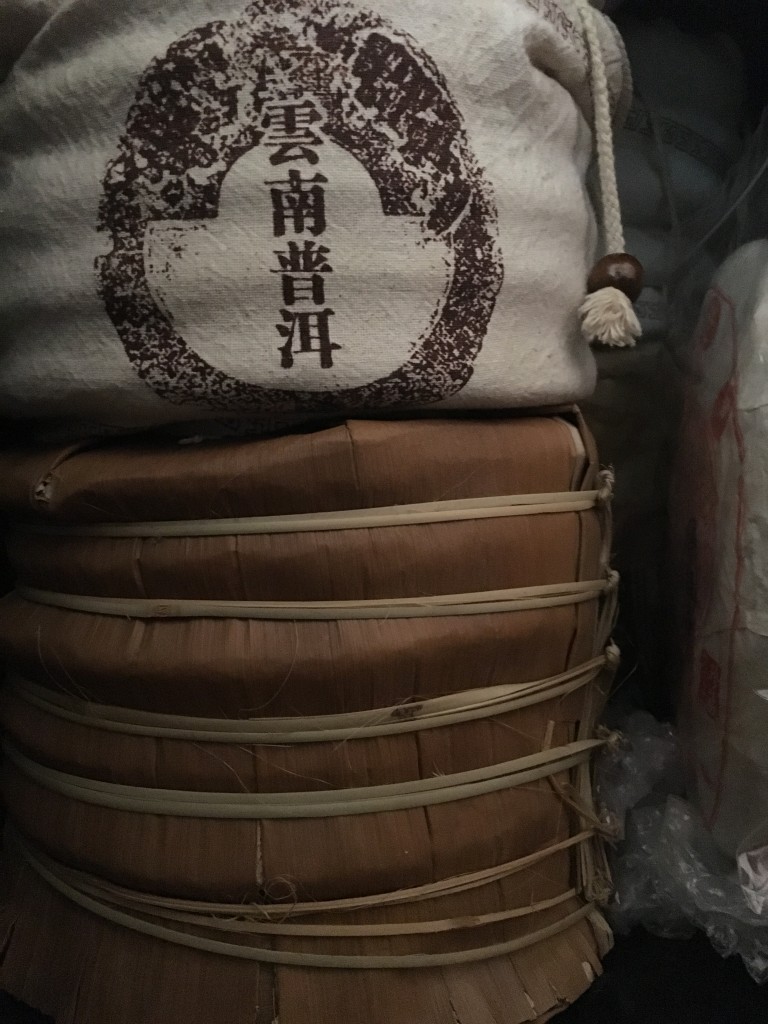
When I first heard how many tongs some veteran drinkers bought or jians were split I was legitimately shocked. A tong seems like an absurd amount of tea, multiplying the random number of 357 by another 7 cakes? And hitting hard is not just a tong in many such cases. It can be two or three. To the uninitiated this may seem absurd and I’ve seen people seemingly disgusted at why anyone would buy such a high quantity. But sort of like how savings rates and retirement math can feel fake especially when you are young and own very little, owning several tongs to the uninitiated seems abstract and unnecessary. But math-wise it makes sense when you take into account a youngish drinker and longer time horizons. Two tongs of a tea is 5 kilograms, so with some tea loss, you’re at around 900 sessions. Split across 40 years, you can have that tea about twice per month. That’s a lot of one tea, but far from an unlimited supply. If you wanted that tea once per week, you’d need four tongs!!
Pros & Cons of Tong Gang
There are legitimate reasons to be in the tong gang or not. I don’t think it’s as simple as right or wrong so much as it is situational depending on your intended goals.
Pros (of joining Team Tong)
- You have enough tea to really age and drink. If you are consuming a stamp even just a couple times per year, you’re not really going to age it. You’ll end up with a partly consumed cake very quickly. You can also be more aggressive with trading or generous with giving away.
- Cleaner. It is annoying and overwhelming dealing with a lot of partly consumed cakes. Some on their last legs and others unconsumed or consumed once. Buying less variety but more of a few verified good quality teas allows settling into rhythm with teas more easily.
- Selling something you overbought or regret is easier, because you can simply list seven cakes of a tea, rather than seven individual cakes.
- If you are a prolific tea drinker, consuming a few teas per day, a cake is really not that much.
- Oftentimes teas can be cheaper if you buy in quantity.
Cons
- Mistakes are more painful. Single cake mistakes are small in comparison to an unwanted tong. There’s a beauty in the nimbleness of newer drinkers who are active and don’t worry about the long-term, using swaps and connections to try a lot of tea. There’s also a real danger in newer drinkers just building an entire collection before they really have a good idea how they’ll drink long-term.
- Danger of cheaping out and restricting yourself to lesser/less expensive tea. If you start thinking about what you can afford we often think in flat $ amounts. Samples are excellent for limiting up front cost, cakes can be OK, but tongs are awful. That $150 cake looks cheap as a $7 16 gram sample, looks OK on its own, but buying a tong you are all of a sudden over four digits. It is true that many of the pu’erh hobbyist who own the most amount of tea, started when the norm was $15-30 cakes, certainly not the high-priced boutiques we deal with now. They had the privilege of cheaper prices that no longer exists. If you stick with less quantity you are going to consume quickly you can simply buy better tea since you’re less worried about picking up several kilograms.
- If you are a 3 gram gang member or a weekend warrior, a tong might be too much. And you’d want to calculate the quantities carefully to suit your consumption.
It doesn’t have to be one or the other. Grabbing stamps can be synergistic with tong buying. Not because you can age that stamp, but because it gives you a lot of tea to play around with and get to know by brewing. Many of my larger purchases have started with a single stamp or sample cake which I’m able to drink several times before deciding I want to buy more.
The tong and cakes quantities are arbitrary, and there’s nothing wrong with dealing with the quantities in between, half a tong or five cakes or whatever. Everyone will be a little different. But I do think if you are new, a high quantity of a single tea whether it be a tong or not is not as absurd as you may think, especially if you are young and intend to drink and age tea for a long time.


Leave a Reply