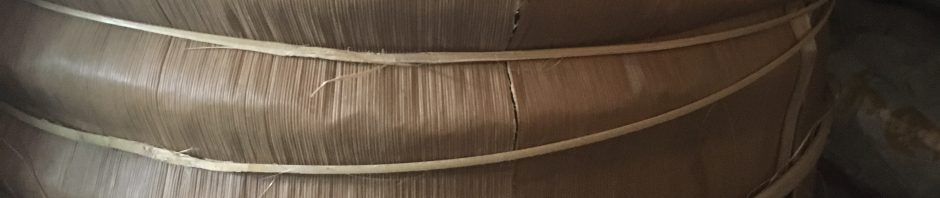
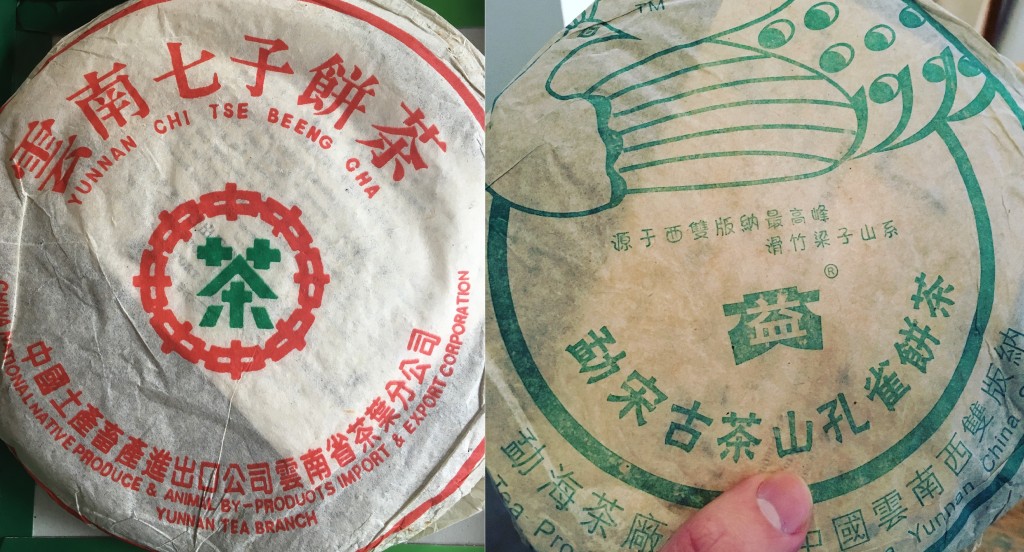
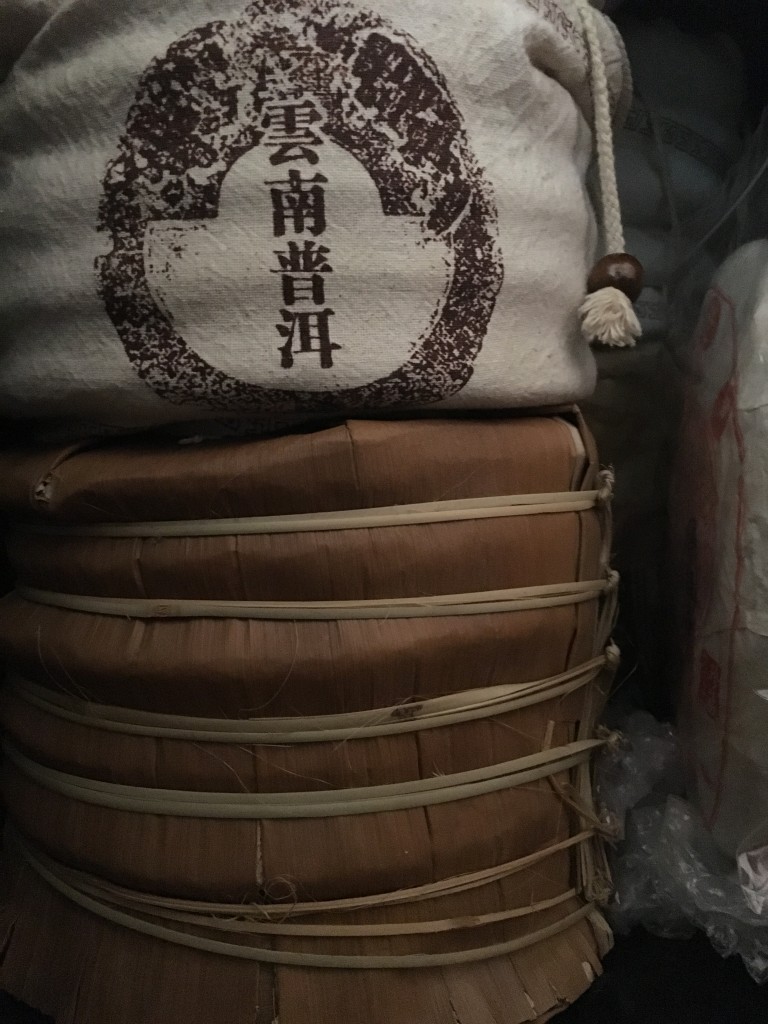
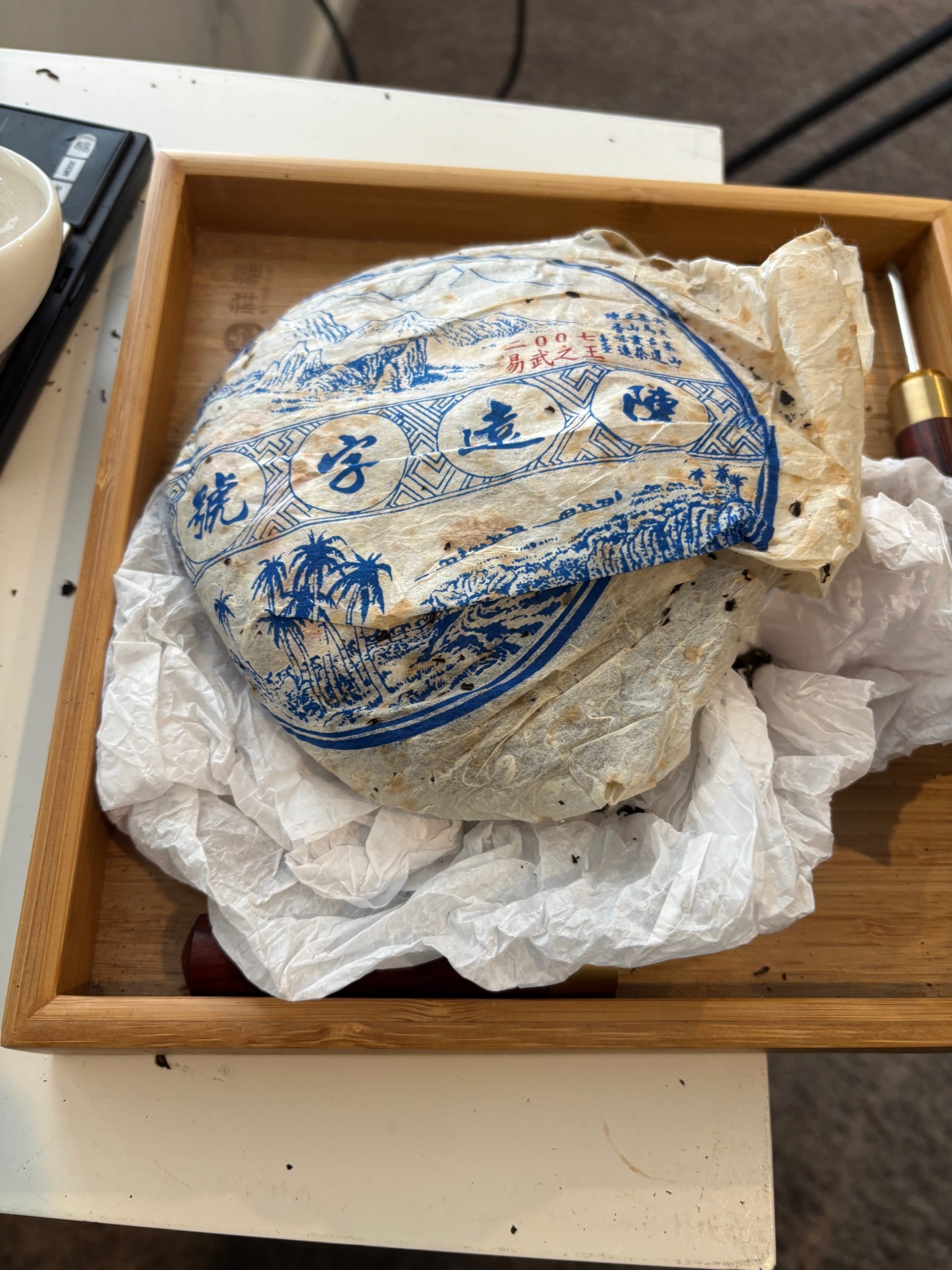
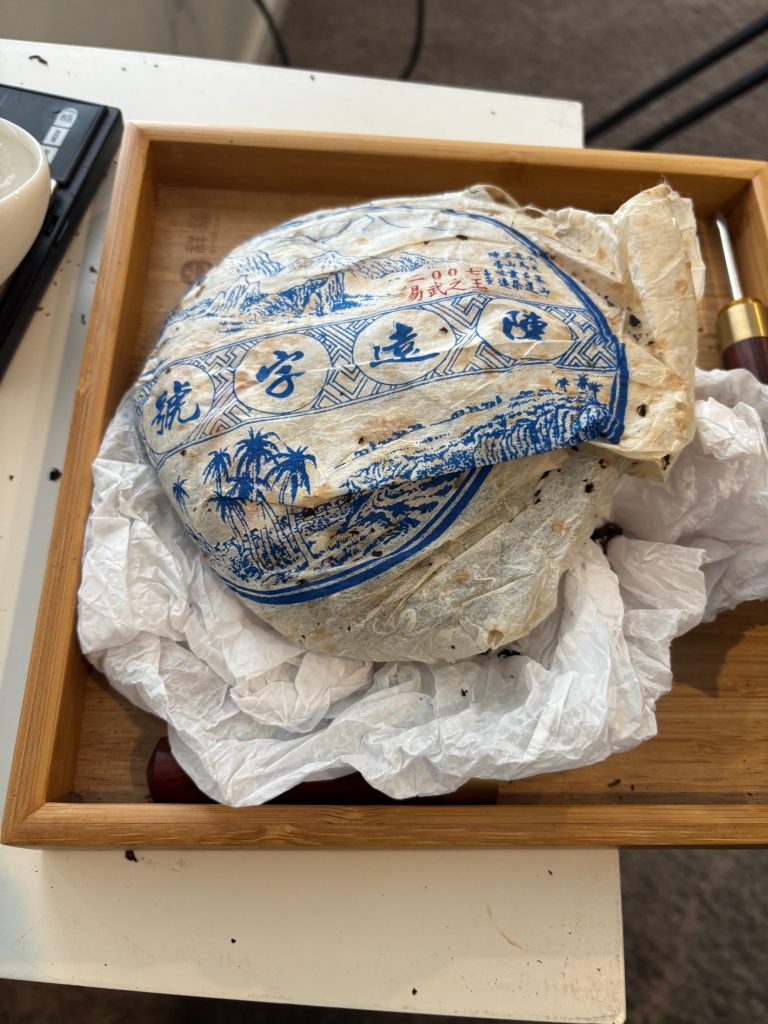
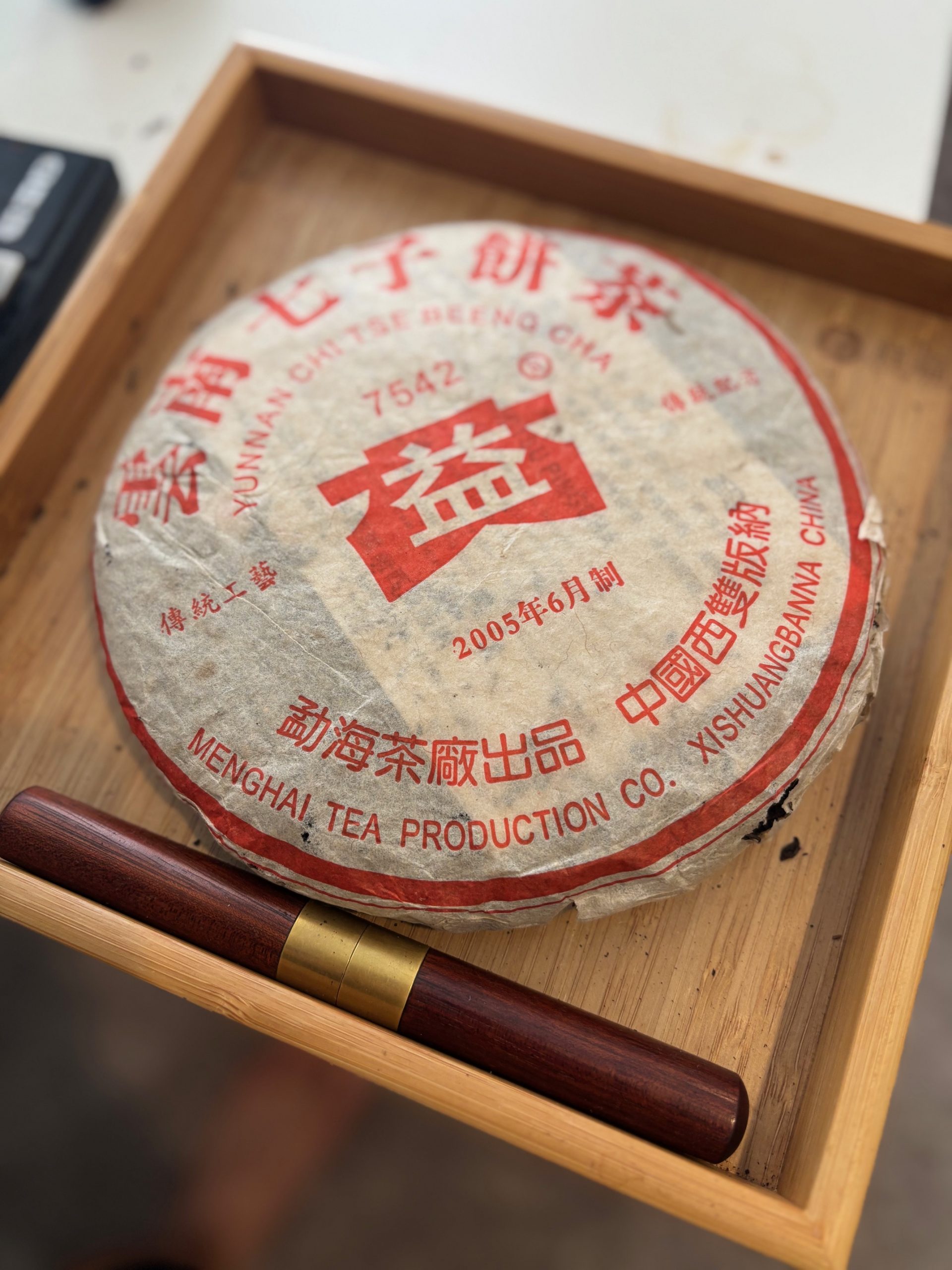
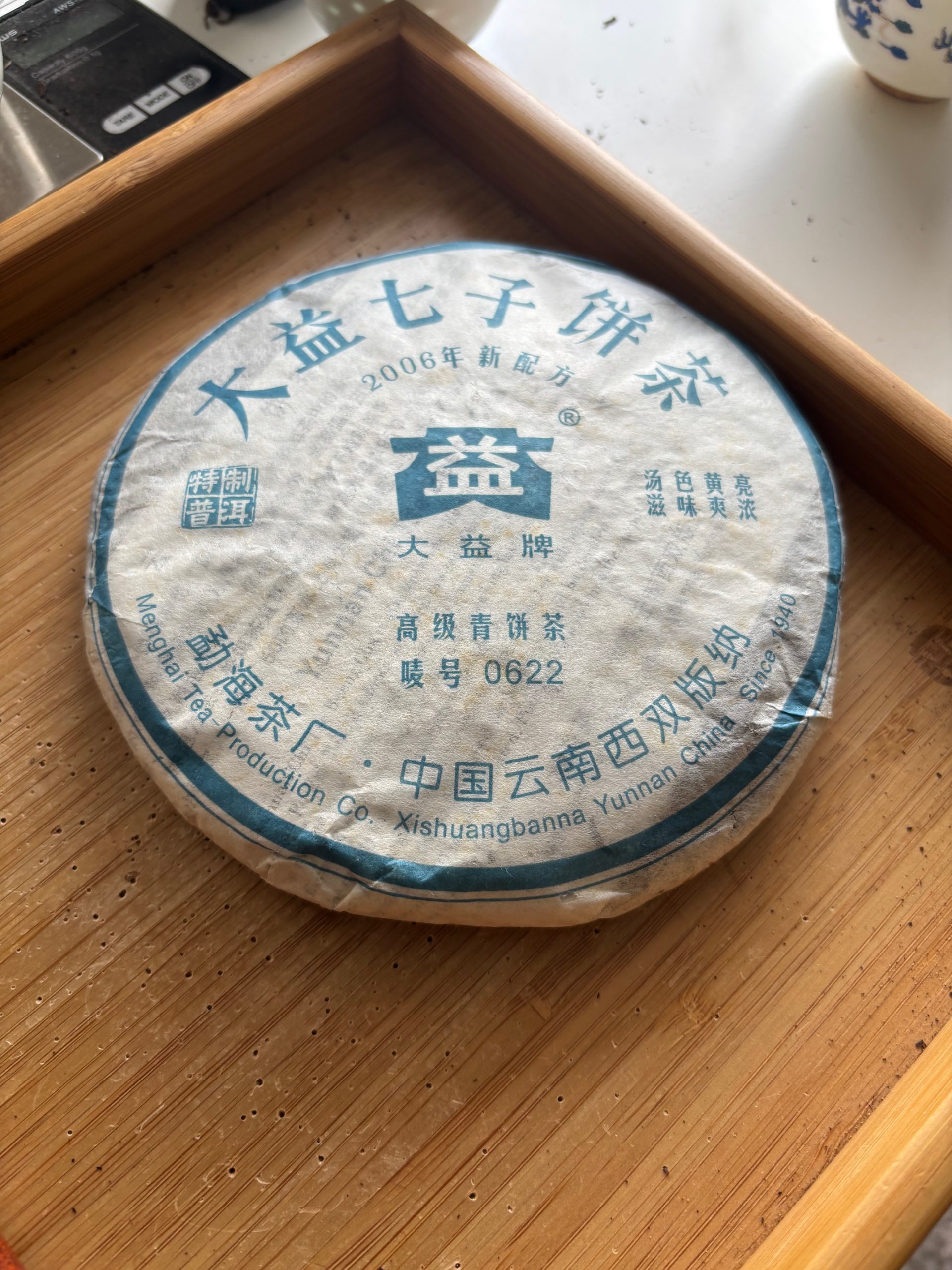
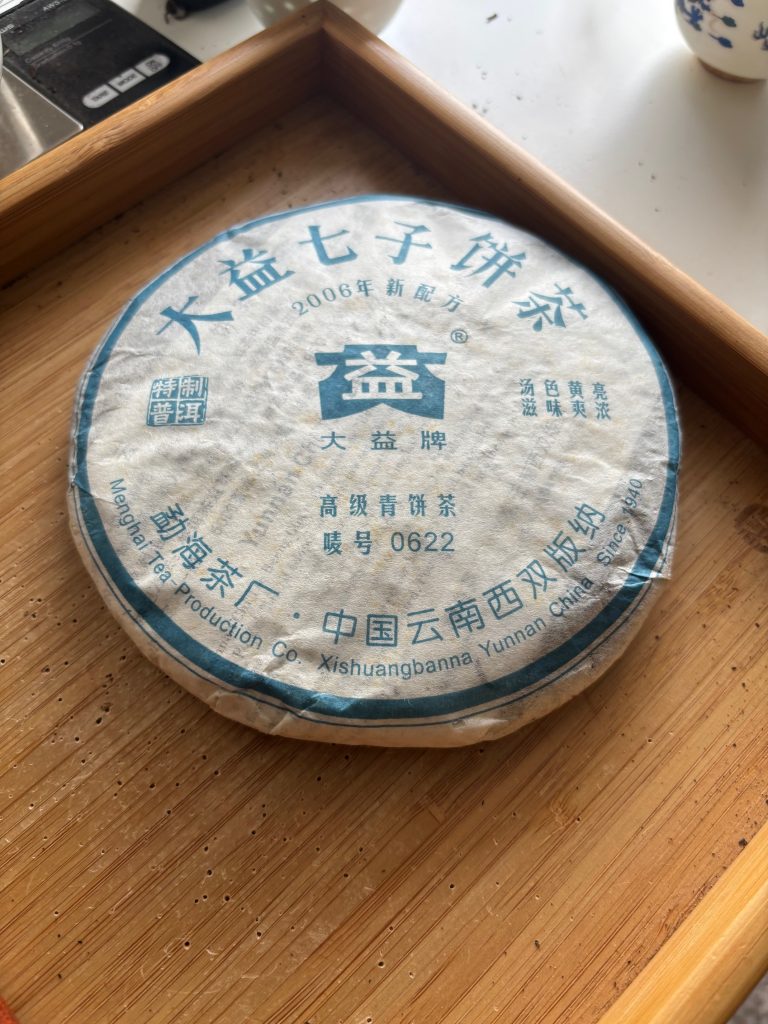
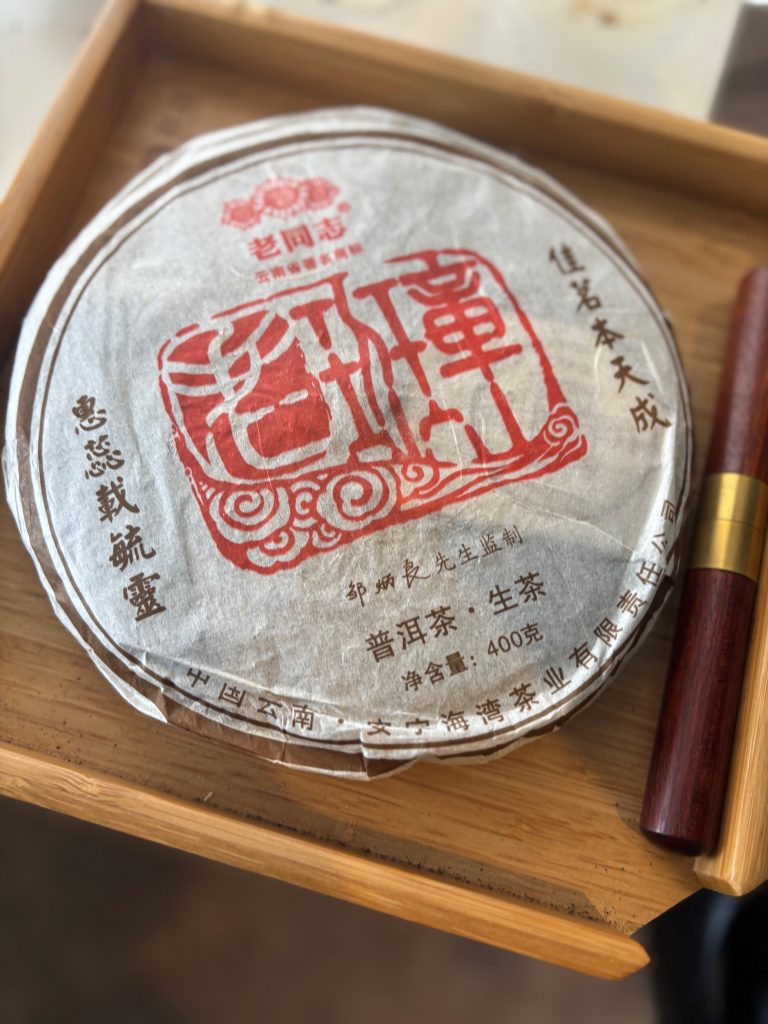
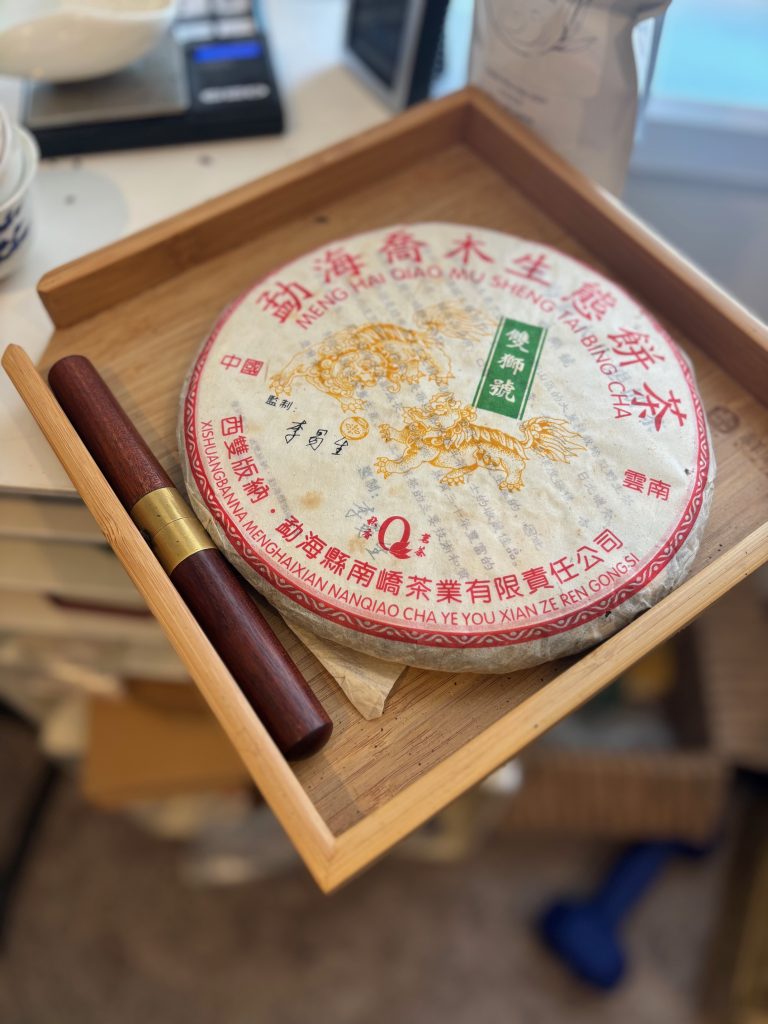
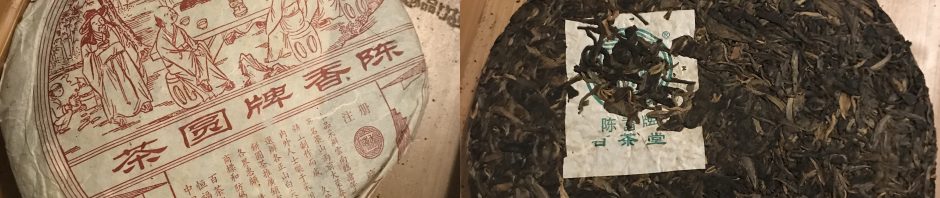
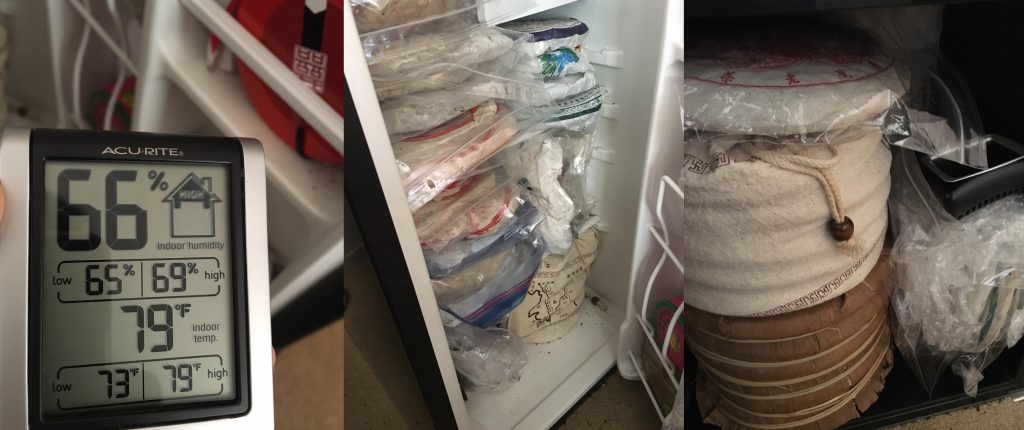
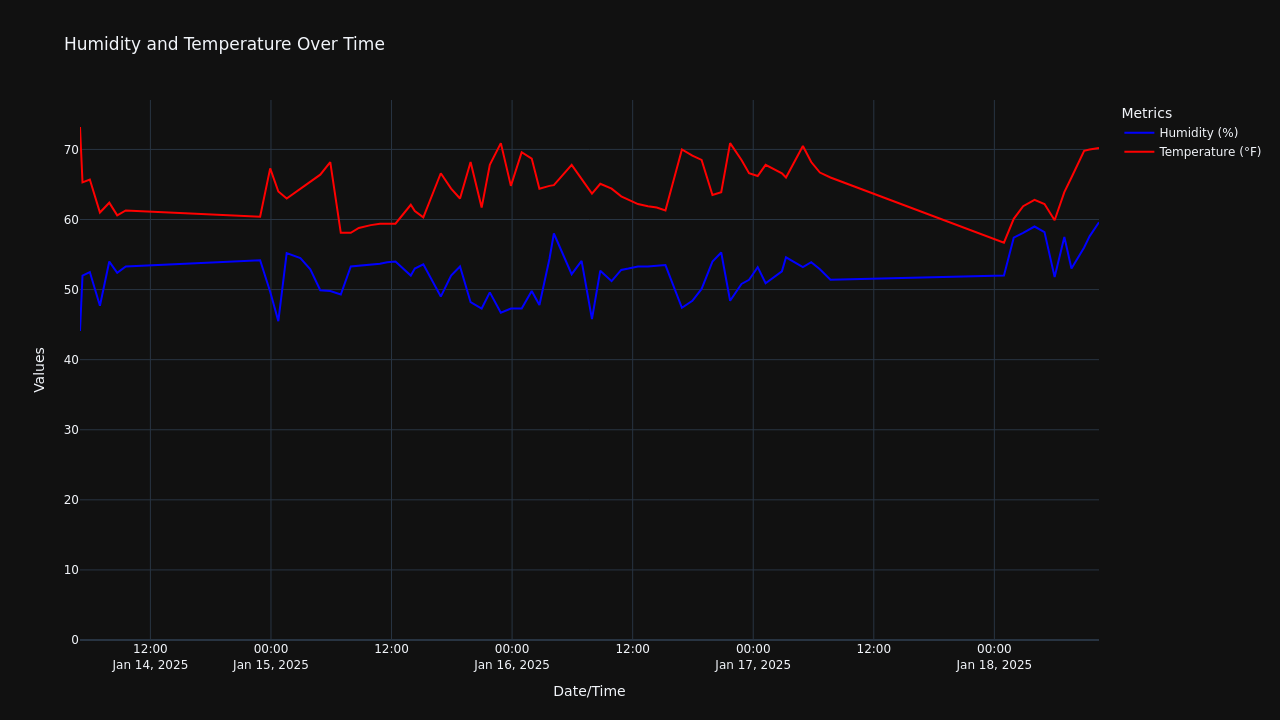
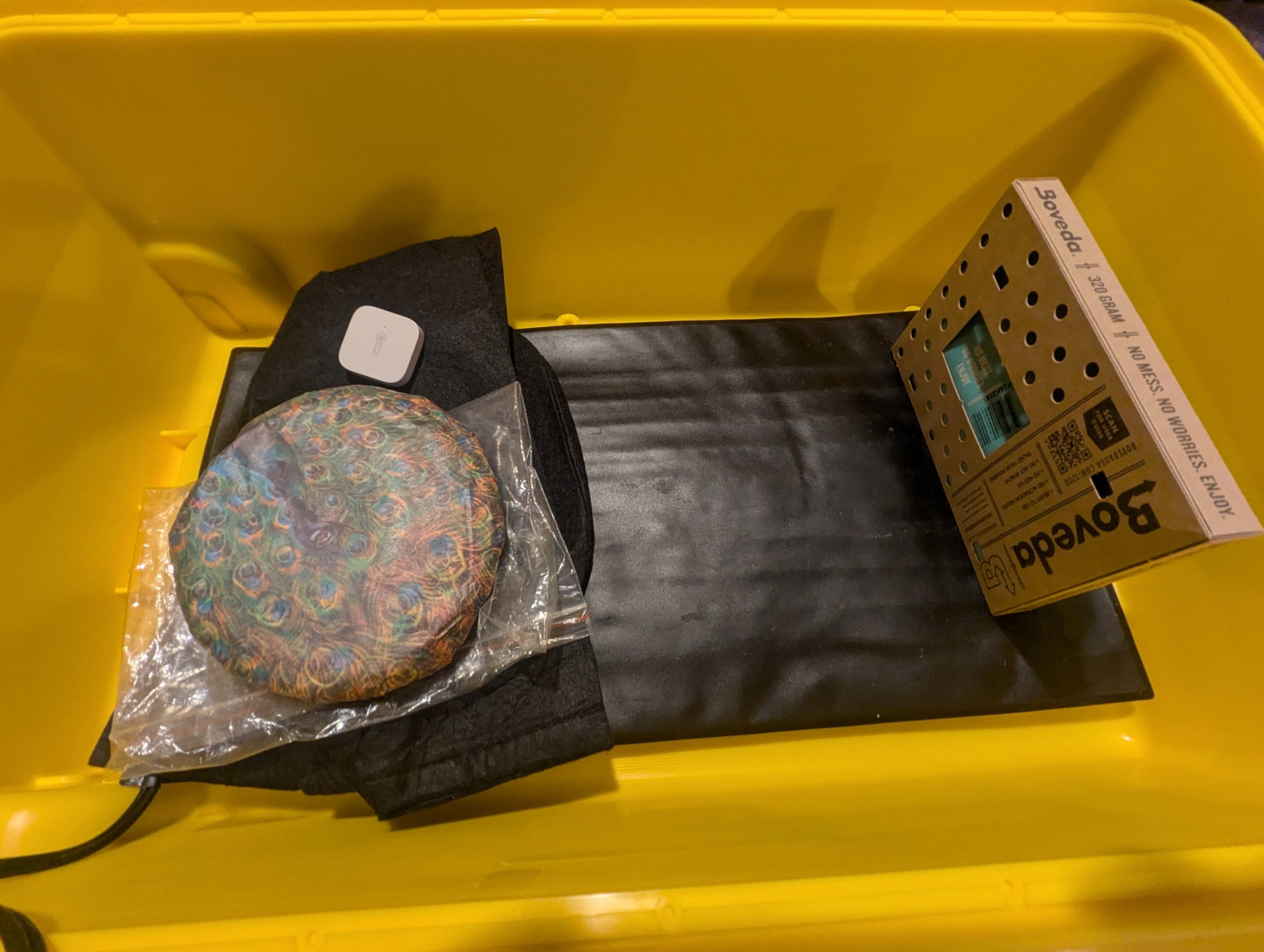
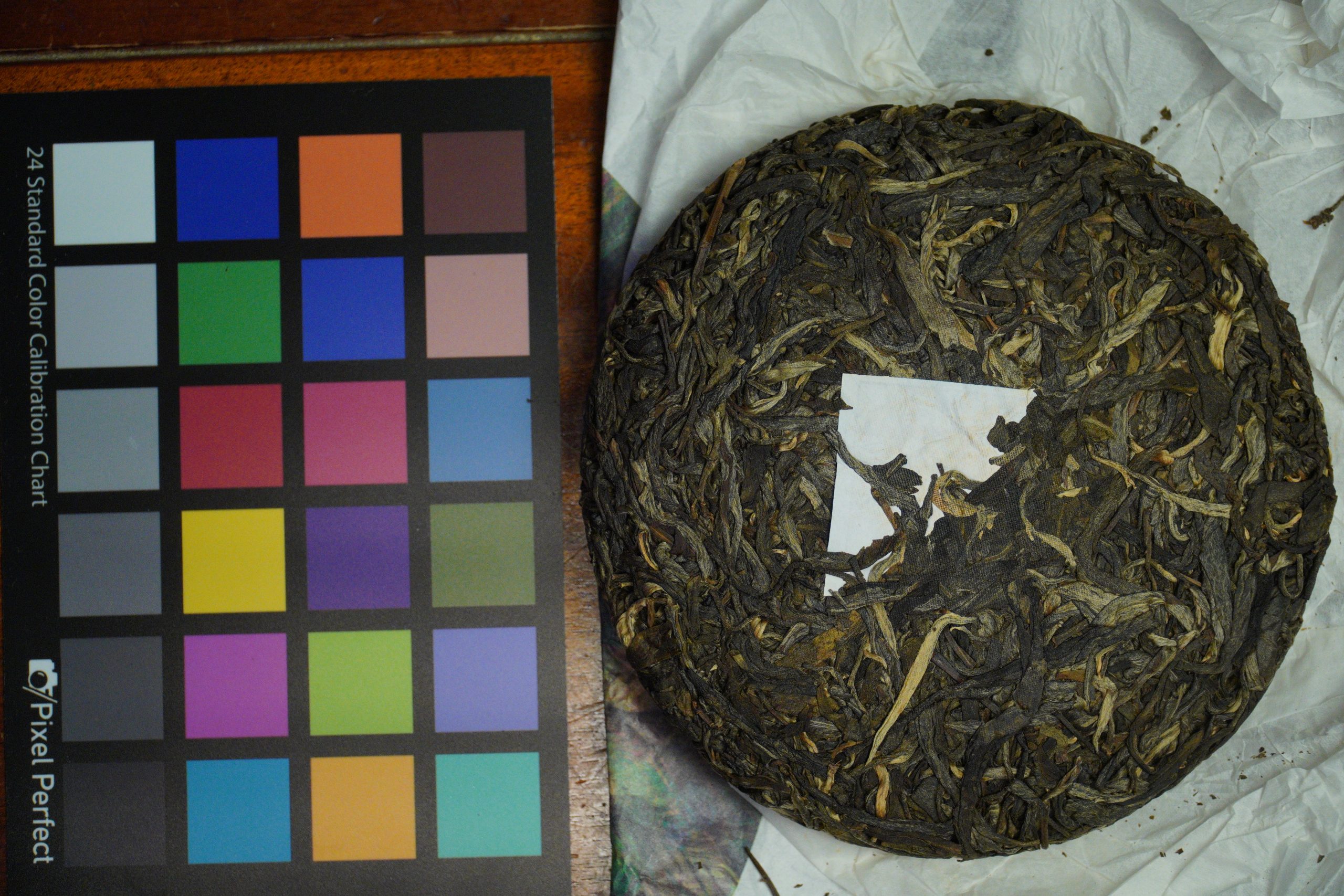
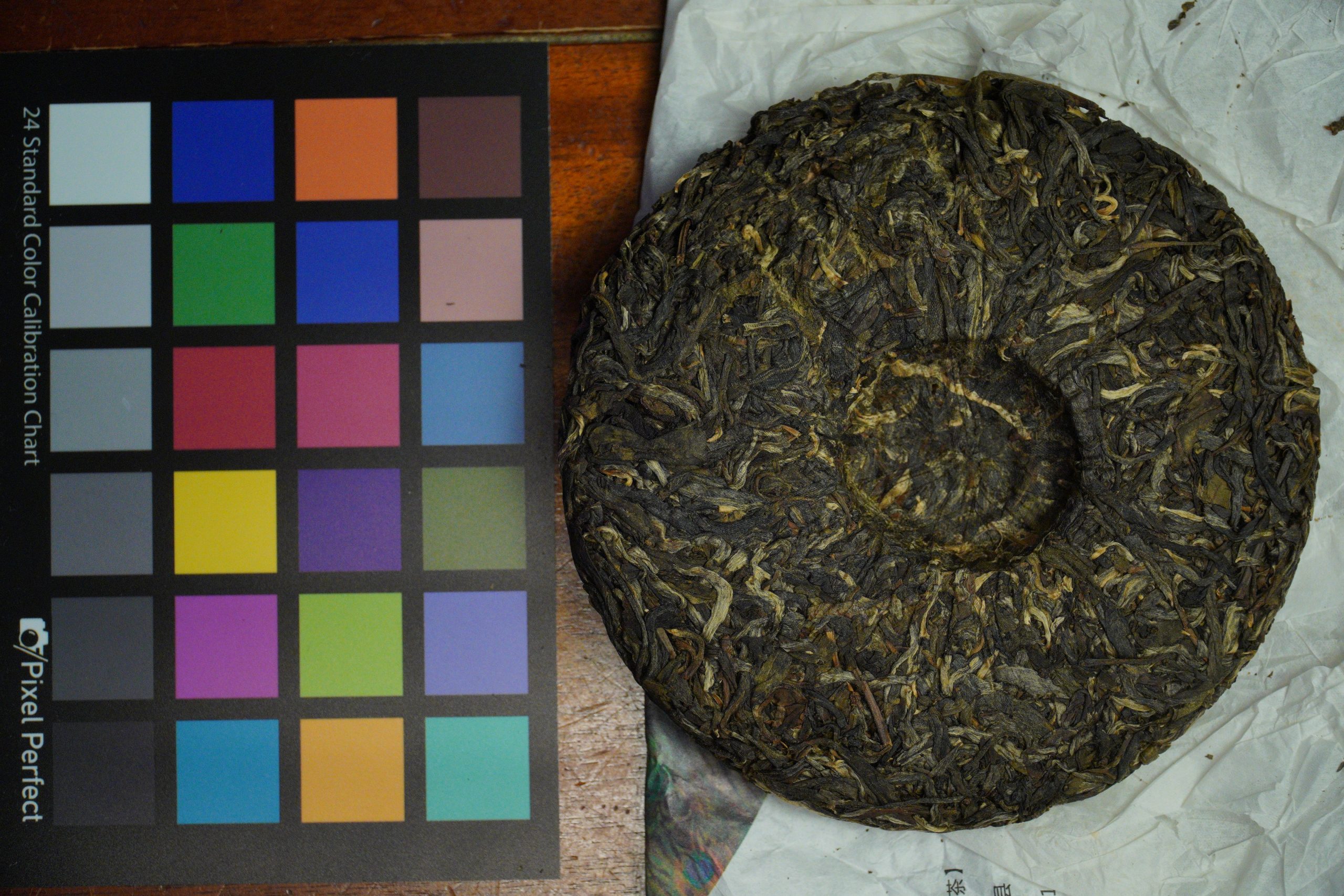
In past videos I’ve described a 357g cake as a weird awkward amount. It’s quite a bit of tea to drink through, ~50-70 sessions depending on your dose but a cake is also far from a lifetime of tea. Because 357 grams is the traditional cake size it’s the quantity we often end up stuck with. If you could customize cake size every time you bought a cake I suspect everyone’s stashes would look dramatically different. Instead many of us end up with this odd quantity of 357 grams, and occasionally some odd fraction of 357g in split cake situations.
Stamp Collecting
Stamp collecting is a term used to describe someone who buys lots of singles of cakes. It’s an effective way to start out in the exploration phase and don’t have a lot of tea. Samples are usually preferred but sometimes they’re not offered. With a cake you get enough tea to get as many repetitions as you want. There are also a lot of teas people do not want to consume the required 50-70 times to finish before another cake catches their eye, so many inevitably end up with a sort of unwieldy stash of partly consumed cakes, some which will go neglected.
Through experience, people learn the sort of tea that they will drink through and the ones that will not be drunk and will naturally gravitate towards buying what they will actually drink. This is all simple enough and there’s absolutely nothing wrong with buying as you go.
Long-Term Thinking & The Case For Tonging
Stamp collecting is good for the short term but if you are a pu’erh person in for the long haul you sometimes want a tea to be around for a couple decades or the rest of your life, stamp collecting isn’t going to cut it. And single cakes, especially if you are drinking it are going to be consumed before they have undergone significant transformation.
Some math with a standard 357g cake. Assume 5g sessions. You’ll likely have a 10% loss in terms of dust. This leaves you with about 65 sessions. Seems like a lot. But if you drink this tea semi-regularly once per month, you’ll finish it off in 5 years. Not exactly a lifetime of tea. A popular strategy about 10 years ago, was the double cake. One to drink and pick away at, and another for later. Even buying like this, your tea will not last in the regular rotation. If you drink that tea once per month, you’ll finish off your entire stash of that cake in a decade.
When I first heard how many tongs some veteran drinkers bought or jians were split I was legitimately shocked. A tong seems like an absurd amount of tea, multiplying the random number of 357 by another 7 cakes? And hitting hard is not just a tong in many such cases. It can be two or three. To the uninitiated this may seem absurd and I’ve seen people seemingly disgusted at why anyone would buy such a high quantity. But sort of like how savings rates and retirement math can feel fake especially when you are young and own very little, owning several tongs to the uninitiated seems abstract and unnecessary. But math-wise it makes sense when you take into account a youngish drinker and longer time horizons. Two tongs of a tea is 5 kilograms, so with some tea loss, you’re at around 900 sessions. Split across 40 years, you can have that tea about twice per month. That’s a lot of one tea, but far from an unlimited supply. If you wanted that tea once per week, you’d need four tongs!!
Pros & Cons of Tong Gang
There are legitimate reasons to be in the tong gang or not. I don’t think it’s as simple as right or wrong so much as it is situational depending on your intended goals.
Pros (of joining Team Tong)
You have enough tea to really age and drink. If you are consuming a stamp even just a couple times per year, you’re not really going to age it. You’ll end up with a partly consumed cake very quickly. You can also be more aggressive with trading or generous with giving away.
Cleaner. It is annoying and overwhelming dealing with a lot of partly consumed cakes. Some on their last legs and others unconsumed or consumed once. Buying less variety but more of a few verified good quality teas allows settling into rhythm with teas more easily.
Selling something you overbought or regret is easier, because you can simply list seven cakes of a tea, rather than seven individual cakes.
If you are a prolific tea drinker, consuming a few teas per day, a cake is really not that much.
Oftentimes teas can be cheaper if you buy in quantity.
Cons
Mistakes are more painful. Single cake mistakes are small in comparison to an unwanted tong. There’s a beauty in the nimbleness of newer drinkers who are active and don’t worry about the long-term, using swaps and connections to try a lot of tea. There’s also a real danger in newer drinkers just building an entire collection before they really have a good idea how they’ll drink long-term.
Danger of cheaping out and restricting yourself to lesser/less expensive tea. If you start thinking about what you can afford we often think in flat $ amounts. Samples are excellent for limiting up front cost, cakes can be OK, but tongs are awful. That $150 cake looks cheap as a $7 16 gram sample, looks OK on its own, but buying a tong you are all of a sudden over four digits. It is true that many of the pu’erh hobbyist who own the most amount of tea, started when the norm was $15-30 cakes, certainly not the high-priced boutiques we deal with now. They had the privilege of cheaper prices that no longer exists. If you stick with less quantity you are going to consume quickly you can simply buy better tea since you’re less worried about picking up several kilograms.
If you are a 3 gram gang member or a weekend warrior, a tong might be too much. And you’d want to calculate the quantities carefully to suit your consumption.
It doesn’t have to be one or the other. Grabbing stamps can be synergistic with tong buying. Not because you can age that stamp, but because it gives you a lot of tea to play around with and get to know by brewing. Many of my larger purchases have started with a single stamp or sample cake which I’m able to drink several times before deciding I want to buy more.
The tong and cakes quantities are arbitrary, and there’s nothing wrong with dealing with the quantities in between, half a tong or five cakes or whatever. Everyone will be a little different. But I do think if you are new, a high quantity of a single tea whether it be a tong or not is not as absurd as you may think, especially if you are young and intend to drink and age tea for a long time.
Like my Taobao post this is a snapshot of what is available at this specific time (April 2026). Be warned, this post could be outdated in a few months. There are teas I would’ve definitely picked but are no longer available. Unlike the TB post, this starts in a much higher budget range (beyond the most expensive teas in that report) as is the nature of the boutique market. It is also very Yiwu/6FTM centric, which is my preferred area for boutiques in general.
Budget Range <$0.65/g
This range starts more pricy than any of my Taobao picks. Boutiques aren’t known to be budget. Most boutique brands do have a range and there are some attempts at making price-friendly options and in my experience they mostly produce functional, boring tea that misses a lot of the appeal of boutiques (see Chenyuan Hao Cang series or many of the Yuanyuan Tang productions). You also have vendors like Pu’erh Guy regularly hawking a variety of teas in this range many of which I have not had, so I’m only going to speak towards what I am personally familiar with. Here are my picks at the relatively cheaper range.
2007 Yangqing Hao Jincha ($0.40/g, $120/300g) via Yangqing Hao
Once upon a time Origin Tea sold this for $170/300g like 12 years ago. This was one of the first teas that really clicked with me for pu’erh and continues to hold a soft spot in my rotation. It was so clearly a step up from the young and semi-aged sheng I had been sampling previously that I ended up going a bit too wild. The availability of teas is much better now (for YQH and others) and you have more than a couple options but this remains a good pick.
The material is quite good for the price, but there is one significant downside. The compression is amongst the most intense I’ve encountered. I’d probably have drank this 4x as often if this was just a good ol normal cake. Still if you want value, this is pretty great, you may just be risking a finger or two. On a sidenote, make sure you’re getting the Yiwu Jincha not the Yibang material tuo or jincha from the same year. Thanks to Emmett for over a decade of making these teas available in the west.
2015 Biyun Hao Lishan Gongcha ($0.60/g, $216.48/360g) via The Jade Leaf
This is a nice blend by Biyun Hao. It’s not as high quality as their earlier productions but it seems like a good bet as the processing seems good and it is a blend. I think a lot of these boutique producers like Yang struggled with unevenness in their blends early on, but Mr. Chen (BYH proprietor) has generally done a fairly solid job (2004-2006 BYH Yiwu/MZs are blends) and there’s less relative complaints about inconsistency when it comes to their blended line.
2010 Wuweisanfang Manzhuan Arbor ($0.63/g, $250/400g) via Teas We Like
TWL is hopefully in the midst of restocking so I will leave this here, but it competes very well with options at the same price range. This is not their highest-end (gushu) production which is why it is priced a bit lower, but I think it definitely punches well above its weight. The material is good and it has just turned a corner compared to other WWSF. My only complaint with WWSF is that the storage is dry for my own tastes and it reduces how much I want to drink them.
Honorable Mention: 2011 CYH Qianjiazhai Mushroom ($0.37/g, $110/300g) – Personally I’d take this above the Chenyuan Hao budget Cang series, which I’m lukewarm on.
Mid-Range <$1/g
I fully acknowledge this is mid-range only in the world of boutiques. It used to be rare to see teas above $1/g, but we live in a different world now. This is a tricky range to buy in as you can get access to respected labels but not really their best stuff.
2007 Yangqing Hao Qizhong ($0.70/g, $280/400g) via Yangqing Hao
Origin Tea used to sell this for $270 and it is now available at $280. Not bad! Similar character but better quality than the Jincha and lacks the compression flaw. It is definitely very much a YQH tea and can get uneven at times, but I find this punches well above its rate with nice expansiveness and good longevity. I’m at the point with this where I have it often enough I find it quite easy to brew because I know how it should taste and can alter my steeping to achieve something I’m satisfied with.
2013 Biyun Hao Mahei ($0.76/g, $274/360g) via Teas We Like
A blend of a few different areas around Mahei. Biyun Hao really focuses a lot of Manzhuan but also on Yiwu. This might be the best example of a very classic Yiwu in this list that balances flavor with the many intangibles that Yiwu brings.
2013 Baohongyinji Zhenren Yufeng ($0.98/g, $375/380g) via Teas We Like
Squeaks just under the limit. Very good, refined Yiwu. Lowish on flavor but lots of intangibles. Probably not going to be the tea for everyone but if you love boutique Yiwu in this kind of ethereal form, this is about as well as you can do under $/g. Many credit a Marshaln review for springing this to relative popularity as opposed to its sibling, the Yuema Wangong (also a good tea). Even still, the price it sits at is not that far above its initial offering price.
Sub $2/g
2004-2005 Biyun Hao Manzhuan or Yiwu ($1.3-$1.35/g, $650-670/500g) via The Jade Leaf
Note the cake size here which makes the $/g considerably more appealing than a standard 357g or small 200g cake. I’ve slowly picked up a few of these throughout the years as they remain my personal favorite at this pricepoint. The rest of BYH can be bought around this range too, but things like the Zhengjialiangzi and others float in and out of availability. These are all blends of a few different villages. Mr. Chen of BYH continued to focus on both these areas (Yiwu and Manzhuan) for the two decades after.
2007 Dragon Tea House Yiwu ($1.52/g, $545/357g) via Teas We Like
Currently the only Dragon Tea House available via TWL. This is the tea I have the most limited experience with, but given DTH’s consistent track record. I feel comfortable enough to recommend it. DTH is definitely worth trying because their style and processing is traditional and their productions feel fundamentally different from the rest of the boutique space.
The Chenyuan Hao 2003 cakes and 2005 SZCQ are worth mentioning here. I like these teas, but maybe not quite as much as other options. Others disagree. My personal favorite of the 2003 CYH line is the 2003 TQH Reproduction which is not currently available.
>$2/g
Not nearly as many teas exist in this range. And when they are, they tend to be in limited quantity. In terms of Taiwanese boutique teas that would personally catch my eye:
2003 CYH Yesheng
2004 CYH Songpin
Beyond that, I would consider contacting or cruising an operation like Listening to Leaves to see what they can get. Things like the 2012 WWSF Manzhuan Anniversary are good teas in that range.
If you really want to talk yourself into the higher-ranges do the usual trick of looking at price per session and avert your eyes when it comes to sticker price. Even teas like the 2004 Biyun Haos are under $7 for a 5 gram session.
Maaaa. The pu nerds are citing four digit again!!! This time with the most famous recipe of them all, 7542. One of my regrets early on in my pu’erh journey was the heavy focus on more boutique teas. I got some exposure to factory tea and more traditional pu’erh, but the pathway wasn’t open towards many different avenues of pu’erh like it is now. I could’ve forced my way into more, after all Dayi isn’t some unknown quantity, but frankly did not prioritize it. Since the return of the blog, I’ve had an occasionally controversial but deliberate focus on more factory-related content.
My History w/7542
Prior to 2026, I’d had a number of 7542s, including a handful of the more famed versions. Teas like the 1988 Qing Bing (1989-1992 Dry Stored 7542), the 1997 Shuilan Yin, the 2001 Jianyun (Simplified Character) and quite enjoyed it. Despite all this, 7542 has never been in my regular rotation and I don’t think I had a firm grasp on the recipes evolution throughout the years. For instance, before drinking the recipe repeatedly I don’t think I would’ve been able to place a 2010 7542 vs a different generic Dayi. The famed ones I’ve tried were mostly out of the price range and impractical for regular brewing. The famed ones are also not really representative of run of the mill late 2000s or early 2010s 7542. I bought a tong of 2010 7542s during the pandemic but I never found it inspiring enough to really drink regularly. My goal with this was to dive deep and get a better feel for what is likely the most famous pu’erh recipe.
Storage & Batch
This is important enough I wanted to stick it high up. Storage is extremely important! Especially for factory teas. The conception of this drinking report originally started out as a blind, but I found it to be such a mess that I decided to release this as a more conventional report. A big cause of the chaotic mess is that storage is a big ingredient for why a tea takes a certain profile. Without holding storage constant, it’s much trickier to get to the bottom of something like 2010 7542 vs. 2011 7542. At that point, the storage can be a more powerful factor than the actual tea material.
Dayi teas change hands a lot. Even from Taobao, the same vendor can have a variety of storage. In the end, I opted for the brute force method of trying teas. The blinds were not without purpose but I found I was getting a bit lost in the sauce and constantly trying to guess the tea (and not particularly well). I’d often get the caliber of tea about right but the specific guess wrong. The blinds are something I might revisit now that I feel I understand the recipe somewhat better.
The batches add an additional element. In some years they seem to only matter a little, in others they seem to matter a lot (see 2005 or 901 7542). I think in general the storage is more important than batch, although both can be quite important. And batches almost certainly do matter especially in the mid 2000s and for famous batches like the 901.
I only had the stomach to bring on teas that are at least a dozen years old. Sorry.
In a year there are often multiple batches, especially of a popular recipe like 7542. These are usually signified by an 01 (first batch) or 02 (second batch) or 03 (third batch) at the end of the tea name. For instance a 2006 7542 601 is the first batch of 2006.
The Teas
2013 Xiaguan 7543 (C)
Starting out with a Xiaguan. What a betrayal! The tea is featured because it is XG riffing on Dayi. Thanks to ghostinthetoast for sending it my way.
Diesel, tobacco. Fairly dark. There’s some texture here that makes it feel non standard. Good resinous activity, moderately bitter and the body is mostly just moderate. This does not really feel like a 7542. If you are a taobao enjoying value maxxer, this may be worth a pickup. I do think it punches a bit above its weight.
2011 7542 (C)
From a GD taobao vendor. This is OK. Has a decent body and some grape/sugarcane sweetness that might indicate a bit of oxidation. Not a ton of bitterness. It evens out to a bit more of a standard profile as it brews out.
2011 Jin/Gold (B)
I’d had this described to me as a superior 7542 and to some extent I get that, but this also feels quite different from the 7542s of 2010/2011 and frankly would benefit considerably from more time. Perhaps it is closer to some of the more acclaimed batches such as the 2005s. This has a darker base, like the Xiaguan. Has some wood and grain but becomes very tobacco dominant as it brews. The tea feels bigger and a bit sharper up front. It’s really not bad, but needs a lot of time even compared with the rest of the set. Decently strong mouthfeel and presence. This has the potential to rise in my rating but I grade based off how the tea is now not its future.
2010 7542 1001 (B/C)
This has gotten quite a bit of circulation in the west, mostly thanks to Teas We Like and more recently Quiche. The tea sort of like the 2011 has a grape like, sugarcane sweetness in the initial steeps. It becomes a bit more properly what you’d expect from a 7542 as it brews out. Sturdy body, fairly mild bitterness. Due to the crazy prices of Dayi in 2020-2022, I do see why something like this would stand out as an affordable, good-enough tea, although I think there’s virtually no chance this reaches the levels of even something like the 601 7542.
2009 7542 901 (B)
This is an interesting one. It demands a significantly higher price than later batches from 2009 as well as the surrounding years. Alex of Taiwan Tea Odyssey compared this with other 7542s and found it was a bit more boutique feeling. And drinking these in close succession, I agree that it is different than the other years. The tea offers better pungency and more texture that become quite obvious brewed side by side.
Is it worth the price difference? If you are remotely value oriented, not in my opinion. But it does seem like a more likely bet than the 2007-2008 or 2010-onward 7542s. I’d also say it is a different beast than the Jin.
2008 7542 807 (C)
From Taobao. Teas like this are extremely inexpensive right now (under $30 on taobao) although you’ll need to suffer through potentially drier storage. It has a sturdy body but is still pretty green. More sugarcane, florals, nutty. Sort of like the 2007s it feels a bit shallower than the 2005-2006.
2008 7542 802 (B)
Can post-reform Dayi hold up to good old traditional storage? Yee On decided to find out. While the tea is nothing special the answer is mostly yes. It offers more or less exactly what you’d expect. A pungent tea that has been smoothed out by age. There’s a relatively low amount of sweetness but there’s good body and a strong textured mouthfeel.
2007 7542 704 (D)
Rough rough rough! This was from TSH a few years ago and was frankly just too green and feels too weak and thin. 2007 has a pretty awful reputation and I can see why. The 704 7542 has a sugarcane like taste accompanied with sourness. Very unimpressive. I do have a hard time attributing blame to storage and material but it’s likely both in this case.
2007 7542 701 (C)
Sent by Mr. Green who got it from Taishunhe. Thank you! It feels shallower than 2005/2006 other teas with a smaller body. A bit less sweetness on this one as well, but does feel at least stronger and in a bit better spot than the 704. The woody pungency does remind me of the earlier years, just lacks more of the expansive feeling. Certainly weaker, thinner, more taxed material in this one.
2006 7542 603 (B)
Pretty similar to the 502 and 504 in structure. There’s a strong pungency up front that gives the tea a really strong mouthfeel before it starts to level off. This one is a little drier stored than those two, so it gives a little less wet wood and chocolate and a bit more incense.
2006 7542 601 (B)
From Taishunhe. Relatively dry stored. The profile of it is a bit clearer and better than the 603, but not enough for me to raise its rating. Still has a bit of plum, antique wood resin. A decent enough aftertaste. Solid tea. It isn’t quite as big as the 502, but the there is some resemblance. I’d easily take this over the 2007, 2008, and 2010 I’ve tried. Although maybe the 901 could beat it. Not sure.
2005 8542 501 (B)
From brigmbg on Discord, and previously from Mr. Jin. Thank you sir! This is a bit drier stored than the 502 and 504 7542s I own. Tobacco, wood, a bit sharper, grassier, with a narrower profile. It’s still pretty classical and I’d definitely take it over some crappier 7542s. This particular one needs some more time but it has nice enough structure and I think it’s a pretty good value for the price.
2005 7542 501 (A)
The fancy white thread one. Thank you Toby! This is nice, nicer than the 502 and priced accordingly. Basically it offers a somewhat similar structure to the 502, but is more potent. While it isn’t necessarily overwhelmingly bitter it has a stronger mouthfeel, resinous activity and an impressive intensity with more mouth coating. It almost leaves an anesthetic numbing feel by the end of the session. Absolutely a tea that would be hard to follow in a session. The depth of the aftertaste is also good and it coats further into the throat than the 502. It’s interesting because it is clearly a very good tea but I’m not sure it is quite the same as the earlier era too. I can’t quite put my finger on it, but the strength of it is quite unique.
2005 7542 502 (A/B)
I am quite happy with this one and have quickly drank down a good chunk of a cake. Thick, textured mouthfeel. Woody, chocolatey, antique, slightly wet wood. It has a strong taste to it and is quite straightforward. I’ve always been more of a 8582 guy, but part of it is the lack of availability of teas like this, which unfortunately remains hardish to find.
2005 7542 504 (B)
How is the 502 better? It is simply stronger, richer compared with the thinner 504. Otherwise these teas are pretty similar. This has also undergone a bit danker storage. Pretty ready to drink now.
—-
2003 Purple Dayi GD 7542 (A)
Guangdong stored. I really like this tea. It has good strength and I think it’ll continue to age well. Probably stronger than the traditional Yun, good bitterness that all converts. Great, engaging texture. Lots of sweetness and salivation. Depending on the session can have some incense. I had this alongside the 1999 Dawen and it holds up pretty well. I also blinded this with the 2001 Traditional Yun 7542 and I think it is roughly the same level.
2003 Purple Dayi TW Natural 7542 (A)
Taiwan natural storage. Foresty, thick, oily. Very healthy body, and a more mild bitterness than the GD stored one. The GD stored tea (in my opinion) has a greater clarity of character with a more focused intensity. That being said there is still much to enjoy here.
2003 Purple Dayi 7542 via Houde (A/B)
This is my least favorite of the three Purple Dayis but I still find plenty to enjoy even if it does not come close to passing the speed test. It is definitely green and needs time. It starts out a bit thin but builds up in the first few steeps crescendoing to a healthy amount of bitterness and a nice mouth coat. It has a bit of that candied powdery texture throughout that is in the TSH version as well.
2003 Blue Dayi 7542 (A)
Roughly on par with the Purple. Maybe a bit stronger, although storage is a confounding factory. A bit drier stored than the GD . Not much smoke, but a good strong density here. Can feel its strength in my cheeks. Moving a bit beyond hay into more of a refined antique wood. Can feel the depth and sweetness coating the mouth. Great stuff and too bad it is quite expensive compared with other options.
2003 HKH Serious Formula “7542” (B)
I kind of knew what would happen here having this in sequence with 7542s. This is a decent tea that is not really a 7542 at all. It lacks the strength and pungency of any of surrounding year 7542s. Never quite found a spot for this in my pu’erh rotation, but I would not fault anyone for buying this as a good drinker that hits a nice age to quality ratio.
2001 Traditional Yun 7542 (A)
Very classical. Antique wood, resin, incense. Good thickness. Moderate, healthy bitterness throughout. There’s some light fruit going on here, maybe a darker plum sort. The aftertaste is also the sort you want, expansive reaching down into the throat. I’ve had alternating excellent and merely good sessions with this, although I’m inclined to blame myself for some of that. In recent sessions this hits the spot.
2001 Simplified Yun 7542 (S)
Very nice Malaysian stored version from Max of Teas We Like. I think this represents the pinnacle of this report and somewhat better than the other pre-reform 7542. Has that distinctive Malaysian spice aroma. Resin, tobacco, some mouthcooling. Leaves quite an impact on the mouth. Can get a bit sour. Moves into a bit more of an antique wood (as opposed to the more humid, darker wood of the Dawen). Overall brighter, stronger, and deeper feeling than that. The storage combined with the raw tea strength make for a dynamic and complex experience.
When I had this with Max it was the winner of the blind taste, even when put up against four pretty heavy hitting teas.
1999 Dawen 7542 (A)
I had this with Max of Teas We Like when I visited Hawaii where it sat amongst a number of good Malaysian stored 1999-2001 teas. This one has been mostly Taiwan stored and even with the storage it maintains a high degree of strength. Having it on its own I quite like it. I do see the lineage here from this tea all the way up through the 2005 versions. It’s a slightly wetter antique wood taste with mushroom. Quite strong and the aftertaste extends into the throat. Causes a good amount of salivation. Very satisfying tea.
Takeaways & Changing Over Time
The 7542 blend has changed significantly throughout the years. This can be attributed to two primary reasons (a) production quantity ramped up, watering down the leaf quality + overtaxing the tea plants and (b) demand for more quickly drinkable tea that does not need to be traditionally stored. Dayi has also shifted towards the numbered recipes representing more of their lower-end material, something that I don’t believe was as true in the 1990s or earlier. This has all resulted in the 7542 blend getting demonstrably weaker. Depending on the storage (a huge factor), 7542 can have a few different profiles but one I associate with 2005 and earlier is a strong, pungent mouthfeel that almost feels too strong for the initial steeps that eventually softens as you get into the mid steeps. This is not something that I find for the majority of the post 2006 products. Maybe the 901, but even if you don’t consider price I’m still uncertain on its future.
Teas like 2007 and 2008 7542 (despite being nearly 20 years old) are very inexpensive (like $0.10/g), partly due to crashing Dayi prices (they were more $$ 5 years ago) but also because they aren’t great teas and never will be. At one point these were like stocks but now these are seen (correctly) as overproduced, humble, greenish factory tea. Another confounding factor is storage standards which have gotten drier as time has passed, with notable changes in the 2000s.
There’s also a bit of a shift during the reform period. I like the 2005 7542s (502 and 504) I’ve tried but they don’t quite capture the power and expansiveness of pre reform 7542 like the 2003 Purple Dayi or Traditional Yun.
7542 Timeline as I see it:
Pre-2004 – Expensive but good if you can find real Menghai TF. At some point before dry storage became more common in the late 1990s and early 2000s, the recipe was almost certainly intended for the more intense traditional storage.
2004-2006 – Dayi reforms in 2004. Rather than a complete drop off a cliff the quality remained decent for at least 2005 and to a lesser extent 2006.
2007-2008 – Pretty bad. 2007 in particular many of the teas are just not that good.
2009-Onwards – The famed 901 is seen by some as a return to form. Otherwise there are some functional but not great teas in this range.
Recommendations
The pu’erh market is certainly not completely efficient in matching tea quality to price but when it comes to the most famous factory and recipe, it’s not exactly unknown ground so I do think quality will at least somewhat correlate with pricing especially when we are comparing Dayi to other Dayi. The fakes remain a problem if you are picking up tea. Certainly do not trust unvetted vendors peddling the cheapest version you can find. Storage is also important. Make sure you’re vetting the storage before going too deep in the water.
Value Pick – The 2010 7542/2011 7542 remains a good value at $50. 2009 7542 is a better tea, but not really worth the 3-4x price difference. I don’t think this will ever be that great of a tea, so I wouldn’t bother buying a huge amount for aging and I still don’t get very excited in the morning if this is on the tea schedule but it’s mostly fine. These two give a decent idea of what 7542 is about at a very modest cost.
If You Can Afford It – Honestly anything pre-reform (pre-2004) is worth trying if you can get it from a verifiable source, assuming it is reasonably stored and you can afford it. One of the criticisms I got of my pro-factory propaganda in recommending mid 2000s teas is that they don’t necessarily represent what makes the earlier era of factory tea special. Especially if you aren’t very price sensitive this is fair enough. So why not go for the good stuff? These are not value picks but there are qualities to these teas that are hard to find in post-reform Dayi. Quiche is probably currently the best place to sample them. If you want to talk yourself into it these are about $1.5-$2/g. So you are still talking sub $10 for a nice factory session. Again, it struggles a bit against other options but if you want a good 7542 these are it.
The Moderates – 2005/2006 7542. There is some ground in between these two. By 2007, the quality of the 7542 had degraded significantly and 2007 7542 is a fraction of the price of a decent batch of 2005 despite being barely younger. These teas (with the exception of 501) represent an area where quality wasn’t quite as good as earlier but still solid enough. Even within this narrow window, 2006 tea is significantly cheaper (and also lower quality) compared with most batches of 2005 7542. And within an even narrower window, the 2005 and 2006 batch quality differs significantly (i.e. 502 > 504). Things were changing quickly in this period. You can find a later batch of 2006 7542 for around $60-70 from a reliable Dayi seller on Taobao.
VOATO & Which 7542 Make it Into My Rotation?
Over the past year I’ve drank a fair bit of 502 7542 and I do think there’s a spot in my rotation for some of these teas. The 502 hits that mid point of being not too expensive but still pretty tasty.. There is a bit of a hard cut off as most of the post 2006 teas I do not think would pass the speed test and find a spot in my rotation.
My Average Factory Tea Owned would be a solid B rating (say 2006 Dayi 8582) so, something like the 502 would be a +.5.
Stay tuned for even more Menghai Tea Factory propaganda in 2026!
For myself, the appeal of Taobao is the massive amount of tea that is otherwise unavailable or difficult to access outside of east Asia. I’ve held off on specific Taobao recommendations because the landscape can change quickly and I tend to create content with a longer release cycle. This post is an exception. I’m writing and releasing this post quickly so they are all currently available at this specific moment of time in February 2026. Some may still be there in a year, others may not.
How To Buy
1. The Direct Method
For those comfortable with the Taobao app, you can buy directly and ship to a shipping agent (like ShipForwarder).
The Process: You buy the tea → ship it to the agent’s warehouse → they consolidate multiple orders → you pay for one international package.
Shipping Lines: * Guangzhou ePacket: Best for small hauls (under 2kg).
EMS: Faster, but expensive.
Sea Freight: The “slow boat,” but significantly cheaper for heavy hauls. Oftentimes unavailable.
Estimated Cost: Expect to pay roughly $0.03–$0.05/g in shipping fees.
2. The Beginner-Friendly Method (Super Buy)
If you don’t want to navigate the Chinese UI, use an intermediary like Super Buy.
Browsing: Use a standard Taobao account to find what you want. Alternatively if you don’t have a Taobao account you can use the Super Buy Browsing function but it is reportedly a bit finicky.
Fund: Send money to your agent (Super Buy) and have them buy it for you. Most will accept paypal or other methods.
Purchasing: Paste that URL into Super Buy. They buy the item for you, receive it, and take QC (Quality Control) photos.
Consolidation: Once all your cakes arrive at their warehouse, you trigger the final international shipment.
Join the The Tea Table Discord. The Taobao channel is a valuable resource for real-time help with account lockouts or finding specific “hidden” storefronts.
Price Range
Taobao has all the price ranges, but western Taobaoers typically shop at what would be considered more of the budget price range in the western scene. I think more people should check out more expensive tea, but I also understand why people opt for inexpensive options when there are a lot of barriers towards pricier gambles. Regardless, I have not tried enough higher-end options to wholeheartedly recommend them so these picks are centered in the $0.05-$0.30/g range.
This is a fancy ripe. Credits to shah for turning me onto this years ago. It used to be pricier but Dayi prices have gone down quite a bit. Very refined and a nice aged profile.
One major risk in Taobao is the storage factor. There’s always some unknown aspect to it. Different vendors have different storage and there’s often a decent degree of variability in the storage offered. For Dayi raw in this age range, much of the storage is a bit drier than my preference. It’s not unforgivable but the storage is an important factor towards how the tea presents. For ripe it’s not nearly as important making it a higher batting average category than raw.
A cheap brick? Really? Credits to Phobos for turning me onto this one and Chen Tang. It’s simply a very good daily drink, antique wood profile. Less tippy and high-end than the Anxiang but just as delicious in most of the ways that count.
If you are a ripe enjoyer, Chen Tang is a good place to pick up a variety of ripes. Fan of 7572? They have a dozen options, almost all inexpensive. Same with much of the other popular Dayi recipes including raw like v93, 7542, 8582, Golden Needle White Lotus, etc.
Dayi to Age: 2015 Dayi Purple via Chen Tang (link) $67/357g ($0.19/g)
In an infamous Hong Kong Category III film, Red to Kill, an evil social worker goes from a seemingly well adjusted empathetic man to an absolute maniac when he gets triggered by the color red. This is how I feel about the western tea scene with the color purple. Purple wrappers seems to drive them into a mania to buy buy buy.
This cake has been peddled around the west for various prices. Like many Dayi teas it was quite a bit higher about 5 years ago, but has fallen to a pretty reasonable price range. If you want to hear our thoughts on this tea search our video archives.
Unlike the Purple, I highly unrecommend Red to Kill unless you derive as much enjoyment from absolute depravity as me.
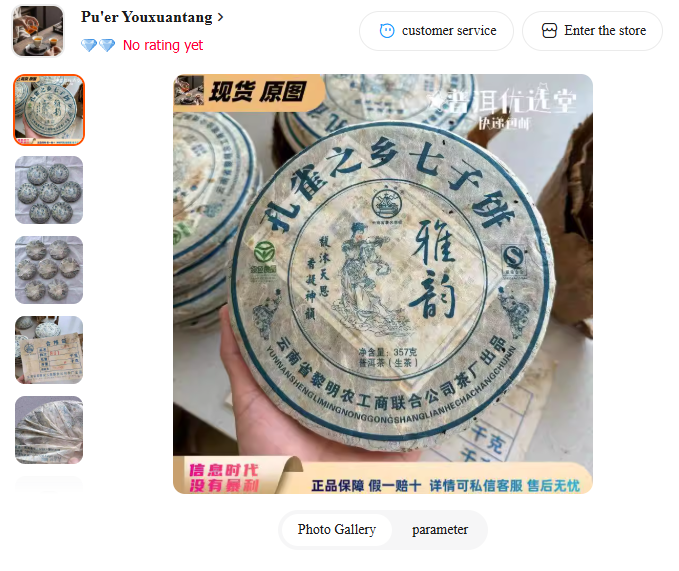
Mid-Range to Drink/Age: 2008 Liming Yayun via Pu’er Youxuantang(link) $98/357g ($0.27/g)
In Taobao some of the shops sound like consignment or even old school pawn shops. One such store was selling this (not the one mentioned here).
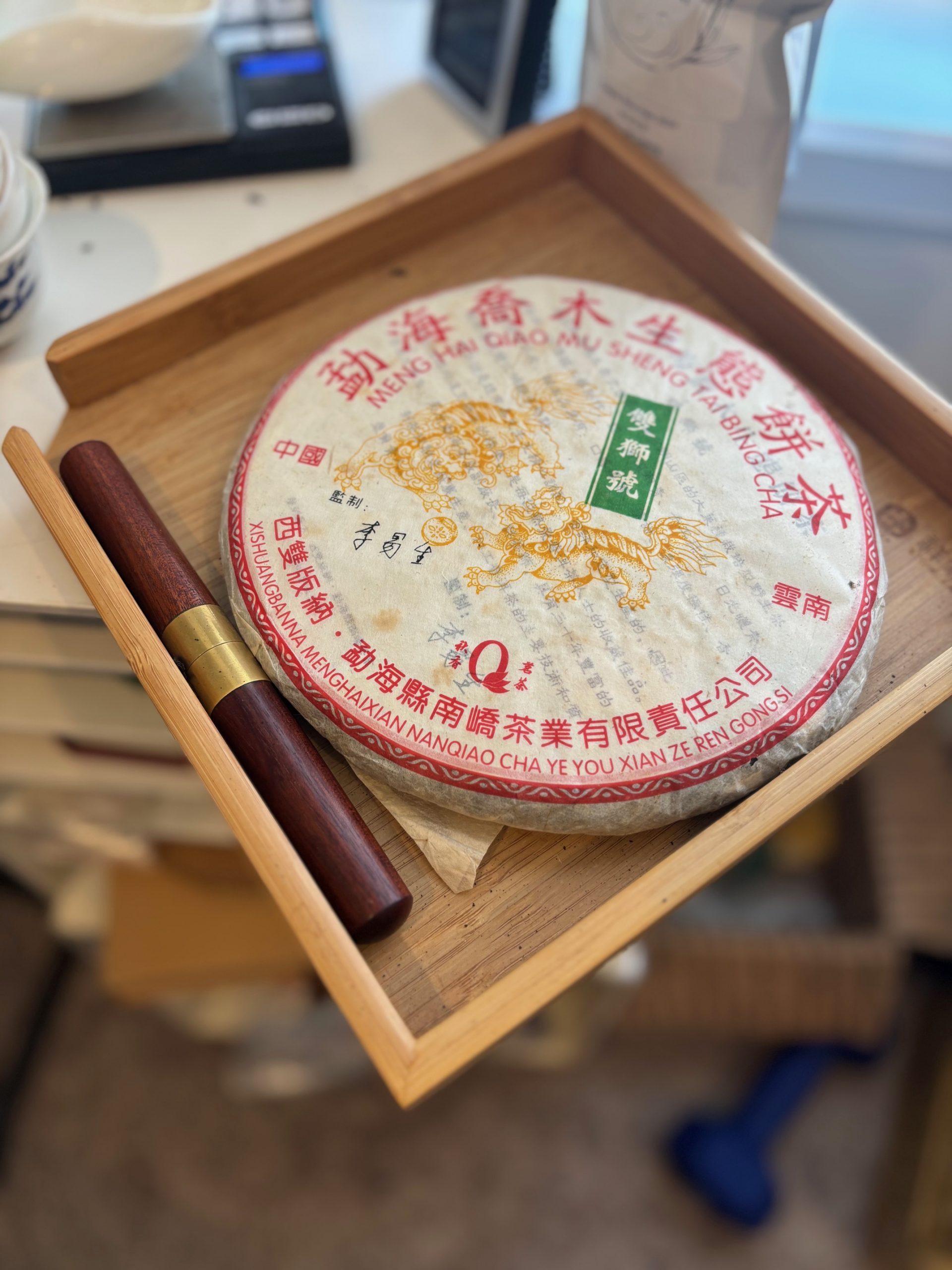
This tea is available from a variety of vendors for around $100-125. It isn’t super budget but it punches a bit above its weight. The Yayun has a pleasing old school, smoky, honey profile. I infamously mixed this up with the pricier 502 Double Lion in a blind tasting. Enjoyable to drink now but should improve. Denny and I split a tong.
Mid-Range to Age: 2005 Nanqiao Blue Peacock via Pu’er Youxuantang(link) $107/357g ($0.30/g)
Old school Bulang profile, a bit smoky and probably needs more time. I think this one needs longer than the Yayun but if you want some sturdy Nanqiao Bulang for a cheaper price (stares Double Lion down) this is your cake. It’s not quite the same tea as Double Lion but it has a strong, resinous, smoky profile.
From good ol classic, Xiaguan specialist MX Tea, a classic tea. The burly, sturdy Jiaji is a workhorse tea that is worth seeking out and referencing. You can get these 22 and 23 year old tuos for an exceedingly reasonable price. 2004 is the better value, the 2003 is a bit better and still not very expensive. The value of MX over other Xiaguan dealers is they are more consistent selecting for decent storage whereas other vendors can be hit or miss.
MX is a good place to find other inexpensive tuos, like the Teji.
Mid-Range to Drink: 2004 Xiaguan Gold Ribbon Red Eye (link) $32/100g ($0.32/g)
Like a true Taobao degenerate I check MX’s new listings regularly. They sometimes release one-offs or teas that are in limited quantities and sell out quickly. One such tea was the aforementioned Yayun, which was sold out by the time I received my sample cake (Denny and I bought the rest from other vendors). The Gold Ribbon Red Eye is one where I’m not sure how long it will be around. It’s a special production made by XY that is smoother than your standard Jiaji but retains a bit of that crane taste (moreso than the Nanzhao). The later years are better value (2006/2007) but I find the price difference worth it for something a bit older with better material. This is smoother and more easy to drink than the Jiaji right now.
Come, open your wallet and join the Taobao Degen club.
Since diving back into tea at the end of 2024, I’ve done a lot of thinking on how the tea scene has changed and what the ideal intro to different tea types are. In many ways the ideal way to approach Taiwanese oolongs or Yancha is the same as it was in 2012. Identify specialized vendors in that tea type and sample a bunch. You’ll pay more and have less choices than someone based in east Asia but that is the reality of being based in a different continent. As is often the case, pu’erh tends to complicate things more, due to the variety and diversity of approaches. The easiest way to make sense of this is to break down pu’erh into simpler components and categories, like Five Types of Raw Pu’erh You Should Try. A decade ago the conversations mostly centered around young boutique and larger regions, like Yiwu. In reading about specific teas I was highly influenced by bloggers like Half Dipper and Jakub (Marshaln didn’t focus on reviews). Scroll back to what they were drinking in 2013, and you’ll see a wide array of young recently produced pu’erh many under western vendor’s labels. Factory pu’erh seemed to be an afterthought. Not to say it wasn’t around, Yunnan Sourcing sold some stuff or you could go to various ebay vendors who hopefully would sell the real deal. But factory teas simply weren’t a huge focus of conversation in the pu’erh community a 10-12 years ago. No doubt TeaDB was a part of this same movement pushing things in the young boutique. Looking back, I think this was suboptimal and perhaps even a bit strange. If someone came to me and wanted to get into pu’erh, besides directing them towards the different types I’d encourage them to get their baseline from factory pu’erh made between 2005-2008. Here’s why.
1. They Are Old Enough Now & Have Aged Good Enough to Give a Good Baseline
This is a math problem. Factory teas are mostly made to be stored and not consumed young. Back in 2014, teas between 2005-2008 were not even 10 years old. Now they are 17-20 years old, firmly semi-aged. The time allows these teas to darken, mellow and get to a more drinkable place. I’d still generally recommend people try them from places besides Kunming where they’ve seen real heat and humidity (Taiwan, Guangdong, Malaysia, etc.).
As production expanded throughout the 1990s and 2000s, there was speculation as to how the tea would age. Generally speaking it seems like factory teas has aged fine. While the 2005-2008 are not nearly as strong as their predecessors (say 1980s/1990s Dayi), they do exist along a similarish aging trajectory, unlike many boutique teas.
2. It is Easy to Find
Yunnan factories crank out a ton of tea every year. These are not boutique single tree runs and even the limited special products operate at a certain scale. But besides the handful of Dayi and Xiaguan that Yunnan Sourcing or other western vendors sold these products were largely unavailable from the western market. Sure you could risk Taobao, but that is a lot of hoops to jump through.
Now it is much easier. You have all of the original channels, the generally reliable King Tea Mall, Teaswelike, Quiche Teas, etc. Taobao is considerably easier to navigate than it used to be. There are multiple established Dayi flagship sources and there are a lot more people with taobao experience that can help you (join a Discord!).
3. Reasonable Prices
You’d think with another decade of storage these would now be extremely expensive. Teas that were 17-20 years old were not cheap in 2012. I’m happy to report that is not the case . A huge part of this is simply the quantity of pu’erh made. The last few years have not been kind to Dayi stocks and their prices remains at a bit of a low point, where you can snag cakes through reputable channels for under $100 cake easily. Xiaguan and other factories are generally priced even less than Dayi teas.
You may ask, why not go a bit older if prices are so cheap? Unfortunately it remains difficult to find reliable pre-reform (earlier than 2005) tea. These teas are generally considered stronger and better, an assessment I agree with, but because of the more limited quantity they are much more expensive than an average factory production from 2008.
4. Boutique Pu’erh is Complicated and Weird (Not Just Western Boutiques)
Boutique pu’erh is weird. It is easy to be allured by the promise of fantastic tea leaves from old grove trees. Seems like a simple enough idea. Unfortunately it has ended up being anything but.. Boutique products being smaller runs allow more variability in how the leaves are processed. In trying to create a product that can taste better young, the tea can be processed in ways that make it taste good but age poorly (underrolled, green tea pu’erh, honged). This is fine if you want to consume the tea young, but not great for those that prefer aged pu’erh. Conversations prop up regularly about certain products not aging well or being processed in a way that makes the tea taste good young but age poorly (see Green Tea Pu’erh). It has both complicated and expanded the variety of pu’erh by a wide margin. Now you have to learn about proper processing and be able to taste if there are processing flaws if you want the tea to continue being decent. It can be quite difficult and frankly tedious.
Being a pu-head in the 1980s/1990s would’ve been comparatively quite dull, choosing between a handful of traditionally stored productions. In 2025, the amount of productions, boutique and factory is quite overwhelming.. It is part of the rabbithole, but it is easy to get confused.. Factory tea from the mid 2000s (minus the wrapperology) is back to basics.
A veteran drinker complained about how drinking Taiwanese boutique pu’erh is generally not worth it because you have to drink through all their strangely, processed perfumed house note to even get to their base taste. Now that I’m semi-experienced with pu’erh I immediately understood what they were talking about. If I were to do over my tea hobby, I would not have focused nearly as much on boutique pu’erh from the get go and instead shifted it towards factory tea. In this alternate universe, I think I probably would’ve bought some boutique pu’erh at some point but I think I focused far too heavily on it for my first 5 or 6 years of tea drinking. Imagine getting recommended Xizi Hao from the start as some sort of endgame of tea and getting your baseline set with these teas. Many boutiques will give you experience in a very specific little niche of the pu’erh game.
Many of my favorite pu’erh teas I own are boutique productions. These do have real upside if done properly. I tend to think of boutiques as a high potential ceiling, but also a low floor that comes with an expensive price tag compared with factory tea. There are good boutique teas, but it can be a morass getting to them.
Which Teas?
So the list is still subject to change over time, but these are the recommendations as of Summer 2025. I think this list would be similar to one from 5-6 years ago or so as these teas are large scale productions and don’t skate in and out of availability as much as boutique pu’erh.
My advice is to focus on Dayi and then Xiaguan, with potential add ons from places like Mengku or whatever.
2006/2008 Dayi 8582
2006/2007/2008/2010 Dayi 7542
2005 Xiaguan T8653 Thick Paper (Early in the Year Batch)
There are a ton of factory productions but I think these three will give a steady foundation for pu’erh that you can use as a springboard to dive deeper into factory tea or branch out into the wild world of boutiques.
Where Should I Buy These?
It is easiest to purchase these from TeasWeLike or Quiche (dropships Taishunhe). For those brave enough, the lowest prices are probably on Taobao (you need you to use an agent like SuperBuy or ShipForwarder).
You can try some of the Dayi Flagships or Chentang for Menghai Tea Factory. For Xiaguan, MX is the most reliable and decent option.
Like the Yiwu Megareport this is a return to a couple reports I did in the 2010s. The first focused on Bulang and the second on Menghai County tea. The initial Bulang report had teas ranging from fresh to 12 years old with an average age of maybe 3-5 years. Coming back to the Bulang theme a decade later there’s a large chunk of teas at the 15-20 year mark, with just two teas being produced since 2020. The maturation of these teas has tamed the famed Bulang bitterness and made for a much more enjoyable drink through.
Banzhang is in Bulang so it is shoehorned in as are some teas that are Bulang adjacent.
Bitter to Sweet Conversion
Classic Bulang and Banzhang tea are famous for a punchy and potent profile with a quick conversion of bitterness into sweetness. A characteristic that is also oft cited for classic 7542. It’s a classical pu’erh note and not hard to spot in both factory and boutique versions of these teas. The speed of the conversion is another trait to note. Something like the 2002 Menghai TF Bok Choy had a very quick returning sweetness. There are also other teas that are much slower to convert or don’t convert at all which results in a pervasive lingering bitterness, something I’m not really a fan of. In ripes I’ve come to appreciate it on occasion or when it is well integrated into the tea.
Bulang Structure & The Value of Blending
There’s a fair deal of repetition in the profiles dealt with. I did enjoy most of the teas, but Bulang has a more narrow profile compared with the 6fm on a whole, which is why expanding it to Menghai County and Menghai area blends makes sense. After all these areas have a history of being blended together. When a factory or producer moved outside of Bulang for more of a blend, like many of the Dayi teas which don’t specify geographical provenance it can fix this problem by creating more dynamism.
Slower Storage Hasn’t Been Awful
In past reports I’ve talked about the importance of storage. For factory teas this absolutely matters. In particular something like Xiaguan really needs good storage to smooth it out. For Bulang teas while I would definitely prefer storage in Taiwan, southern China or the tropics over the US the slower storage hasn’t been nearly as awful as I anticipated. Something like the 2010 Gumingxiang Banpen has clearly mellowed especially when I look back at my notes from a decade ago.
Boutique vs. Factory
Western Xishuangbanna doesn’t have the same boutique prominence that Yiwu and eastern Xishuangbanna does. My Yiwu report was dominated by mostly boutique teas, with very occasional factory toss ins from the turn of the century. In Menghai County it is a different story. You have the factory (Dayi) based in Menghai County, cranking out different blends many of which could be roughly grouped with teas here. While I almost included a bunch of Dayi teas, most are not explicitly Bulang, and I decided to save some ammunition for 2026 where I’ll be doing my best to cover more of Menghai TF teas.
In my TeaDB 2.0 phase I’ve leaned a more towards factory than boutique, having done the vast majority of boutique buying 7-10 years ago. I think this preference holds true for most of the teas here. Another advantage to the teas I sampled a decade ago is that there is simply way more 15-20 year old tea available. The teas from 2005-2010 were about 5-10 years old when I tried them back then and now have reaped the benefits of time.
Goals:
Stash check.
What should the average (VOATO) and benchmark teas be? The Malaysian stored 502 Double Lions probably has the biggest reputation of any overtly Bulang tea. Is this deserved?
Ratings
As has been the case for previous reports I am rating purely on my own appreciation of the tea at the moment I drank it and the ratings are not a reflection on the potential of the tea.
Nanqiao/Liming
Nanqiao ended up being the benchmark for this.. Famously in the western scene they have the Double Lion whose Malaysian stored version remains a very solid benchmark and one of the better teas of the report. It seems like the one remaining state-run factory Liming (which I’ve always thought of as B-tier Dayi) made quite a bit of tea from this area.
Amazingly Liming has never been featured on a TeaDB video. It’s not really a factory I hold in high regard (B/C level Dayi) but some of their teas in this era are decent.
2008 Liming Yayun (A/B)
Sold by Quiche but also available on Taobao from a number of vendors for much less. Solid tea. The bitterness is mild, but the bones are strong. Thick, oily resinous. Retired smoke. Leaves a nice aftertaste on the back of the mouth. Very classical and I think this is entering a state of being drinkable. Perhaps reminiscent of the 7742 except more ready.
2007 Nanqiao Early Spring Tribute (C)
Decent overall. It isn’t as potent as most of the other teas here and instead leans more heavily into flora, sugarcane, and grassy notes. Still it is thick and hints at some past smoke. I’d say that this needs more time, heat and humidity, but for the price it’s a reasonable value.
2006 Nanqiao Double Lions (A/B)
I don’t know exactly what version this was, it might be the smaller 250g cake. Regardless it is a solid, often overlooked tea. Wood, oily. Takes a bit of time to open up. Definitely not as punchy and only lightly bitter. It has good aftertaste and coats the mouth nicely. The sessions on it are a bit varied with some being a little less satisfying and others feeling like the real successor to DL.
I also was able to session a CN stored one, which was also pretty good. Retired smoke, wood, incense, oily. Almost as good as the MY version. The 2006 is well worth pursuing if you want a great PQ ratio.
2006 Liming Arbor Wild Arbor King (B)
Pretty good tea, with a very classical Bulang/Menghai profile. Smoky, heavy BBQ, needs a lot more time but it has good bones. Decently oily with a good aftertaste. Wood, pine, resin. Needs heat/humidity but Kunming has chipped away at it.
2005 Nanqiao Double Lion 502 (A)
A very good standard. Woody, incense. The bitterness isn’t as strong as you’d think. Maybe for boutique bros. But it is very intense and concentrated. Good, booming aftertaste. I’ve struggled with how to rate teas like this in the past but the Malaysian stored in particular holds strong in a lot of aspects and I’ve risen in my own enjoyment of the tea over the past 7 or 8 years.
2005 Nanqiao Double Lion 501 (A/B)
For a tea I almost never heard about this was shockingly good. It does a very good impersonation of the 502 with just a bit less strength. Wood, incense, protracted mouthfeel, strong immediate aftertaste. Need to SbS with 502 to more fully parse out differences.
2005 Nanqiao Banzhang Tuo (C)
Unfortunately not everything Nanqiao made in 2005 was great. This one isn’t awful but doesn’t really impress either. In contrast with something like DL it is thinner and more narrow. Some light fruit and the aftertaste does resolve well but it’s not that pleasant to drink. It needs quite a bit more time and even then I don’t think this will get close to the NQ DL.
2005 Nanqiao Purple Peacock (A/B)
Southern Chinese stored. This tea is in a nice place to be consumed. I don’t think it is quite as Bulang heavy as other teas in the report or perhaps it is just more tamed. Thick, wood, leather. Mouthcooling early. Not too bitter but can get astringent. Goes down easier than Double Lions but with a little less potency.
2005 Nanqiao Liming Impression (B)
This one isn’t as good as the 2006 Liming Arbor but is a little more aged. Oily, woody, has a bit more depth but a little less oomph than the Arbor. Good thickness overall.
2005 Nanqiao Blue Peacock (A/B)
This is a good tea and undercovered compared to other Nanqiaos from this era. Very concentrated and oily. Still has some BBQ-like smoke. Good throat coat. Still pretty drying and not quite ready but this has good expansiveness and is aging well. I don’t quite agree that this is better than the best of DL, but it is operating on the same playing field.
2004 Nanqiao Double Lions (A)
I suspect most would put this above the 2005. I’m a bit more split and to me this feels like it is in a smoother state but also lacks the intense concentration and pungency that makes the 502 so memorable. It still has very similar notes, oily, woody, some incense. In particular those who prefer boutique over factory will go for this as it has certain refined characteristics the 2005 502 lacks.
2004/98 Nanqiao SEA (B)
A weird one. In some ways this looks like an extremely stellar tea. It is very oily, with heavy retired smoke, incense, and camphor notes. I don’t love the aftertaste as much as other Nanqiaos from the era. It is also less dense and just a touch hollow compared with things like the 502 Double Lions or even the Blue Peacock. There’s also some curious black tea type notes to it, although it mostly can be ignored. A decent enough brew but I don’t like it as much as some of the other Nanqiaos.
Dayi/Xiaguan
I probably could’ve included a lot more Dayi and it probably made sense as the primary benchmark here. But I wanted to avoid having this get way too big so as a result so I included those that are overtly labeled Bulang (7742, Bok Choy) and a couple versions of the famed 7542 recipe.
2011 Xiaguan Laobanzhang (C)
From Puerh NW. The tea is reasonably strong but I’m otherwise unconvinced about it. It has some thickness and oiliness early, but is eventually overcome with a lot of drying and bitterness that doesn’t convert very quickly. I think this tea probably would’ve done better with more heat/humidity but it’s not very close to being ready as of now.
2010 Dayi 7542 (C)
Not terribly impressed. It is somewhat oily and thick. It is not particularly punchy/bitter, although it does get astringent. Perhaps it is my expectations but I find this lacking. Due for deeper exploration next year.
2009 Xiaguan DX 7223 (C)
Commissioned by Dehexin who was partly responsible for the Double Lions and drew my interest. It is just OK. It is sweeter and more narrow than the other teas here. Way too little of a punch to really grip me. Tastewise woody, a bit of fruit.
2006 Dayi 7742 (A/B)
Supposedly aged Bulang material. This is good but needs more time. Actively smoky, BBQ, woody, oily, and pungent. This is a straightforward tea with a classical profile. Quite different from the 7542. Not going to be for everyone (I suspect I wouldn’t have liked this 10 years ago) but it is solid tea.
2006 Dayi Bulang Peacock (B)
Shockingly mediocre considering the price. Body is medium. Taste is wood, apple, a bit creamy. Doesn’t really have the big expansiveness of the better teas here. Does get a bit sour and somewhat astringent but the aftertaste is much worse than the 7742. Probably more of a collector’s item than a drinker’s drink.
2005 Dayi 7742 (A)
Really good and a bit different than the 2006, probably on account of storage. Much less smoky it does have a bit of a recently retired tobacco taste. Very refined wood, antique furniture like. Aftertaste is very quick and coating.
2005 Dayi 7542 502 (A/B)
Mine compared with Dennys is a bit further along. Smooth, not a ton of bitterness but still a fair bit of astringency. Wood sweetness, creamy, resin, leathery.
2002 Menghai TF Xiao Bok Choy (A)
From Houde. Good tea. Needs more time. Still pretty sharp but the aftertaste converts very quickly. Depth is pretty good without being great. Some resin. Longevity is OK. There’s some factory tea I like more than this, but I think some of that is the drier storage that this has gotten. I think if western storage may eventually be able to get some of these teas to a drinkable state but it takes a while.
Chensheng Hao
A Banzhang focused producer. They occupy an interesting space where they market themselves as a premium, luxury brand but are clearly operating at a fairly large scale. They are also a producer who really started to hit their stride in the 2010s rather than earlier like Nanqiao and Liming and their teas feel relatively less traditional than the aforementioned teas.
2022 Chensheng Hao Lao Banzhang (B)
I suspect this is getting into a bit of a more muted awkward stage as it is not as rich as it was a year or two ago. It is young, but I appreciate its clean, clear profile. It is relatively thick, has a moderate bitterness, and comes through with a nice but not super intense sweetness. Good longevity as well.
2017 Chensheng Hao Yi Hao (C)
Pretty good tea, but is still quite green in a way I don’t love. Oily, floral, nutty. Good intensity of aftertaste. There is some bitterness although not as much as the Bawang when pushed. Unfortunately this needs some pretty significant age, but I think this could be pretty decent.
2013/2016 Chensheng Hao Bawang (C)
Lumping in 2013 and 2016 since I feel the same about both. Very bitter tea with thick oiliness. The bitterness is slower to convert. I do have three of the 2019 aging away, but I see it as an extremely long term aging experiment.
2013 Chensheng Hao Jin Yin (Gold Mark) Banzhang (B)
This also needs time but it is closer. I’ve had this tea three or four times and my opinion has slowly risen. I think a good chunk of the enjoyment is it because it has been stored less dry than the other semi-aged CSH I’ve had. Like those it is very oily and has some strong bitterness. However, it’s considerably less green and starting to lose that sharper edge. It has a decent concentration of flavor. Tastewise brown sugar, wood.
2013 Chensheng Hao Organic Banzhang Arbor (B)
More standard and in my opinion likable than the CSH Jin Yin. Good body. The aftertaste resolves quickly it has a nice deep slightly heavy feeling to it. Good aftertaste. Tastewise it is around what you’d expect, florals becoming woodier.
2012 Chensheng Hao Yin Banzhang (B/C)
Measures up a bit worst compared to the Yee BZ. Partly because its been stuck in Seattle for longer. Still maintains green, floral notes. Has nice thickness. A bit bittersweet as a lot of younger CSH is. Similar to the Yee BZ the bitterness is a little slower to convert.
Western Boutiques
These are interesting to visit and revisit and predictably ended up being a bit of a mixed bag.
2024 White2Tea Astro Kittens (D)
Smells nice. Floral, nutty, sugar. The most bitter tea of these, pill like at times. Very protracted mouthfeel. The bitterness was quite slow to convert. I’m curious what this will be like later, but it is not something I would enjoy drinking anytime in the next 20 years.
2018 White2Tea Lucky Puppy (A/B)
My favorite of the boutique products. Has aged pretty well and is now simpler but pretty tasty. Wood, light fruit.. Very thick, moderate bitterness, sugarcane. Some mouthcool early. Very quick and good aftertaste that coats the mouth. Very sweet after that. Despite being young this is enjoyable.
On potential negatives, as one would expect from a modern production the rolling is on the lighter side of things. Perhaps this is why the tea is entering into such a nice phase so quickly.
2016 White2Tea Untitled 02 (B)
Thick, a bit oily. Moderate body, herbal, moderate bitterness. Lightly sweet and decent depth. Some resolution on the bitterness but it also has a lot that lingers more than preferred. This has fared OK enough and I like it, but I think it needs more time and I am ambivalent about the nature of its bitterness.
2012 Essence of Tea Bulang (C)
Malaysia stored and preferred over the 2010. It has a moderate body, is a bit herbal and gets quite bitter. Like the 2010 it doesn’t convert to sweetness much, which is more striking because this tea is much further along than the 2010.
2010 Yunnan Sourcing Jieliang (B/C)
Still pretty green, nutty. Thick, but not as much as the best teas in this report. Resin, strong mouthfeel. The conversion isn’t super fast, but it is there. This is getting there but still needs longer. Not bad.
2010 Essence of Tea Bulang (D)
Pretty dry stored. Antique wood. Fairly bitter, not a ton of conversion into sweet. Still quite burly, tart. Not a big fan of where this is right now.
Other
2013 Yee On Banzhang TFC (B)
Very thick, oily. Some mouthcooling. A touch of citrus. It is more bitter than most here. I think this will be quite a good tea at some point but still needs quite a bit of time. Has a strong protracted mouthfeel. The one hesitation is the nature of the bitterness which is a bit slow to convert although not overwhelming. Nevertheless I generally trust operations like Yee On to know what will age. Some solid potential.
2012 Hailang Hao 16th Anniversary (D)
The leaves here are clearly good, but I’m just not a fan beyond the first two steeps. Starts out nice, oily, syrupy texture. Still quite green, grassy. After that the session goes downhill fast. It gets somewhat bitter, but it also doesn’t resolve and the greener aspects really linger.
2010 Gumingxiang Banpen (B)
I have a much better handle on this tea than 2014 or 2015 where I gave it negative and mediocre reviews. On the negative it does feel relatively less blended and a bit more single faceted, which is what I think confused me when I’d had this tea before. The tea has a big body, it’s oily, and at this point only mild to moderate bitterness that converts. The conversion is a bit slower, but the tea is substantive enough that I feel decent about its future.
2008 Haiwan Lao Banzhang (A/B)
My only Haiwan. Picked up from Wilson at Adventure in Every Cup back in 2016. It isn’t quite as bitter as you’d expect and has more of a subtle power to it. Softer and a bit less resinous than other teas in this report. Less pine and more of a dark oak/cedar. Nice coating of the mouth. Soft, oily, good depth.
2006 Banzhang Laoshu Green Peacock (C)
Same cake as sold by TWL but a different storage, probably drier. This is stronger, has a big mouthfeel and more penetratingly bitter than the majority of other teas. The aftertaste is slower to convert. It is also not as oily and has a thinner focus. I am not a big fan of it.
2006 Zhongcha Six Side 8081 (B)
An overall decent tea that just lacks the intensity and expansiveness to be truly great. Nevertheless it has good structure/balance, oiliness, above average bitterness that builds, and some retired smoke. There are some light camphor notes and the aftertaste all resolves in a pleasing way. Just not quite as big as I want my Bulang tea to feel.
2005 Yunhai Banzhang (B)
This was sent by HappyGuy over on Discord. Thank you!
This is still a bit green and could use time but tastes proper to me. Dry wood, slightly oily. Pushed gets a bit sour. Has a decent enough aftertaste. Leans a bit towards the fruit/sweet direction but has strong enough bones.
2005 CNNP Big Yellow Mark (C)
I reviewed this almost a decade ago and it hasn’t really changed too much. The smoke is mostly in the past now. Has a bit of a softer perfume, pinewood, resin. Oily.. I’m a bit cooler on this than I was back then, partly because the aftertaste isn’t as good as some other teas and I’m not a huge fan of the softer perfumey (Nannuo?) aspects of this tea.
2005 Farmer Banzhang (B/C)
An interesting tea. Has a good amount of sweetness and is far more fruit forward than a lot of other teas here. It is also pretty astringent and drying, but it mostly all resolves. Despite being pretty oily and thick it also has a softer side to it. I’d take the 2002 Bulang brick that YS sells over this but it is respectable.
2005 Yuanyuan Tang Laobanzhang (A/B)
Taiwanese boutique ringer alert!! Thanks to Peter for sending this in. Apparently there’s some sort of relationship between CYH and YYT LBZs, although the details are hazy to me. Either way this is one of the better YYT I’ve had. The taste is mildly bitter and sour. A little oily but not as much as the NQs. The aftertaste is quite sweet and has a decent amount of depth. I’d originally put this at B tier but ended up upgrading it as it has significant appeal now. As you might expect from a TW boutique version it is a bit sweeter and a little softer than the other Bulang teas being made at the time. Still it retains a decent amount of thickness. Solid tea.
2005 Chenguanghetang Menghai Yesheng (A)
The Malaysian stored version. Amongst the most enjoyable teas in this report. Herbal, incense. Some mouthcooling. Very sturdy and thick. Strong mouthfeel. It is mildly sweet and if I had this after an Yiwu it might be a bit too strong. Good depth. Despite its strength I am pretty OK drinking the MY stored version semi-regularly now.
2004 Hualian Laobanzhang (B)
Decent enough tea. Still a little green and has some sourness. It has the proper Bulang structure (bitter then sweet, oily) and is a somewhat enjoyable tea. The downside is it’ lacks the potency and expansiveness to be more than decent.
2004 Mengyang Guoyan (C)
A bit dank. This feels closer to traditionally stored. Very mellow, creamy, woody. It’s an alright enough brew, but does not provide the Bulang thrills I seek.
2002 Bulang Brick (B)
This is solid old tea. Burly wood. Smells of smoke early but it quickly dissipates. Really not too bitter. Oily, rustic, quite sweet, very old school pu’erh. Has a good body throughout.
2000 Hailang Hao Bulang Mushroom Tuo (C)
This has good structure to it but its Kunming storage hasn’t done it any favors. Oily, hay. It’s aging fine but too slow.
VOATO & Benchmarks
Not sure I own enough tea to make the VOATO (Value Over Average Tea Owned) a decent metric here. The cakes I do own are the CGHT Menghai Yesheng, the 502 Nanqiao Double Lions, the Nanqiao Purple Peacock, and the Chensheng Hao Bawang. Those are amongst the best teas of the month and I think the average tea would be the Purple Peacock, IMO a solidly reliable tea. A reminder to keep standards high for future pickups. The teas here are also in pretty direct competition with good old Dayi teas, especially from the mid 2000s.
Thanks to Pedro and TeasWeLike, the 2005 Malaysian Stored Double Lions 502 has probably the largest reputation in the niche pu’erh scene, a reputation that seems well deserved. Like most teas that get some hype, it’s not a value budget banger but it is a very appropriately potent Bulang that I think deserves its place and should be experienced.
Final Thoughts & Why No S Tier?
I prefer the top end teas in my Yiwu report more than the top end teas here. I think there is the potential for some teas, like the 2002 Menghai TF Bok Choy to rise but it’s not there for me at least not yet. If you think the top should always be S, just add a grade scale up to every tea, making the 2005 NQ DL 502, 2004 NQ DL, and the 2005 CGHT Menghai Yesheng the top teas.
Although the brasher Bulang style often takes a bit of a backseat to my Yiwus I do enjoy drinking most of the teas in this report. Many of them are also decent enough value. The sweet spot falls in that mid 2000s range where many of these productions are still relatively attainable and smoothing out. I did not include many Dayi products here which would probably be in direct competition with these teas like the standout Nanqiao and Liming products.
What Would An Ideal Tea Day Actually Look Like For You? What About An Ideal Tea Day For A Regular, Routine Day?
For my first decade of tea drinking this is a question I never really asked myself. I suspect I’m not the only one. An ideal tea day does not mean narrowing it down to a hyper-specific tea, but more about the context and types of teas. What time would you drink tea? Would you enjoy Yancha, Yiwu?? Maybe a rotation between a few different types of tea? How many teas? Do you enjoy drinking with tea friend A or tea friend B? How much time do you need to have a satisfying session?
Two followup questions. How often do you achieve an ideal tea day? What is preventing you from having more days like this?
An ideal tea day is something that can’t happen everyday for most folks due to life constraints. Work, kids, school, etc. Most of us have a fairly regular and routine schedule… Now, on an average day, ask the same question. Under the constraint of an ordinary day, what would the ideal tea day look like?
The Goal:
The goal is to pursue both your ideal tea day and teas so you can appreciate and enjoy tea more! By defining this clearly, we can strive for it more frequently.
For Myself:
My ideal tea day is having a leisurely 1.5-2 hour morning or early afternoon session with a good tea friend. My best and most memorable sessions are rarely alone, but in the company of someone else. We would share 3-4 great teas we both enjoy. Ideal tea types: pu’erh with age, Yancha, and aged tea. A good quantity to savor and enjoy, but not too many to overwhelm the experience. Teas I would not drink: younger pu’erh, Taiwanese oolong, Dancong, most Heicha, green tea.
The more routine ideal is to have two excellent quality teas in one day and then go on a run afterwards. The teas should be distinct from one another. For instance, one fairly active pu’erh around 20 years old followed by an aged tea or Yancha. An example: 2004 BYH Manzhuan, followed by some old Liubao.
Determining the ideal tea day is not particularly relevant for newer drinkers. The exploratory phase is something that plays out largely on its own and takes everyone in different directions.. Mostly you don’t want to over accumulate tuition during this period (samples are your best friend). But I think if you’ve been drinking tea regularly for a few years and have an idea of where your tastes lie you should try to move towards our ideals.
What Would An Ideal Month or Year Look Like?
This is a deceptively different question than an ideal tea day. Looking at a full month or year time frame, gives a different perspective than what you’d like to drink today or tomorrow. That level of distance and long term thinking is also good for preventing tempting impulse purchases that may not fit your vision. Having a zoomed out point of view also allows you to sample and dabble with a bit more purpose. Perhaps this month or year you want to explore Liubao. As much as we love to build a fantasy cart made up with teas we have the slightest interest in, you can go a lot deeper if you eliminate the clutter and focus, sample, and drink in a purposeful manner.
For Myself: Do 2-4 wide samplings (10+ reps) to get a feel for a tea maker or a tea type, i.e. Liubao. More routinely having a regular rotation of teas, 15-20+ year old pu’erh, Wuyi, Aged Oolongs.
I still enjoy sampling around and try different things on occasion. It remains fun to shop for tea that I enjoy. I continue to get a fair bit of edification by doing themed tastings and explorations. 10 years ago, I sampled too hard at different points so I know there is a limit to this for myself but there’s still enough variety out there in pu’erh and all tea types to enjoy the learning process. One difference between now and a decade ago is I’m much faster to move on from a session or sample if it isn’t working for me.
Managing Finite Resources. Did You Buy Too Much? Or Did You Spend Too Much?
As an RTS (Real Time Strategy) enjoyer, one of the biggest in-game mistakes you can make is floating too much of one resource. In the Age of Empire Series (I currently play AOE4) you have four resources, Food, Wood, Gold, and Stone. At a certain level of play if you are floating too much of one of them you’re probably dead. Why? You might be rich, but because you have mismanaged your economy you won’t have as much to invest into units. Tea is obviously different, but in the same way you can definitely over commit in certain areas.
Did you buy too much tea? Or did you spend too much money? These are different questions that don’t always overlap. Someone who spent too much money, means they likely don’t have enough for other things outside of tea..
Someone who bought too much tea has a different problem. Both are a resource allocation problem but should be thought of differently. The good news: if you misallocate too much into tea quantity it’s not like an RTS game where you’ll be dead in a couple minutes..
The two most important things someone who bought too much tea can do:
Give away or sell teas you value less.
Focus on teas that are of superior quality.
I have fallen into the “bought too much” camp more often than the former. I probably spent too much in my first couple years of tea hobbyism. But once my job and income stabilized I was buying too much quantity rather than spending irresponsibly.
By my own calculations I technically do not have a lifetime of tea, I would be able to brew and drink prolifically for around 30 years without buying anymore. Given my healthy stash of tea, one of the largest mistakes I can make now is to buy loads of value-oriented say $0.07/g tea. Another of my focuses in the past two years has been on giving away teas. Tea is better consumed by someone who enjoys it, rather than a tea hoarder padding his stash. I’ve opted to give away, and have given away at least 10kg in the last couple years. If a cake is indeed a sample, you should do the same thing you’d do to a dud sample you’re no longer interested in drinking. Get rid of it.. I fortunately do not need the money and can be thankfully picky about the tea I keep. So in the end I’m happy to give it away. After all, I overbought in quantity not in $$!
I don’t buy as often as I once did, but when I do make a purchase, I try to not buy on price performance or over focus on value as much as I once did. Obviously price and cost are always a part of the equation, but I am buying up a bracket from what I did when I accumulated most of my tea and trying to look at sheer quality and enjoyment. We do not drink dollars..
How Do We Know Tea Is Expensive?
Many people spend and judge price sheerly by feel. When something is too expensive, it’s often more of a feeling and not by an objective measure. Expensive also almost always means relative. $500 feels like a lot compared to $100, so therefore it is expensive. If you scroll back into the annals of pu’erh discourse you’ll find the days where people complained about $35 young cakes. This seems obvious in 2025, but they weren’t complaining because the cake was expensive in absolute terms. They were complaining because $35 was more than other pu’erh being sold at the time and they could not see what future pu’erh tea prices would be. It’s important to be aware of this psychology we use when judging prices.
I’ve long advocated for $/g metrics and I continue to hold to that. This is simply smart math and helps to standardize any purchasing calculations. Standardizing $/g is one thing, but there is also adjusting tea expenses to life circumstances. Tea fanatics range in life stages and can have hugely variable levels of income. It does not make much sense for an unmarried 30 year old working in tech in the Bay Area making $600,000 vs. a college student with no income to abide by the same budgeting rules.
So how much to spend on tea? For people who have an income, I would suggest using a % of income as a baseline. Perhaps it could all fit into some sort of bucket for all discretionary spending or hobby spending or perhaps it’s a tea budget line all on its own. This gets into somewhat uncomfortable territory as it is taboo to talk too openly about one’s own financial situation in most social situations. It also can feel like you’re spending too much if you are framing it this way. This is a psychological barrier and I think having a healthy and honest view on spending money on something we enjoy is ultimately a good thing. I also believe spending in proportion to income makes sense, when compared with spending by feel. It would be prudent to be frugal during tougher times when income is lower. Likewise when things are going well it is OK to spend more.
One obvious caveat is that the actual % set can and should vary. After all two people can make the same amount of money in the same city and one can live comfortably while the other drowns in housing costs and credit card debt. It is probably unwise for someone paying high interest credit card debt to spend a lot on tea. Whereas the one with a fully funded retirement account can probably afford to allocate a higher %. Judge what is expensive or not based off of real numbers not just a feeling.
A Couple Quick Calculations
At what rate are you buying vs. consuming tea? This is pretty simple to figure out. It’s easy enough to calculate out how much quantity and how much $ you’ve sent within a specific timeframe. It might be painful to tabulate, but it is better to live honestly than with purposeful self-delusion.
Calculate:
Quantify Amount Purchased
Quantify Amount Consumed
Quantify $ Amount Spent
Quantify $ Amount Consumed
At what rate are you drinking tea vs. consuming it? This is helpful as a way to measure how quickly you are accumulating. A lot of people humor the idea they will have a short burst of buying a lifetime of tea perfectly suited for them and retire into their idyllic wood cabin with beautifully designed, aesthetically pleasing pu’erh storage. It is true that once people have a lot of tea they do tend to slow down. And perhaps some people have that sort of self control but it is far more frequently fantasy than reality. It’s important to be realistic about our human impulses and not rationalize extremely rapid acquisition under the false idea you’ll stop on a dime.
One calculation I suggest is calculating the $ amount consumed. It is entirely possible to consume several times beneath what you are buying. It essentially means you are drinking your cheaper teas at a decent pace but saving your nicer teas. I know because this describes my own habits for years. I would manage to save up and justify pricier purchases, that I would hardly touch. Part of this was the premise that the tea was not at its peak. Part of it was simply good old fashioned hoarding. You could argue this means the teas don’t pass the speed test. But the only reason they don’t pass my speed test is because I deemed them too expensive to enjoy.. Drink and enjoy stuff you like when you can. Now as someone with a young child, I generally try to get a good session whenever I can and the conditions are good enough, not when the stars are perfectly aligned!
Remember.. For a lot of your favorite tea, you are amongst the most ideal people to enjoy it. You bought it for a reason. It can be OK to wait for the perfect opportunity to share tea, but sometimes a good but not perfect time to enjoy a tea is all you need.
Tea Drinker A:
20 Cakes Purchased Annually (7,140 grams)
10 Grams a day consumed (3,650 grams)
2:1 Weight Purchasing to Consumed Ratio
$2,400 Spent Annually ($200/month)
$65 Consumed Monthly
~3:1 $ Purchasing to Consumed Ratio
Opportunities for Quality Sessions (OQS)
Life dictates how we drink tea. Tea is a caffeinated beverage and different people react in varied ways. I have a friend that strongly prefers to be done drinking before mid-morning or his sleep gets messed up. Others can tolerate evening tea sessions without losing much sleep. Some people can also drink multiple teas easily, whereas others are strictly one per day. Opportunities for Quality Sessions (OQS) is essentially how many chances you get to have a good session.
I am fortunate to have a high OQS in my current life. Quality sessions are doable for me on most workdays, where the nature of my work allows me an objectively good schedule to enjoy tea. I tend to have time for morning tea sessions where the caffeine is least likely to impact my sleep.
Having a low OQS unfortunately means less chances to really enjoy and savor tea. It does however have some positives. For instance if you can only have good sessions on the weekend you could just load up on daily drinkers for the work week and bring out the $1k cakes for Saturday, Sunday. If I could only drink tea intently once per week my buying would and should look different (bring on the $3/g cakes!).
You Don’t Have To Feel Bad About Spending Money On Tea
One thing you’ll notice when money gets brought up in tea circles (reddit or discord) is a shared sense of shame for how much they’ve spent. I think this is mostly because it isn’t normal to spend hundreds or thousands of dollars on tea leaves. While this is true, most of it is based on societal expectations. For instance, far more people spend irresponsibly on another vehicle than tea, something that is more or less accepted as normal. I don’t think people who spend a good amount on tea need to feel bad about it, provided they are doing so responsibly.
It is very easy to gawk at someone who spends an outrageous $2/g for a $12 session as an unwise use of money. But that $12 might be the highlight of their day or week and something they looked forward to before the session, enjoyed in the moment, and savored afterwards.. If that’s the case, $12 is an absolute bargain. It is a good thing when people spend money on hobbies they personally value and enjoy. Especially when the alternative is self-enforced tea poverty. Spending as little money as possible is not a good or inspiring goal and we shouldn’t besmirch someone who responsibly spends a few thousand on tea in a year, in the same way we shouldn’t talk down on someone who does their best with a more modest $100/annual budget.
How we feel is often uncorrelated to reality. Take a step back. Are you actually spending too much?? Or does it simply feel like you are spending too much?
Don’t Sell Your Self Short
I realized I was drinking lesser tea than I needed to. Things like that BYH Manzhuan I enjoy had lingered in deep storage only coming out on rare occasions.. Sure even if I believe they’re not at the peak of their potential, but I like drinking them in their current state and I have enough that I should have some around later. Why should I only drink that tea five times in five years?
Would you rather have your eccentric uncle’s antique coin collection or cold hard cash. Unless you share very similar interests as your uncle, 99.9% of people would likely take the money. In the case of inheritance, money beats esoteric interests. The same is true of tea. We are the eccentric uncle. And unless you are in a tea aficionado family your loved ones do not want your tea and will not enjoy it a fraction as much as you do. Even if I inherited another pu’erh fan’s tea, their taste and choice in tea would likely be different than mine. Passing on jians of tea to the next generation isn’t something that should be a goal in most cases.
Setting Matters. Activities to Do With Tea
Confession time… I find it suboptimal if I sit with the tea alone. I often get bored and the cycle inevitably ends with me scrolling on my phone or some other inane activity. My solution? I like watching films while drinking tea. Ideally I’d be able to share the tea with someone else, but that’s just not the reality most of the times. Sometimes the best setting given the options isn’t always a high-minded lofty one. Yes, I know it isn’t very zen or meditative or whatever… Sorry. I am who I am..
For others, the context would no doubt be different. Setting the right scene and mood matters. I know many folks love nature sessions. As a nature-agnostic who has bad allergies, being surrounded by trees isn’t my preference, but I can understand and respect why others love it. The same goes for teaware. It’s not always about a mathematical calculation to extract the best cup. Sometimes drinking tea in nice things we enjoy enhances the enjoyment even if the chemical compounds of the cup are held constant.
In the travel-sphere, they say you experience a trip three different times. Firstly in anticipation and planning of the upcoming trip, second during the actual experience of the trip, and finally through savoring the experience and enjoying the memories after the trip happened.
I’ve started scheduling my sessions, kind of like meal planning. Sometimes plans change, but I rarely arrive at the tea table and think about what I’m going to drink. I’ve already decided a few days before. Like the travel example I derive a similar level of enjoyment where I look forward to the sessions and savor them afterwards. Scheduling sessions also forces me to make sure to plug in nicer teas at least once a week that I can look forward to.
How Much To Buy? A Math Problem. How Far Does 4 Cakes vs. 2 Tongs Get You?
It’s important to tackle this question once your tastes settle and you have a good idea of what will and won’t pass the speed test. There’s a certain danger with overplanning and outlining an idyllic tea life before you’ve had enough experience to even figure out what you like or want. But once someone figures out what they like…
In trying to determine how many cakes or tongs to buy of teas we like, I think these easily start to feel too complicated and potentially overwhelming.. We can reduce the purchasing to a simple math equation. For the calculation:
Approximately how long you will be drinking tea or that specific tea. For some teas maybe drinking it until the end of your life doesn’t make sense.
When do you approximate the tea will be at a state for you to drink and enjoy?
How often do you want to drink the tea?
How big are your sessions?
If you talk to old veterans of tea some of their hammers are very heavy. Splitting jians two ways, several tongs of tea. In my opinion, this is due to a few factors. (1) High quality pu’erh wasn’t always as expensive as it is now and (2) they were younger with time to drink these teas (3) the price is often quite a bit less if you can buy in higher quantity.
For Myself:
I estimate ~40 years more of tea drinking or until I’m around 80. (Like retirement planning, slowly aging tea forces you to reckon with your own mortality.)
If I bought 4 cakes of a tea and I wanted to enjoy it regularly for the 4 next decades, I’d be able to drink it 6 times per year (5 gram session + 20% cake dust/weight loss) or every other month for four decades. If I bought a tong + 1, I’d be able to drink it once per month for that same timespan.
Think Long Term. Why Younger People Should Consider Hitting Harder. A Tong Isn’t Always Enough
Looking ultra long term like this hopefully doesn’t discourage you from drinking your tea (you can always buy more), but it should encourage long term planning. I was puzzled at first to hear how much experienced people bought when they like a particular tea (wait, how many tongs do you have?). But now I do get it and in some cases do my best to replicate that behavior. A tong might seem like a lot, but if we are talking about a lifetime it is not that much. When you like a tea and want to be drinking it regularly for the rest of your lifetime you don’t just buy two cakes or five tuos. You buy two or three tongs.
It is true that most people tend to buy more than they consume, but the more haphazard buying often results in an odd assortment of slightly consumed cakes. Buying like this lacks focus and vision. Usually what is left are the worst teas that don’t pass the speed test, with the best stuff long gone. Would you rather have a random assortment of teas, or smaller variety but higher quantity of teas you love and can enjoy more freely.
Teas that won’t be ready for a while, you probably don’t need to hit as hard. There’s a few cakes that I’ve become convinced won’t be ready for at least 20 years in my unfortunately slow storage. Since I will only start drinking those in 10-20 years, I probably don’t need several tongs of these.
Younger folks whose taste have gotten somewhat settled, frequently don’t hit hard enough. They simply have more time, to both age and drink tea. If you have the resources, hitting hard makes the most sense for younger people. If you are crafting an investment portfolio, someone like my mid 70s year old Dad acts and invests in a different, more conservative matter than myself. Neither of us are wrong. Our situations are simply different.
If you are a young person who has been drinking for a few years and you run into a tea you like a lot and want to drink you should buy much more than two cakes. You don’t have to be impulsive.. Sleep on the decision and take a breather but when you run into a tea you love, it is very unlikely it will be around forever. Your old version will thank you later.
Help identify this cake (generic Zhongcha wrapper). Help me with my order from White2Tea/Yunnan Sourcing/TWL? What’s a genuine pu’erh source? What pu’erh should I try?
Sometimes I feel like parts of the tea community (reddit) are stuck in a Groundhog day time loop, doomed to ask the same questions over and over. One of my continued aims with TeaDB was to make content that remained useful and helpful over time and help get out of repeated patterns. The results have been mixed. Some articles I still see linked regularly whereas I’m sure a huge chunk are buried in the archives. The aim with this post is to create a guide for someone just journeying into pu’erh in selecting and exploring this diverse category of tea.
If You Are A Beginner You Should Try These Five Types of Raw Pu’erh
There are large differences based off terroir, processing, age and storage. Some things matter considerably more than others, and if you are new it’s important to cut through the massive info dump (who cares which micro village it’s from) and get the most important basics down.
This is my preferred way of breaking down the categories of raw pu’erh for someone new.
Young Boutique Raw Pu’erh – There’s a ton of different smallish outfits making young pu’erh. Young pu’erh will brew a lighter, yellowish color and have lighter, fresher, more floral profile. It can be pleasant now and there’s definitely a large group of pu-heads that drink these regularly. It was and perhaps still is the dominant type of pu’erh promoted to westerners. White2Tea, Yunnan Sourcing, Farmer Leaf, Chenyuan Hao, etc. Not all brands are the same, but you really have to try them to determine which brand and areas suits you best.Why not young factory pu’erh? While there is a general sentiment that these have gotten easier and smoother to drink, these are historically teas for storage and aging. For the sake of simplicity I would not bother trying these until later.
Semi-Aged (10-20 years old) Factory Raw Pu’erh Stored in a Hot + Humid Place – An important aspect to pu’erh is its ability to transform. Different climates and different storage methodologies will yield different results. Hotter and more humid areas will transform the tea more quickly. These teas should brew darker than younger tea, orange or even red. Generally they will become smoother over time.It’s important to note that humid is relative with most of the defaults being significantly hotter and humid than your average western climate. The United Kingdom or Pacific Northwest reputation aside do not qualify as humid in this case. (a) Hot + Humid place = Guangdong, Taiwan, Malaysia, Xishuangbanna, etc.. (b) Factory = Menghai Tea Factory, Xiaguan, Mengku, etc. Menghai Tea Factory is probably the ideal factory although different people have different factory preferences. The ideal: 2005-2011 Menghai TF tea stored in Taiwan.
Semi-Aged (10-20 years old) Factory Raw Pu’erh Stored in a Cool + Dry Place – While age will generally smooth and darken pu’erh, drier climates in general will result in a slower transformation and keep the original character of the more tea intact. Teas in this category will have a darker color than young tea, but not as much as 2.
Semi-Aged (10-20 years old) Boutique Raw Pu’erh – The more aged version of tea type 1. One hurdle is a lot of the western facing boutiques have not been around that long. Semi-Aged boutique tea is probably easier to find from Taiwan-based vendors which has a high number of boutique vendors that are accessible to the west.. You can also find more dryly stored examples. Example: 2007 Chenyuan Hao Yiwu.
Traditionally Stored Raw Pu’erh (10+ Years Old) – This is an important type of tea that is different from what people sometimes disparagingly call wet storage. Read about traditionally stored pu’erh on Marshaln’s blog. Generally this will brew the darkest of all the categories, reddish. Traditionally stored pu’erh is the most difficult type to find. It is important to try as traditional storage transforms pu’erh in a different manner than more natural Taiwan/Guangdong/Malaysia/Hong Kong. While there are some more indie vendors that have some traditionally stored tea, the biggest, most reliable place to get traditionally stored tea remains HK-Based Yee On who is a traditional storage specialist.
Samples & How Many Should I Get?
If possible, order samples! Samples cost a little more per gram, but getting the extra value from a full cake is relatively unimportant compared with getting good examples for the tea you want to try. Getting a good baseline for these categories of tea is an essential step in moving forward. It is more important to get good experiences from a diversity of sources than 60-70 reps with one cake. With 16 gram or 25 gram samples you can try the tea multiple times and if you want, you can always reorder a second sample.
Ideally I’d order at least 3 examples of each type of tea. There’s a tremendous amount of diversity within all five of these categories, so before dismissing a category entirely you want to make sure it’s not just the specific example. Please do not be that person who dismisses pu’erh categorically on reddit after you’ve tried one cheap & crappy grocery store ripe..
Where can you order these?
The simplest way to get these.
Young Boutique – So many options! Yunnan Sourcing, White2Tea, Essence of Tea, Farmer Leaf, etc. You can also seek out accessible Taiwanese brands, like CYH.
Semi-Aged Factory Hot + Humid – Liquid Proust (US), Teaswelike (Taiwan), Quiche Teas (Taiwan), King Tea Mall (Guangzhou).
I’ve been fortunate to meet and get connected with a variety of drinkers and pu’erh collectors throughout the years. One of these fine folks is Geraldo of Far Wenwa, who was a collaborator for the old tea blog Chadao. I recommend people check out his store if you want a taste of US stored tea (based a couple hours east of Seattle). He is in the first wave of western pu’erh drinkers, a nice guy, his prices aren’t bad and the storage is interesting. Geraldo bought the bulk of his tea back in the mid 2000s, when the pu’erh scene in the west was in its infancy. It was acquired partly through traveling, places like Taishunhe, some from Jing Tea Shop and some through a very young ebay store called Yunnan Sourcing.
One tea I had from Geraldo is the 2005 Dayi Menghai Peacock. This is one of the fancier products from what has become an increasingly expensive year for Dayi. A friend bought some back in 2016 and I ended up with a cake and some leftovers. At the time I dismissed it as needing more time and put it in my storage. It’s now hung out in my storage for about nearly a decade. The tea currently sells for a very high (dumb) price in China, so I decided to retry it, given it is now 20 years old, and stored almost exclusively in Washington state.. So how is it?? You can tell there’s high quality material here, but it still needs more time. It brews a faint orange and the green edge of younger sheng is still quite prominent. And most depressingly, the tea is 20 years ago. This is true not just for the Menghai Peacock but for a lot of the teas that have been exclusively western dry-stored. I tried a few teas with lesser pedigree (2004 6FM Youle/Yiwu) and the results are not anymore promising. This is not to insult Geraldo as a large chunk of the storage time was spent in my care!
I originally thought 20 years or so would be a good amount of time to age a tea to achieve a satisfactory level of aging. 20 years is a long time! It is also a long enough amount of time that you can trick yourself into waiting. Western dry storage on decent factory teas, even with humidity added, has only slowly moved it. Some people talk about teas eventually turning a corner. It hasn’t happened yet.. Perhaps in another 20 years? In unheated pumidor land we are most definitely not on the express train for aged tea.
You could argue that many of the classics needed more than 20 years of dry storage, but I think we’re talking about an entirely different beast (slow western storage vs. HK Dry).
There is Very Little Exclusively Western Stored Teas Aged to a Satisfying Amount
This is the sad state of (unheated) western storage. I’ve had teas that are moving in the right direction, but there’s very little that has been exclusively western stored that I’d consider to be a good aged tea. This is a bit unfair as there’s not many people that have stored tea for 20 years. I also don’t doubt someone like shah, based in the south, will have some decent enough aged tea given enough time. Still, the lack of track record 20 years after Geraldo and the early western pioneers bought pu’erh is concerning.
Ways Around The Long Term Aging Question (Buying Already Aged, 6FM, Hotbox)
I get around the aging dilemma by buying teas that are a lot more aged from a hotter and more humid climate than my own. Taiwan, Guangzhou, Hong Kong, Malaysia, etc.. This has more or less worked especially for certain types of teas that have the greener edge already taken off before purchase.. For instance, Yiwu and other 6 famous mountain productions are a category I’m alright drinking with around 10ish years of Taiwanese or Guangdong storage. After some time in Seattle, it’s not totally clear how much they’ve changed but I still like them and my storage has at least maintained them. Even something like the 2006 Chenguanghetang Yiwu Yecha stored in Houston and Seattle isn’t bad, although I’d probably like the tea more if it had a decade in Malaysia instead.
Less successfully, the factory (Dayi and Xiaguan) teas just need longer. Despite a generally favorable opinion of Dayi teas and following a similar buying strategy of purchasing semi-aged tea, there’s very few I’ve bought that I enjoy drinking. Not because the material is bad, they’re just too green and abrasive for my tastes and need more time. Most are moving in the right direction, but aren’t at an acceptable point to be easy enough to drink. Part of this is my preference for smoother, darker tea that not everyone shares. But a lot of it is simply that the good versions of these teas were not created for immediate drinking and certainly not for storage in western climates. Drinking them you can also tell they are not close to their potential yet. As a final caveat, it is possible 10 years from now many of them will have turned the curve and changed my own feelings on that topic..
Another potentially promising storage method would be Marco-style hotboxing. Heated storage has really caught on out west, especially amongst newer pu’erh enthusiasts. I’ve tasted the Bosch from Marco a few years back and it seemed promising. For myself, this sort of storage is unlikely for reasons mostly related to my personal life. I have too much tea that takes a good deal of space already (unlikely to change) and I doubt setting up another huge project will improve my WAF (Wife Acceptance Factor). Despite this, if I was a part of the new generation of drinkers without a huge quantity of cakes, it’s likely I would’ve been one of the hotboxers.
Final Note: If you’ve been hotboxing for a few years and want to donate a sample, I would be curious to try.
Accurate representation of variables influencing tea aging
Accurate visual representation of tea aging over time
Subjective perspective of tea aging over time
Creating a “Smart” Pumidor
Materials & Tools:
HomeAssistant
Wifi Smart Socket
Zigbee Humidity & Temperature Sensor
Seedling Heating Mat
Boveda 65% Two-Way Humidity Control Pack, Size 320
Insulation
NodeMCU ESP32 SBC
SHTC3 Temperature and Humidity Sensor
Version 1: Zigbee sensors
I used a Zigbee-protocol humidity and temperature sensor to start (the square device in there). While zigbee is great for household lights, zigbee devices work best in a tight mesh with amplifier or repeaters within the system. As my pumidor is far away from other zigbee devices, the quality of the signal was iffy at best, and the sensors in this device aren’t great.
Gotta build my own I guess.
Version 2: ESP32 + SHTC3
I’m using a ESP32 board (NodeMCU 38 pinout) and a SHTC3 humidity and temperature sensor. Way way better.
Wrap it up in blankets (insulation):
ESPHome Code
Here is the added logic beyond a standard ESPHome template for an ESP32 device, in case you want to build your own:
i2c:
sda: GPIO21
scl: GPIO22
scan: true
sensor:
– platform: shtcx
temperature:
name: “Pumidor Temperature”
humidity:
name: “Pumidor Humidity”
update_interval: 30s
While it does require a wired power source (I mean I could run this off a portable battery but w/e), this device is way way way more accurate.
I also moved my pumidor into the room adjacent to our furnace to reduce the burden on the heating pad and save a bit of money. The concern in this room is the ambient humidity is extremely low, but so far so good!
Here’s how it looks inside my HomeAssistant UI:
Wattage reading, effectively its power cycle visualized:
Naturally I had to figure out a way to get it online. I’m using HomeAssistant’s API, pulling data to a spreadsheet file via an hourly cron job, which I then run some simple python on to generate the above graph. My script also takes a screenshot and updates the featured image of this blog post hourly.