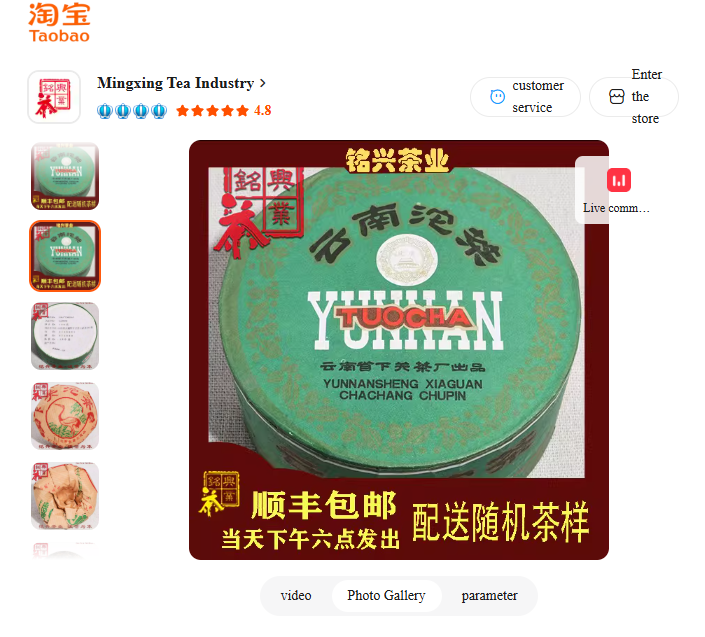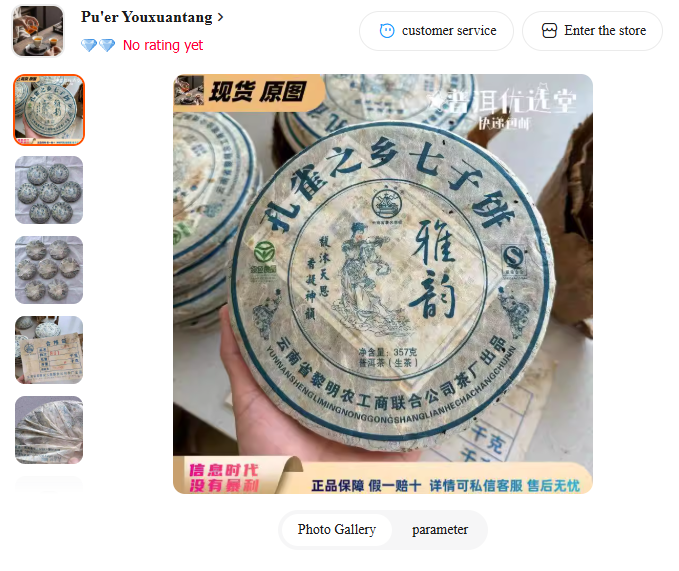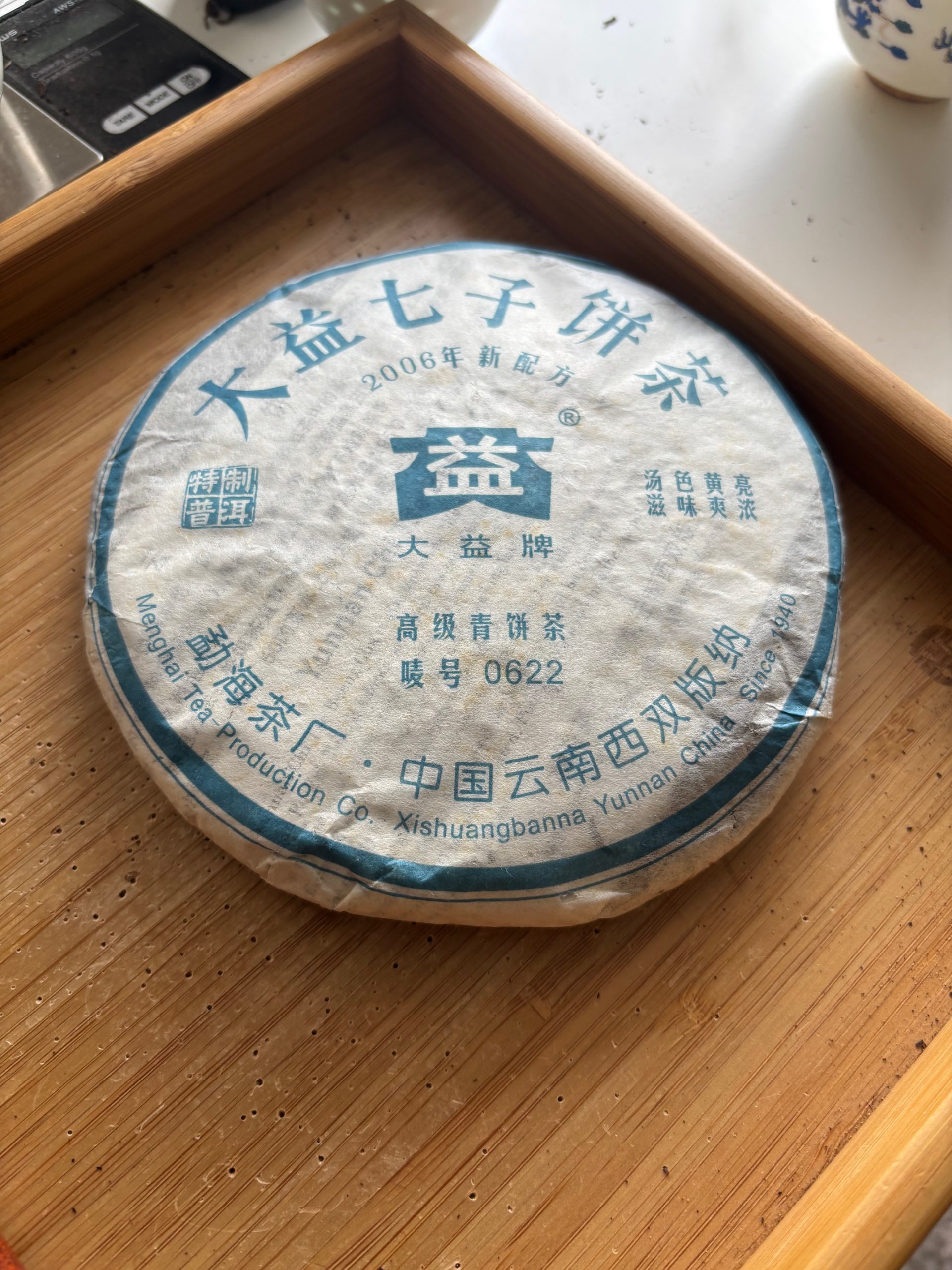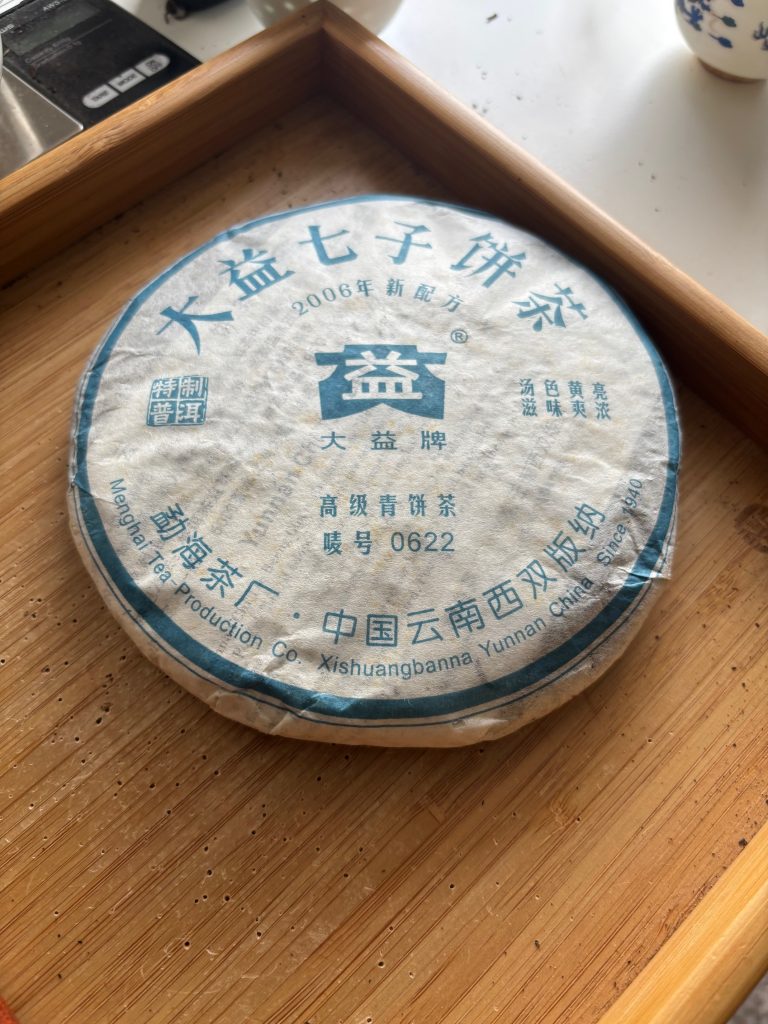
Baichatang is a boutique brand I had some limited exposure to over a decade ago. They press northern (Lincang) tea and have been around a surprisingly long time (1994). As far as I can tell from my distant perch their proprietor Ai Tian seems well known and well regarded. Like the much bigger Xiaguan they also have a history of pressing iron cakes and tuos. Because I’m a curious fellow with some disposable cash to play around with I went on a haphazard toddler-like pointing spree in picking some products to try.
My Prior Exposure to Baichatang
I think I have generally conventional preferences for pu’erh, preferring older teas from the southern Yunnan areas that have been stored in places that aren’t too cold or dry. I regularly drink Yiwu teas from boutiques as well as semi-aged to aged factory teas. As a Lincang focused boutique Baichatang defies much of that. They make Lincang tea and while I drink Xiaguan who also focuses on northern tea, I think most would consider the very large Xiaguan and its big blends its own thing.
So why Baichatang? Despite being deep into the tea hobby for many years and aware that these explorations often end up being a chore and money suck, I’ve never quite lost my own desire for exploration. And the desire to try new stuff that diverges significantly from my usual pu’erh diet sometimes overwhelms the more comfortable stable choices. My prior experience with Baichatang consists of a long list of two teas both which struck me as well above average at the time. One was the 2003 Baichatang 4th Generation cake that Geraldo used to sell. When I bought these in 2015 the material seemed both different from my usual brew and well above average. I ended up with a few. The other tea I tried was a 2008 Iron Cake that Tea Urchin used to sell which also stood out as thick and above average quality. I’ve flirted with getting the 2003 into my rotation but it’s almost entirely western storage has not helped its biological maturation.

Mapping Out Baichatang & Generations
Baichatang uses recipes that have four digits but they follow a different format. In BCT’s case, the last digit represents the generation or the pressing of it. For instance if a tea recipe ended in 3, that would mean it was the 3rd generation of that product. As far as I can tell, the earliest production by Baichatang was their Daqing line started in the 1990s followed by the Iron Cakes, mini cakes, tuos, bricks, etc.
The Teas
Their recipes follow a different format than the standard Dayi or Xiaguan format. The number at the end of the recipes means the generation.
2020 Jade Iron Cake (C)
Might be something there but far too green to enjoy although maybe a bit closer than the 2018 6th Generation. Very bright, grassy, and nutty. Reasonably thick.
2019 Aiqing 1st Generation (B)
I’m not completely positive this is the right tea but it’s my best guess. By far the best random sample tossed in and far more pleasurable than any of the other teas around this age. Lots of sweetness, significantly better depth and a mild throatiness. Some salivation. Also smoother and thicker. Compared with some of the others, there’s a bit less sugarcane and it moves more towards the fruit sweetness direction although I would not call it fruity.
2018 5th Generation Tuo 61035 (C)
Very green and sharp, not remotely close to being drinkable. Texturally interesting and it gets more tart than astringent. Still it does have some merit, like a sugarcane sweetness that coats the front part of the mouth.
2018 6th Generation (D)
The Lincang/Kunming knockout combo I feared. Simply too green for me at this moment. Sweet grass. Pushed it gets a bit tangy and drying. Brown sugar. It’s possible there’s something to this, but it’s nowhere close to anything I’d want to sip.
2013-2015 T61033 (C)
This is smoother and reasonably thick moving towards a more herbal direction. It’s heavier, grassy characters reminds me of Yunnan Sourcing Lincangs, like their Nanpozhai or Mushucha. It’s OK but not particularly inspiring.
2010 5th Generation Iron Cake 6155 (B/C)
This is not bad but not as good as I was hoping. Thankfully it is pretty easy going down and reasonably thick. It is quite oily, moreso than most of the other teas here. While there’s still some astringency that needs to age out, it is also quite mellow and toned down despite brewing a fairly light color. Not particularly complex but decent overall.
2007 4th Generation Tuo 61014 (B)
Pretty good. Thick, herbal, honey. Still has a relatively narrow profile, but this is significantly deeper and better than the younger teas. It sill can get quite astringent but it is balanced well with a nice sugarcane sweetness. I somewhat enjoy this.
2006 7th Generation Iron (C)
From Pu’erh NW. I could immediately tell this came from Geraldo more recently. This makes me appreciate the other western storage, as this is far more drying and has a peculiar perfumey woody note I’ve seen before from his storage. While I think the underlying tea quality is decent, the tea is more difficult to enjoy than the other mid 2000s teas featured here. Tastewise it has a similar tart wood pulp and a pleasant wood sweetness but the tea presents as maybe 5 years old.
2005 6th Generation Iron (B)
From Pu’erh NW. The storage is drier than my preference but it is fairly neutral and this is a solid tea. Like a few of the iron cakes it is oily. The grassiness has mostly aged out towards a unique wood character. Character is relatively simple and straightforward but enjoyable. Good quality aftertaste. After drinking through, I looked up and this had storage from a guy named Mark, whose storage while dry I think is doing quite a bit better than Geraldos.
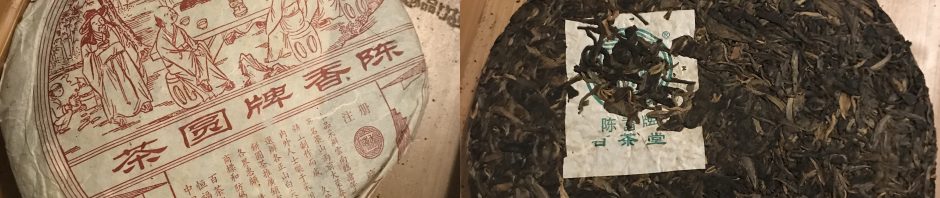
2003 4th Generation Chenxiang (B)
From FarWenwa and then stored by myself for about a decade. It has a bit more of a muddled profile and less of the simple but easy to understand profile that some of the other 00s BCT teas do. At one point this did have a bit of a storage aroma to it (like the 2006) and that has slowly come off of it. Quality of material is clearly good, some mouth and throat cool, decent depth. The bitterness is mild but there’s a tangy wood pulp astringency. It all eventually converts. I’ve tried adding this to the rotation at multiple points but the greenness is ultimately too much for me. This is OK right now but I do hope it turns a corner at some point. Perhaps when it is around 30-35 years old it’ll be more ready.
My Own Thoughts
After this tasting, my prior opinion has not changed significantly. No tea here was above a B in terms of enjoyment and those that were B are priced well above my established benchmarks that would earn a similar grade. Similarly my average rating for a session was between a B and a C, a full letter below my average rating for raw pu’erh. That inherently makes the tea featured here less interesting. However, my own preferences are not the same as everyone elses. I am not a material maximalist and suspect I prioritize a tea’s age and storage higher than the average pu’erh drinker. Many of these teas also play directly against my natural biases against Kunming or other dry storage Lincang tea.
What is interesting is that Baichatang diverges from the popular Taiwanese boutiques by pressing tea from a different area and they’ve been at it for an impressive 32 years. Despite pressing iron cakes and tuos the tea is also definitely different from northern/western staples like Xiaguan and Mengku. There is a very clean, clear feel to their products that is simpler but has a significantly different appeal than the more heavy blends from big factories. The iron cakes and tuos are also more loosely pressed than your standard Xiaguan products. Interestingly even though Kunming has a reputation for thinning out teas, many maintain a nice thickness especially the iron cakes which can have the odd match of oiliness and astringency. If I were to further explore the brand, I’d try out more from Guangdong or hotter climates. So in what will amount to a very lukewarm endorsement: I do not hate these teas.
| Tea | Rating |
VOATO (Boutique)
|
| 2020 Jade Iron | C | -1.5 |
| 2019 Aiqing 1st Generation | B | -0.5 |
| 2018 5th Generation Tuo 61035 | C | -1.5 |
| 2018 6th Generation | D | -2.5 |
| 2013-2015 T61033 | C | -1.5 |
| 2010 5th Generation Iron Cake 6155 | B/C | -1 |
| 2007 4th Generation Tuo 61014 | B | -0.5 |
| 2006 7th Generation Iron | C | -1.5 |
| 2005 6th Generation Iron | B | -0.5 |
| 2003 4th Generation Chenxiang | B | -0.5 |