Category: Tea Musings

  • Five More Things. Blogs, Blogs, Blogs, Storage Matters, & The Comfortable Mafia

    Five More Things. Blogs, Blogs, Blogs, Storage Matters, & The Comfortable Mafia

    Five things I like & dislike.

    Taiwan Tea Odyssey

    Taiwan Tea Odyssey is the most interesting new blog that’s started in a long while and one that works well in conversation with long running blogs like Marshaln. Started in 2023, it details Alex’s excursions in the Taiwanese tea scene as well as his personal exploration into tea, primarily focused on pu’erh. Due to becoming a father in 2023 I got caught up to the blog a bit late, but it is all well worth reading. I got to meet Alex when I visited Taipei in 2024 and he’s an inquisitive person and thorough researcher. High recommendation and also a great instagram follow (@alexbtw886). A must read for anyone into pu’erh or considering visiting Taiwan.

    The Return of the Blogs: Substacks

    Alex’s blog is a good ol fashioned wordpress, but there’s a whole rash of blogs using the newer platform, Substack. While Discord has been a boon for tea conversation, most of the information is private and not formatted in an easily searchable way. That’s why it’s been nice to see a rebirth of tea blogs in a new form. Check out the following:

    • Short Little Steeps – Seo who has become one of the most interesting new vendors, Listening to Leaves. Seo blogged on and off on blogspot before and has migrated it all to this substack.
    • Wet Leaf Dry Leaf – I’ve known Hanji for about a decade and he’s one of the few veteran tea drinkers who still is super into Taiwanese oolongs. Good combination of oolong and pu’erh content.
    • Chili – A very young but well traveled pu’erh fan. Interesting because Chili actually goes to the mountains and has more varied experiences than anyone his age has any business having.
    • Skylarke – I’ve had tea with Skylarke a few times and she drinks from quite a few categories. The blog is still young but she has a nice write-up scoping out the Hongcha scene.
    • Water Friend – A blog mostly focused on Heicha.
    • Erdaifu  – A blog mostly focused on another unsung category, Dancongs.
    • The Path Less Taken – A blog mostly focused on Liubao.

    Blogging is a practice where many fall off especially by the six month mark. Some of these will or already have but there’s still some interesting content even if it’s just a handful of posts.

    Tong.

    Vendors Pretending That Storage Doesn’t Matter

    Vendors have not really been trend setters when it comes to storage. Once they sell the tea it is the customer’s business. Sure you have the occasional weirdo vendor with strong opinions like Hojo, but it’s been more of  a hobbyist lead space. I’ve seen and heard of vendors saying that we significantly overrate or fuss about storage. Yadda yadda, different expressions of the same material. I don’t agree with this attitude. Storage absolutely matters and not just when it is convenient. Unless we are talking about young pu’erh it is an important component for how a tea ends up. And depending on the tea it can absolutely make or break a tea. Pretending it does not matter is lazy.

    This is also not a specific shot at something I’ve read or heard, just a response to numerous vendor murmurings throughout the years.

    Accessible Dayi

    Pu’erh is a diverse tea and the culture around it is as well. You can think of pu’erh culture as a ton of different bubbles. Depending on which circle(s) you exist in, you can be exposed to vastly different thinking on the same topics and it’s important to at least understand and acknowledge the exposure of certain beliefs and opinions over others. If you have boots on the ground in Yunnan and are going up to the mountains you’ll be exposed to different opinions centered around younger pu’erh. This of course extends to brands as well. Dayi tea is not the favored brand in all pu’erh circles and it is absolutely possible to be a tea or pu’erh fan and drink minimal Dayi but it is an extremely prominent brand with a large footprint in quite a few circles.

    In the west we are certainly not exempt from bubbles and bias. The western tea community’s interests shift over time but I’d argue that the west has been comparatively boutique focused when compared with the tea scene in Taiwan or Hong Kong. There’s often a rush towards the rare and perceived higher-end offerings often at the expense of skipping more meat and potato factory pu’erh. I think having a major factory like Dayi around and accessible helps to counterbalance the western scene. There’s plenty of room for both boutique and factory, and Dayi helps to represent a popular type of pu’erh. Rather than a small operation, they represent both a historic growing area (Menghai County) as well as a high-volume factory with a long history of producing both raw and ripe. I also believe Dayi makes higher-quality, more accessible tea than many factory alternatives like Xiaguan or Mengku.

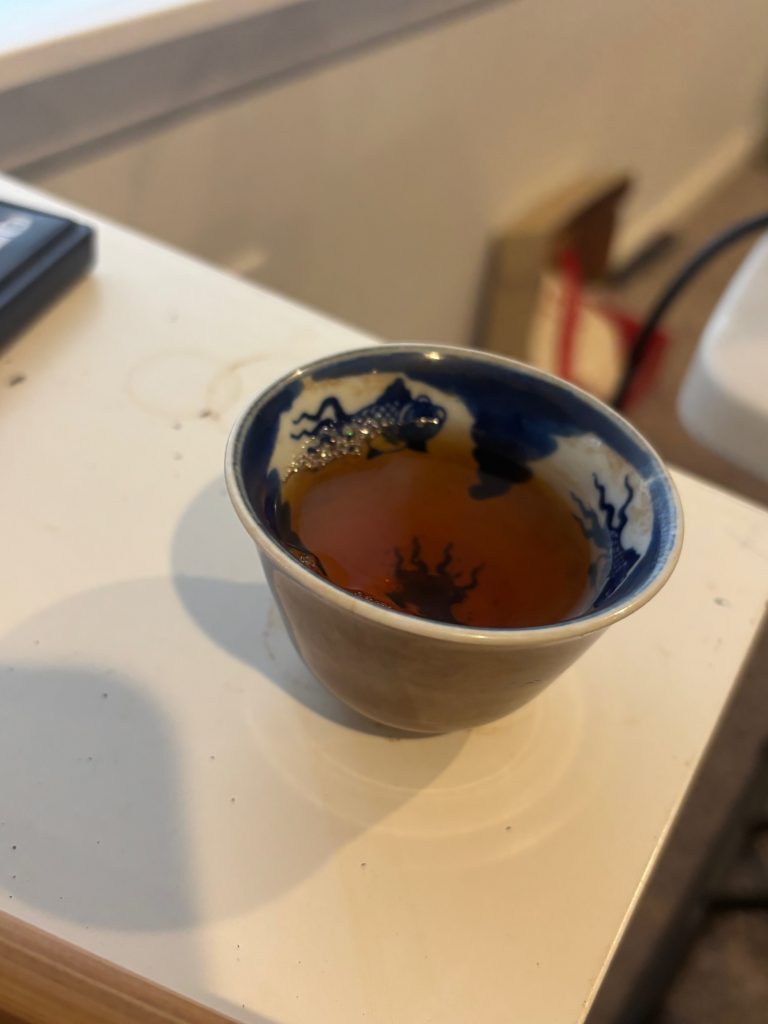
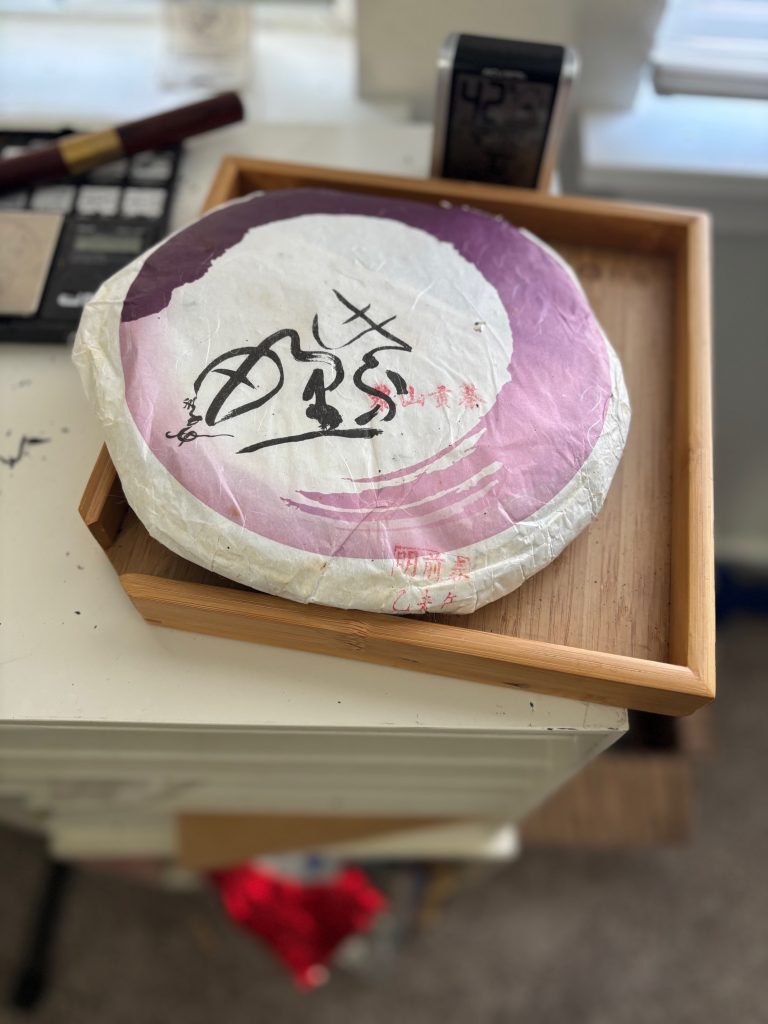
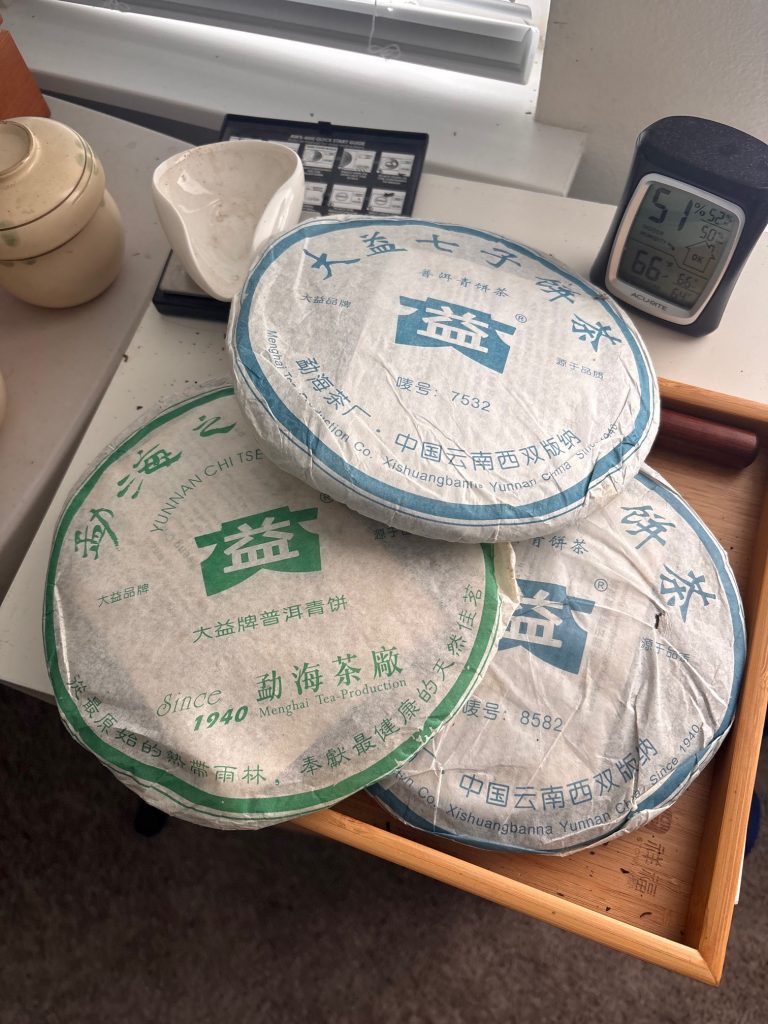
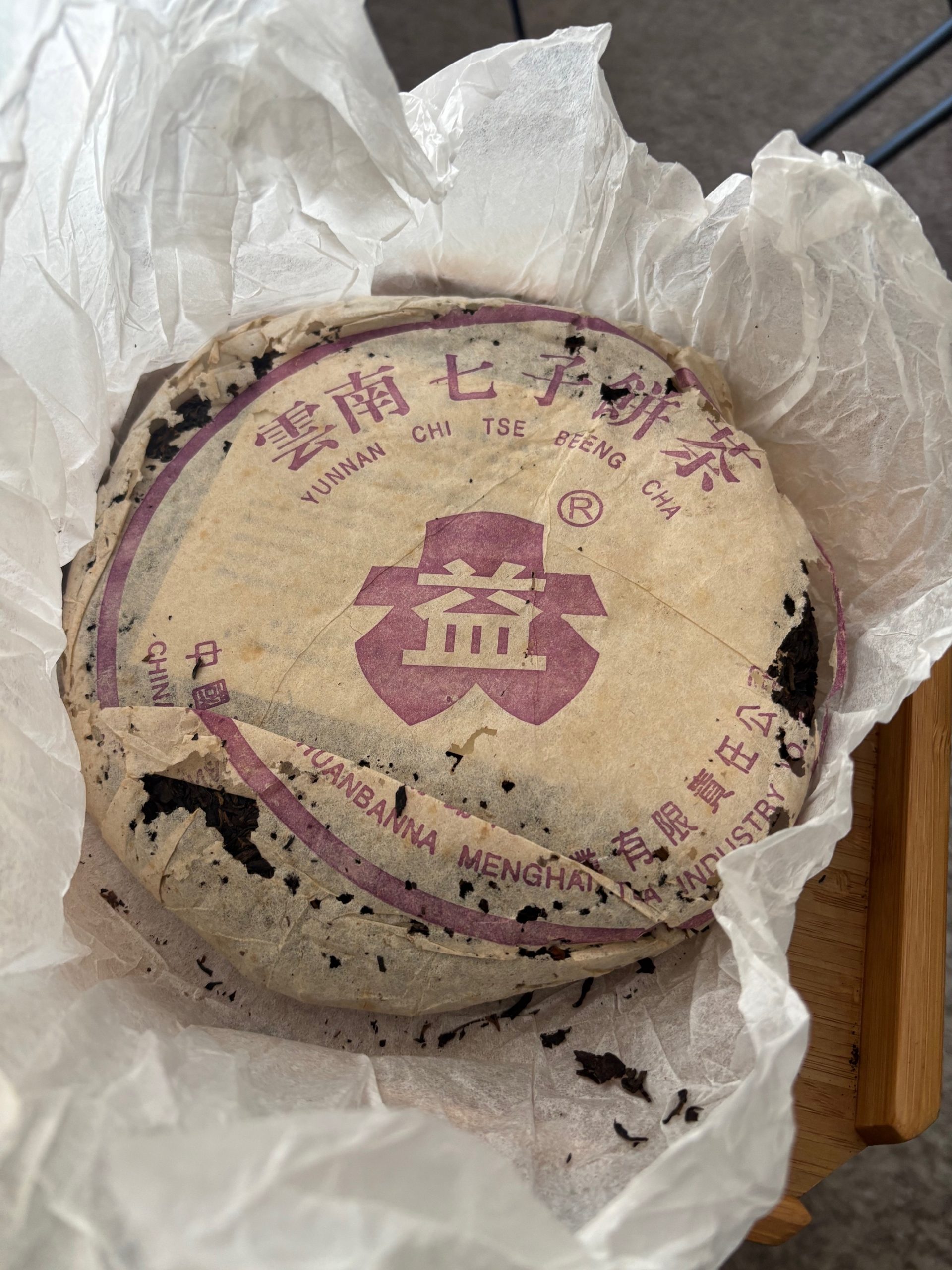
    2006 Dayi

    The Comfortable Mafia & Full Body Reviews

    I’ve seen some people say that the comfortableness of a tea is the most important factor about tea. I think this is an odd starting point. Obviously a truly uncomfortable tea is disqualifying (stomach pains, anaphylaxis, etc), but if I took pure comfort to its logical endpoint I’d end up with some  odd conclusions. In the max comfort universe, my GOAT would be something like traditionally stored Yee On ripe tea, which is much more comfy and easy going than trash like the 1988 Qingbing. In the real world, does that make the Best Taste a better tea than the 88 QB? Absolutely not. As much as I enjoy my traditionally stored tea this would also be a very boring world and not one I wish to live in.

    I don’t deny there can be some somatic impacts for tea and pu’erh. These can be important but they don’t appear in the vast majority of tea or pu’erh and they are very rarely the only thing worth talking about with tea. They’re also not simple to grasp in a consistent manner and I think it’s pretty obvious there’s a lot of overreach when it comes to newer drinkers putting their thoughts online. If I see a new drinker talk about minuscule body impacts that sound like a local massage place’s sales copy about releasing shoulder tension and tingling in their left ankle, I start to question what we are all really doing here.

    You can talk yourself into pre-determined effects. Placebo effects are absolutely real. And if I repeatedly told myself young pu’erh from X Brand that is not well liked would hurt my stomach and kill me, my perceptions of the tea would be impacted. Or if I focus really deep down hunting for every minor quality to a tea that I know is well liked, it is given a significant advantage that is not granted towards other teas. For a veteran with years of experience I give a certain degree of trust, but I’ve seen plenty of impressionable newer drinkers jump to conclusions about what is good or bad uncomfortably quickly, based off what I suspect they think they are supposed to like or dislike.

    The reality is you can setup tea for success or failure and make just about any tea uncomfortable. Leafing too hard, drinking several teas beforehand, drinking on an empty stomach, etc. If you really want to get something out of a sample it’s important to at least give tea a reasonable shot at success. Otherwise, why bother? The same way you can setup a tea for failure and stomach discomfort you can make plenty of mediocre or low quality teas reasonably comfortable. In the end, I think some people are too aggressive in attributing certain things to the tea especially on a granular steep by steep level of detail. It is reasonable to say a tea is energizing or even upwards or downwards.

  • Tea Dashboard

    Tea Dashboard

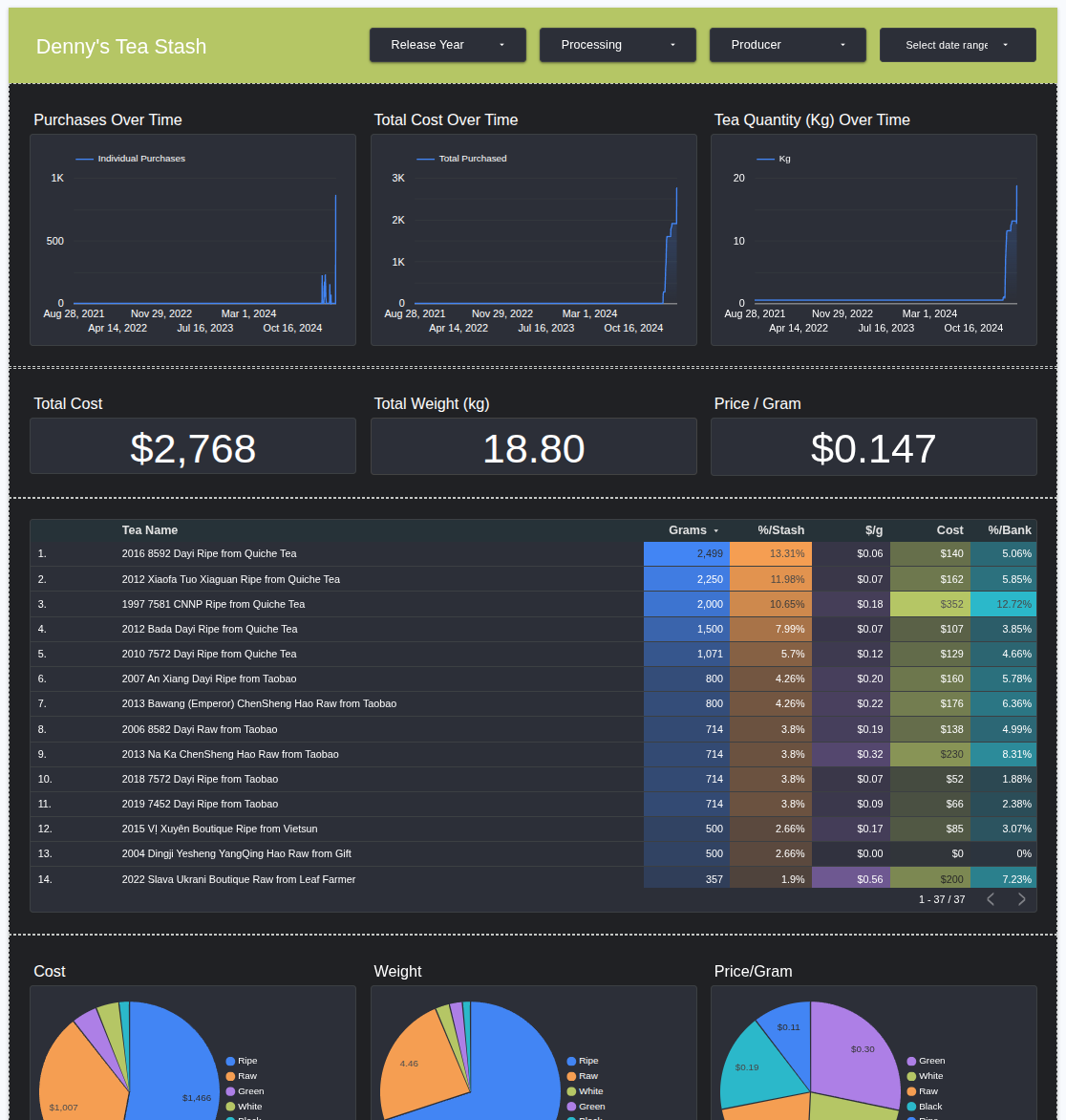
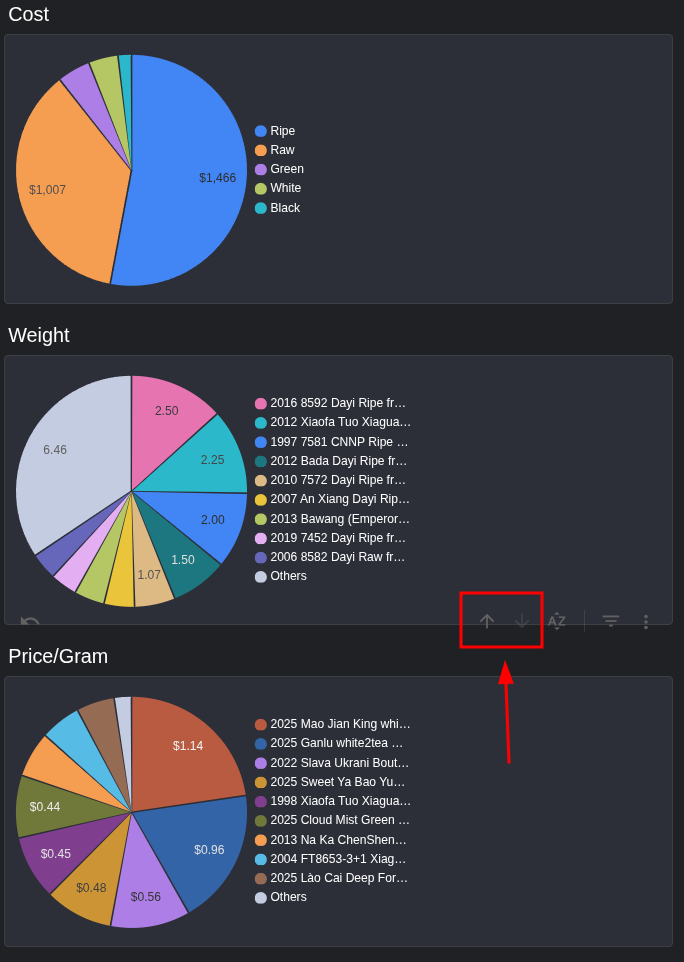
    Like with all of my projects, this is a work in progress. You can also see from the image below that the dashboard view on our blog is a bit wonky.

    Please click through to set up your own filtering! This app is a little wonky — clicking an item will cause it to be a filter for the whole dashboard, so if you click anywhere that says “Ripe” you’ll only see results by ripe.

    Likewise, there are little up and down arrows on the upper right of each element, these let you drill down into specific results, so you can filter by ripe, then drill down into ripe by producer and the name of each tea.

    Here is the drill down button to use, just hover over an element and click the up or down arrow.

    I’m sharing this publicly for now to do a video but I’m not sure if I’ll keep it up long term. More data (and tea!) to add.

    To do:

    I need to better categorize boutique vs factory tea while accounting for a general lack of “factory tea” for white/green/black/oolong, which I enjoy. I think this dashboard would be much cleaner / simpler if you only wanted to feature sheng.

    I want to wire this up to other views for me to input tasting notes, referencing my stash AND samples, enabling me to enrich my tea info further. Doing averages and frequency counting would also be very interesting — James counted for a month to get a sense, and that sounds hard to me, so figuring out a way to record sessions extremely quickly would be awesome.

  • Taking Your Tea Drinking To The Next Level

    Like many western tea hobbyists I have a strong openness to culinary experience, translating into trying new (to me) foods. At one point in my early 20s I was introduced to a place called Sichuan Cuisine in Seattle. They have a couple locations in the area and I really liked it. It was something new and different from the Cantonese cuisine I had grown up with. It had distinct dishes, like twice cooked pork, boiled fish, and Dandan noodles. I was introduced to the “mala” spice of both spicy and numbing. I brought my parents and then-girlfriend to it, who all liked it as well… After that, I tried Sichuanese food at a variety of other places, most of which were similar to my introduction. Fast-forward several years and a new well known Sichuan place was opening up in Seattle that had roots in the San Gabriel Valley (one of the best locations for non-Cantonese Chinese food in North America) called Chengdu Taste. When I looked at Chengdu Taste’s menu it looked somewhat similar to Sichuan Cuisine. They had a few different things but many of the dishes were the same (Kung Pao Chicken, Boiled Fish, Twiced Cooked Pork, etc.). However, once I visited Chengdu Taste the differences between the two restaurants was obvious. It forced me to realize that Sichuan Cuisine was a tapered down version of what the more pungent Chengdu offered. The spice levels at Chengdu Taste were not only much higher, it was way more numbing and it was less sweet and salty. For some dishes it mattered more than others.. In a dish like boiled fish, rather than a scant eighth teaspoon of Sichuan peppercorns, the fragrance of the peppercorns wafted up and the numbing was many many times more intense than versions I had previously.

    I had gotten hints of what the more intense version was simply by reading and making them, but it really took trying Chengdu Taste to understand what the flavor profile could be. You can learn by reading, but experiencing something is better. I like to make some of these sorts of dishes, and tasting Chengdu Taste once, immediately improved my own versions of these dishes.

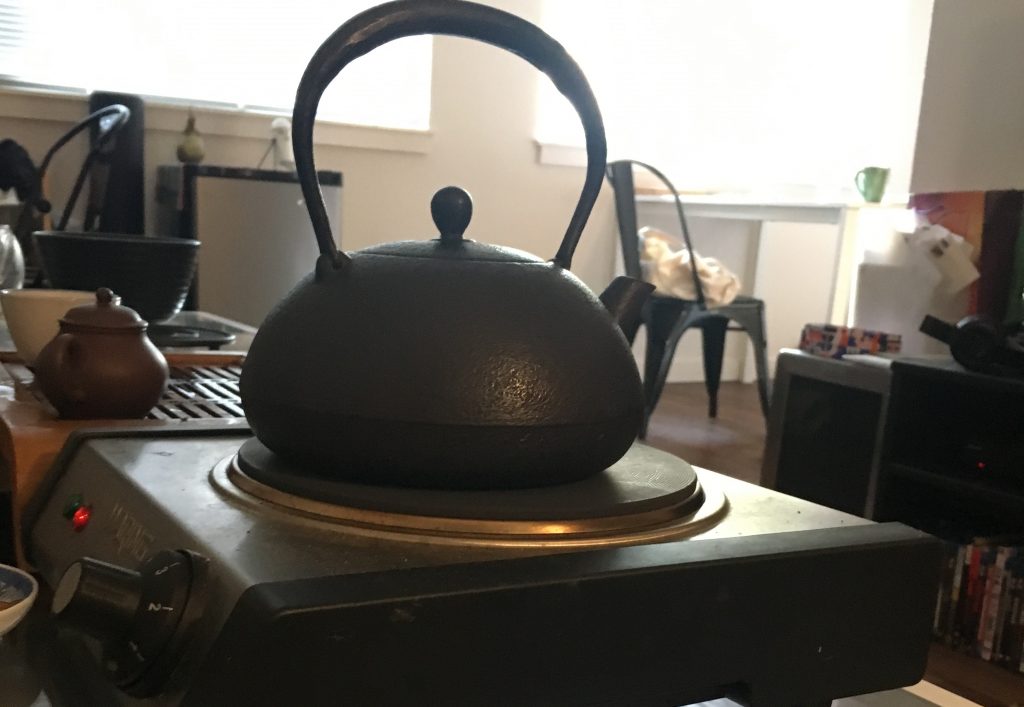
    Tetsubin

    Learning With Wuyi & Aged Oolongs

    Sometimes learning and leveling up with tea more closely resembles a linear pattern… Grinding, drinking lots of different samples, taking notes, and getting repetitions. Doing this, you’ll slowly improve naturally. Other times it doesn’t and it takes getting introduced to something superior and/or different at the right time. In the case of my own appreciation of Sichuan food, this was an immediate realization and a quick level up. Just a few bites in I realized I was in for something very different from the many experiences I’d had with other Sichuanese food before. I’ve had similar realizations in aged oolong as well as Wuyi. In the case of both of those tea types it was through Origin Tea (see: The Box), who had a short but glorious existence.

    With Wuyi tea I had mostly drank alright stuff from places like Yunnan Sourcing until I tried Tony’s $/g Shuixian which opened my eyes to what a Yancha could be. The tea was very good, but it’s also not something that can be communicated easily through tasting notes. The base notes were similar to an average Shuixian but the tea was richer, thicker, more textured, and better than anything I’d had before it. This hasn’t necessarily reduced my enjoyment of other Yancha, since the good stuff remains expensive and very hard to get. I’m perfectly happy drinking decent enough teas from WuyiOrigin. And even if you don’t drink the good stuff every day having experience with it helps to contextualize, get a strong reference point and form a fuller picture of the possibilities of tea. 

    At what point you try the tea is important. In the past, I’ve served what I think is pretty nice pu’erh to newcomers and I can tell that they fail to impress in a way that something cheaper and more flavor forward might have (various oolongs are usually best). It is not just about providing the tea, but about the person drinking tea. What sorts of teas have they had? Have they had pu’erh before? If the $/g Shuixian from Origin was my first Wuyi tea ever, I definitely would’ve liked it. But it also probably wouldn’t have been as meaningful as it ended up being. The grind of lesser Wuyi teas was helpful in allowing me to distinguish what made Origin’s Shuixian a cut above.

    Yinji Teas
    Raise your levels with these teas! OK. Maybe not that high.

    Tea w/Other People & Pushing Other’s Baseline Up

    Drinking and learning from those with more experience is a great way to learn. In the west many of us are very isolated and while we can certainly improve and appreciate tea on our own, learning as a tea hermit is different from learning in a more social environment. Yes reading Marshaln’s blog front to back is a great way to learn and online is better than nothing, but there is quite a bit missing when you are doing tea strictly online. There is not necessarily a surefire way to “level up” in tea easily, but you improve your chances by aiming for good tea & interacting with others, ideally those who know more.

    If you want to introduce someone to more serious tea or push a newer drinker, be thoughtful about their experience with tea and try to go a level or two up. If someone is not a tea drinker or has never had mediocre quality loose leaf tea, it usually doesn’t take too much to push their palate and find something different or interesting to them. If someone drinks more ordinary oolong everyday, try introducing a really nice Yancha or aged oolong. If someone is just getting into pu’erh with younger tea, serve something nicer that you don’t think they may have had like an older tea. I suspect most who are reading this blog have access to far better tea than 99% of the western world. This makes you qualified to help a lot of people reach higher tea levels.

    The very low baseline tea level for US tea drinkers (probably western?) is likely a reason why so many inferior vendors exist. Even these vendors can impress people with slightly less crap loose leaf tea if a person’s only tea experiences are old tea bags.. These unimpressive vendors are technically raising people’s level, but we can and should aim higher.

    Lastly, some people will also taste or get introduced to a certain profile that is considered better and not see the hype or not care for it. Other members of my family still love Sichuan Cuisine, despite a couple introductions to the (IMO) significantly better Chengdu Taste. This is fine.. After all, everyone has their own preferences and even if someone recognizes something as better it doesn’t always equate to enjoying something more.


  • Hobby Crossover in Western Tea Culture

    On instagram a few years ago, I was looking at a tea profile and immediately felt a sense of familiarity that dated back. After massaging my brain, I realized I knew them as an online personality from Blizzard RTS gaming that I used to play… An extraordinary random and tangential connection to something that really has nothing to do with tea. However, how coincidental is it actually?? If you’ve been around the western tea scene enough to learn about some of the participants, you’ll know it’s an eclectic group. Over the course of my tea journey I’ve been fascinated and occasionally befuddled at the other interests from the serial hobbyists. (more…)

  • Storage is Wicked. Long & Short Feedback Loops. Innovation in Pu’erh Storage

    David Epstein’s book Range makes the case for generalization in a world that has become increasingly specialized. One of the ways the book categorizes areas of interest are as wicked and kind environments. Kind environments are where information and feedback is very available, patterns repeat, and situations are more constrained. Examples of mostly kind learning environments are golf or classical music. Wicked environments are inherently trickier, noisier and typically involve situations where not all information is available. Conditions are dynamic and involve other people and judgement where feedback is not automatic. And when feedback is given it may be partial or inaccurate.

    (more…)
  • Missteps & Regrets on TeaDB

    In the five years of TeaDB, we’ve made plenty of mistakes and said countless of dumb things in our hours of airtime on TeaDB. This is a list of areas where in retrospect I feel like I would’ve done stuff differently. (more…)

  • Grams Consumed: Grams Bought. A Relatively Simple Ratio to See If You’re Buying Too Much Pu’erh

    Cakes upon cakes. Filling up fridges by the tong.. Filling up apartments by the fridge. We’ve all seen that instagram. Some may buy a pair of cakes, one for aging and one for drinking.. There’s also the stamp collector who owns 250 different cakes including the entire 2015+2016+2017 White2Tea & Crimson Lotus Tea line. The tong (+1). The two tongs (+1). For the obsessed mind, it is all too easy to buy and accumulate lots of tea. (more…)

  • The Amazing Health Benefits of Pu’erh Tea [Episode 256]

    In the most anticipated TeaDB episode of all-time, James & Denny discuss The Amazing Health Benefits of Pu’erh Tea. The three health benefits are: (1) Aids digestion, (2) Weight Loss, and (3) Improves Memory.

    Music:
    Cool Blast – Disco Ultralounge by Kevin MacLeod is licensed under a Creative Commons Attribution license (https://creativecommons.org/licenses/by/4.0/)
    Source: http://incompetech.com/music/royalty-free/index.html?isrc=USUAN1100281
    Artist: http://incompetech.com/

    Airport Lounge – Disco Ultralounge by Kevin MacLeod is licensed under a Creative Commons Attribution license (https://creativecommons.org/licenses/by/4.0/)
    Source: http://incompetech.com/music/royalty-free/index.html?isrc=USUAN1100806
    Artist: http://incompetech.com/

    Outro (White Smoke)

    Featured Tea: https://white2tea.com/product/2017-old-reliable/

  • Five More Things I like & Dislike. Pu’erh Vendors on YT, Seattle, Gambling on Dayi..

    Things that have been occurring in the tea world that I like and dislike.. (more…)

  • Settling Down into Tea & Other Reflections

    The past year I had a couple goals. The first was to cut down on tea purchases and the second was to settle into more normal purchasing and consumption tea habits. These were motivated by life circumstances and a desire to be more balanced with my tea habits. I already own a lot of tea, much of which I enjoy drinking, and my behavior should reflect that. With these basic thoughts in mind, I’d say I’ve been partially successful thus far. There have been a few impulsive extra cake splits and purchases than I would’ve liked and the obsessive mind will search for endless ways to get around tea rules (cake splits, sample buys), but by and large I’ve bought a whole lot less tea this year. (more…)