Tag: Bana Tea

  • Famous Tea: 1996 Zhenchunya Hao

    Famous Tea: 1996 Zhenchunya Hao

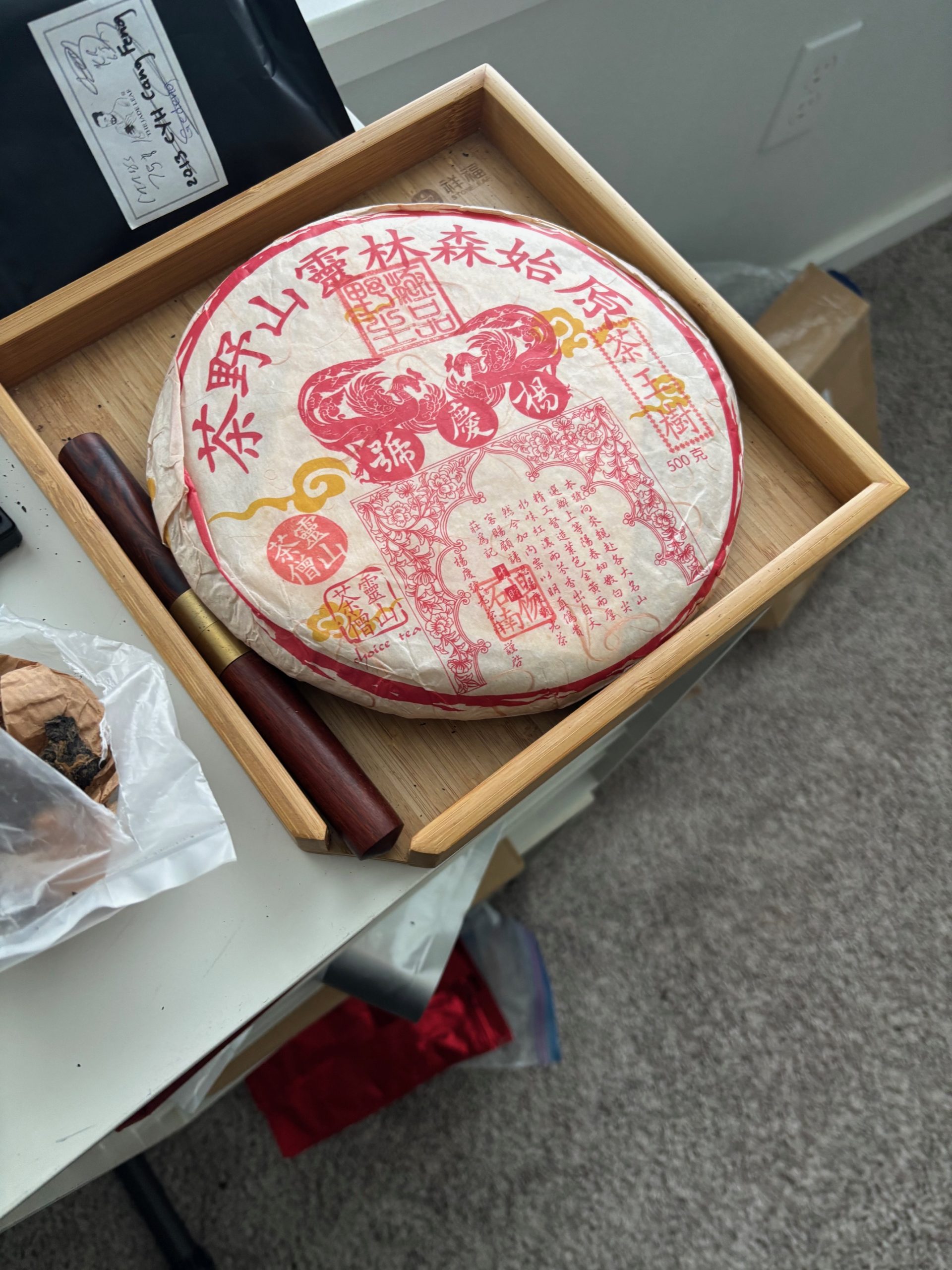
    The 1995/96/97 Zhenchunya Hao are a series of famous cakes made by Lv Lizhen (from Taiwan) in collaboration with former Yiwu village head Zhang Yi. They were made in the midst of a several decade run of pu’erh factory dominance and were created as a callback to the Haoji era predating WWII, where brands (SPH, TQH, FYC) based in the six famous mountains/Yiwu area made pu’erh. The ZCYH also signifies the beginning of a new era of pu’erh where smaller, boutique operations started to operate eventually growing into what the pu’erh industry is today.

    • Supposedly some of the earlier batches of 1995 were trial runs. There is also supposed to be considerable batch variation. This batch was made in 1996 and pressed in 1997 with materials from Manxiu, Luoshuidong, excluding Mahei.
    • Lv Lizhen continued to press pu’erh later under his own label. As did Zhang Yi (Shunshixing).
    • Major thank you to Linda Louie of Bana Tea for selling me a sample of this to drink with Denny and to write this up.

    Age & Storage

    One reason I sought out the Zhenchunya Hao was to get an idea of how boutiques are aging. It is now possible to find Taiwanese boutiques (CYH, YQH, XZH, BYH) with tea around 20 years old. But it is very rare to find 25+ year old boutique tea. The ZCYH is very close to 30 years. It’s also a tea with a mixed reputation and not necessarily unanimous praise.

    For anything significantly aged, storage plays a key component in how the tea presents. In the episode recorded, Denny and I were not familiar with how the tea was stored although it was clear it was kept dry. After we recorded the episode I asked Linda and received the following information:

    1. 1997-Early 2000s – Hong Kong w/Vesper Chan.
    2. Early 2000s-2017 – Kunming.
    3. 2017-2025  – Los Angeles

    Preparation

    I kept the sample in my pumidor open for several months before our episode.

    I tried to calibrate my tastes and had some of my favored early 2000s Yiwu boutiques before the session, teas like the 2003 Wistaria Zipin, 2003 Chenyuan Hao Tongqing Hao, and 2004 Biyun Hao Manzhuan.

    A couple things I was looking out for:

    1. Sleepy or dying. While I don’t have prior experience with this to compare with boutique teas there’s an air of uncertainty about their aging trajectory.
    2. Aged oolong-notes. I’d heard murmurs that this may have some aged oolong notes.

    Further reading:

    1. https://marshaln.com/2006/08/friday-august-11-2006/
    2. https://marshaln.com/2006/12/friday-december-1-2006/
    3. https://vieillesvignes.substack.com/p/aged-tea-exploration-beginnings-of

    Brewing

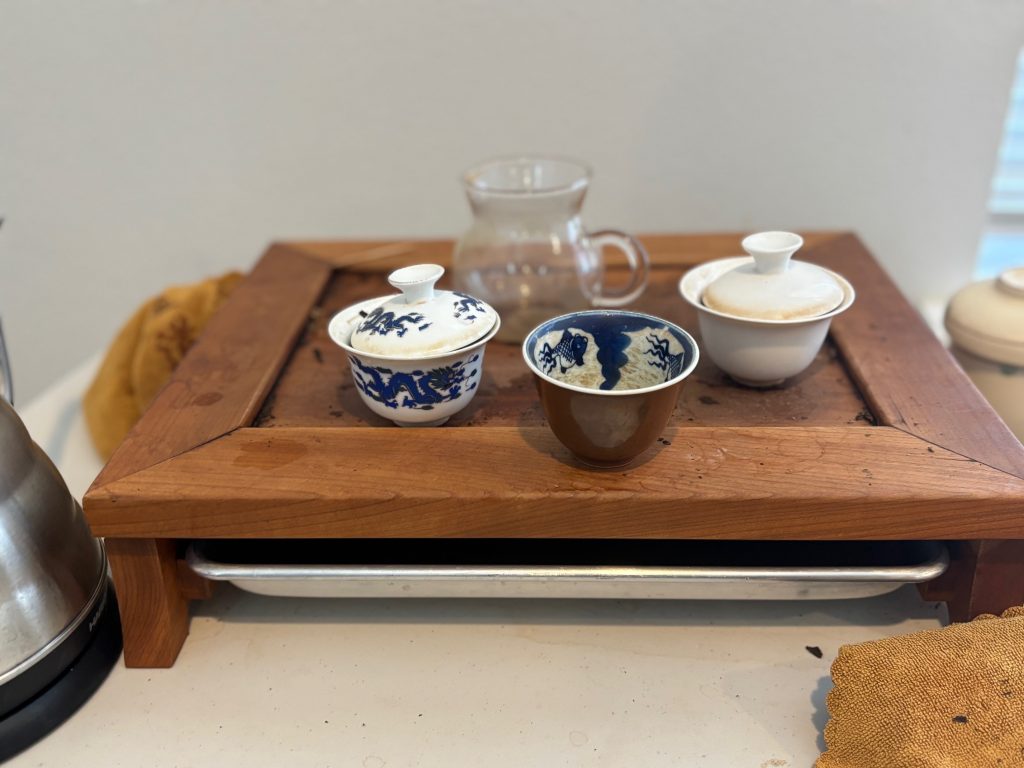
    I brewed in a gaiwan, about 5g:75ml. Why a gaiwan for such an old tea? I have been using a gaiwan very consistently and I think there’s something to be said for brewing in your comfort zone. Oftentimes the best brewing device is the one you are currently using the most. I kept the steeps short and slowly pushed them out as I saw necessary, boiling before every steep. The leaves were already looseish. I don’t have a great feel for the compression of the cake but I’d guess it is looser than factory tea (stone pressed).

    The Session

    Steeps 1-2.

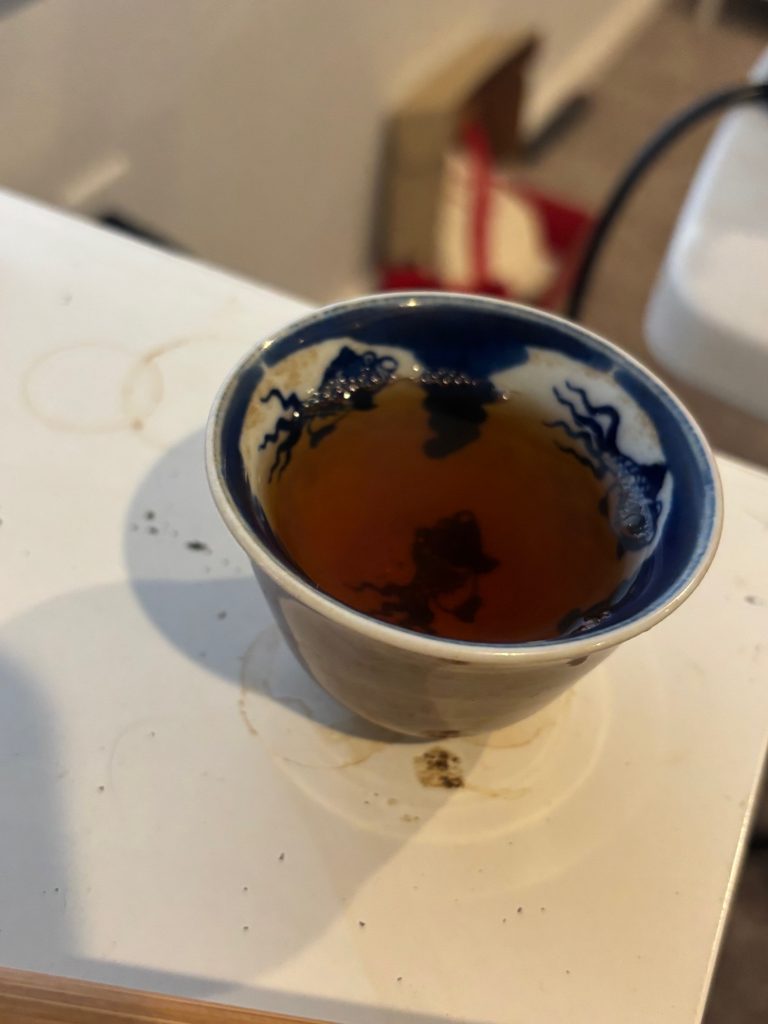
    Starts out very concentrated and dense. This tea is very much alive from the get-go! Thick but not oily. The taste is heavy wood with a nice sweetness that really lingers. Resin, tree sap, very impressive aftertaste. The aftertaste I feel tips its hand at being an Yiwu tea. Rewatching our video, I think my solo session is starting out even stronger.
    Steeps 3-4.

    Loses a touch of density but more brightness comes out. A bit of cherry combined with the wood. These steeps are the most reminiscent of aged oolongs. A very pungent and intense aged oolong. The aftertaste is very nice and coats the back of the mouth and throat, very deep. Denny and I noted some slight tanginess in our session, which do not show up here.

    Steeps 5-7.

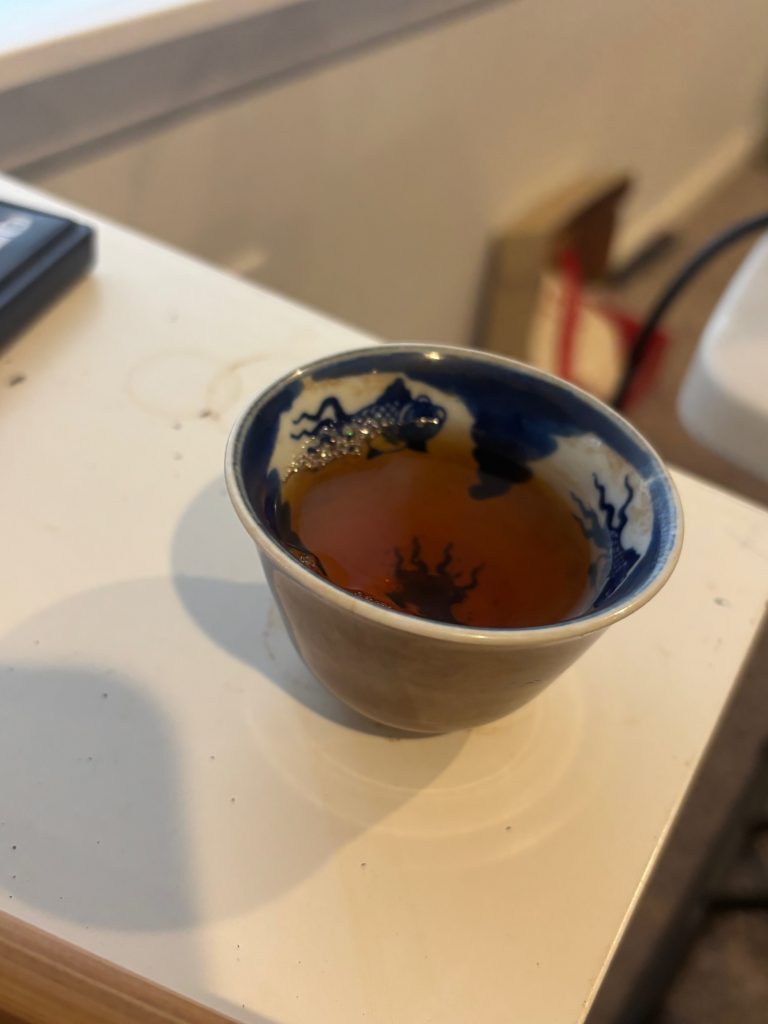
    As I add time it picks up back some density. Note-wise it moves away from the brighter notes into pine and resin, and refined, antique woody notes. There are hints of brightness but the brightness albeit less so than our prior session. Having the full dose on my own I am struck by the strength of the tea.
    Steeps 8-10.

    Done a bit later in the day. Variation on what has happened earlier. These are very pleasant steeps that are very woody and reasonably active and felt deeply.

    Steeps 11+.

    Done over the course of a couple days. Similar to what has come earlier.

    Processing

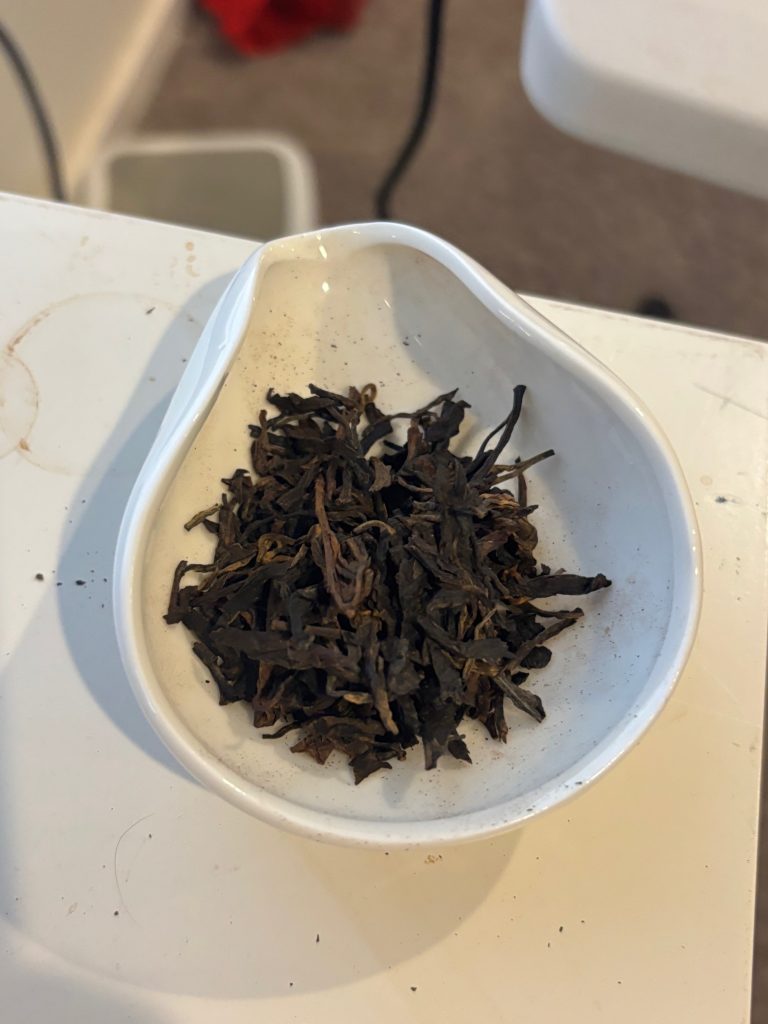
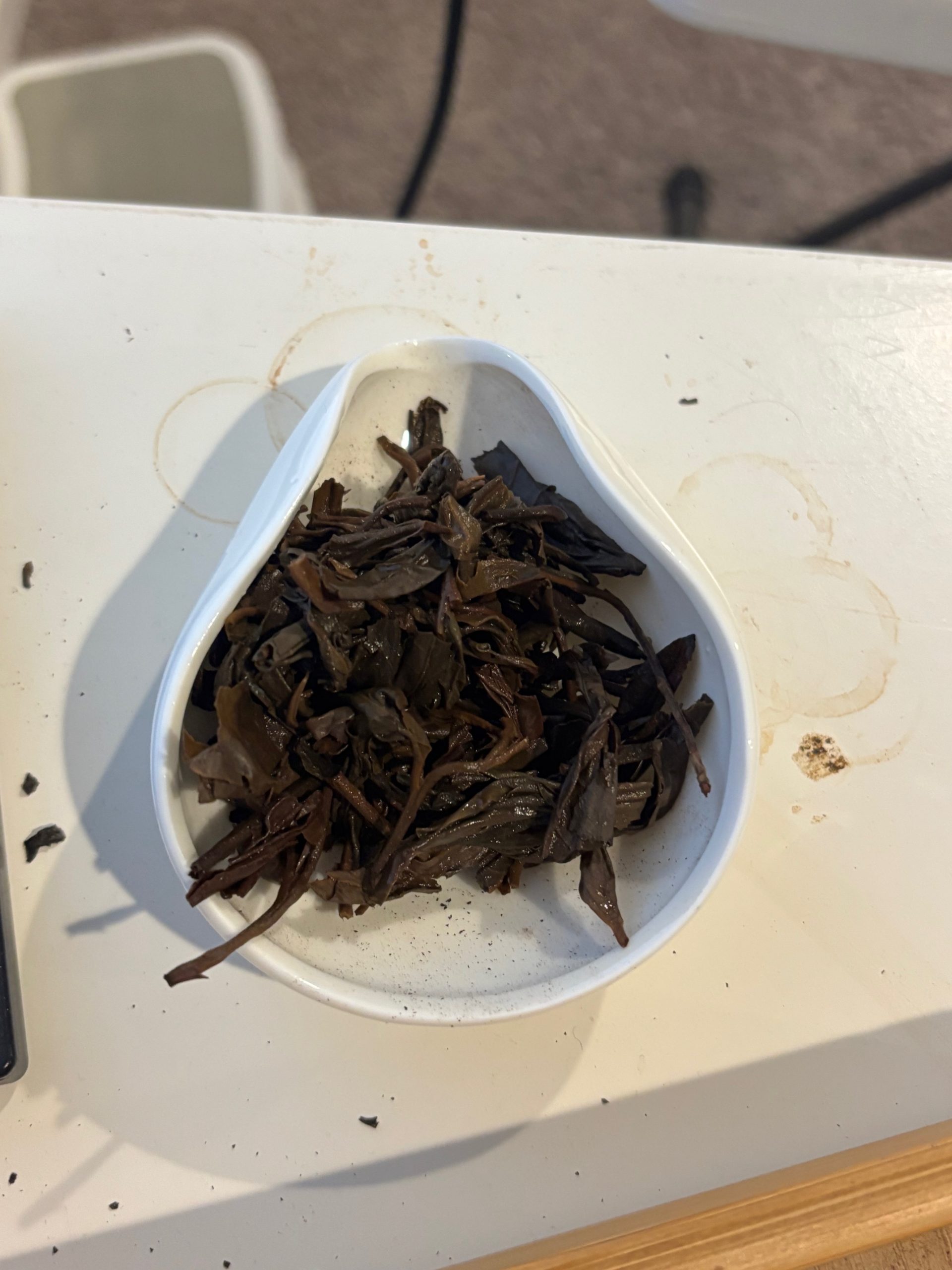
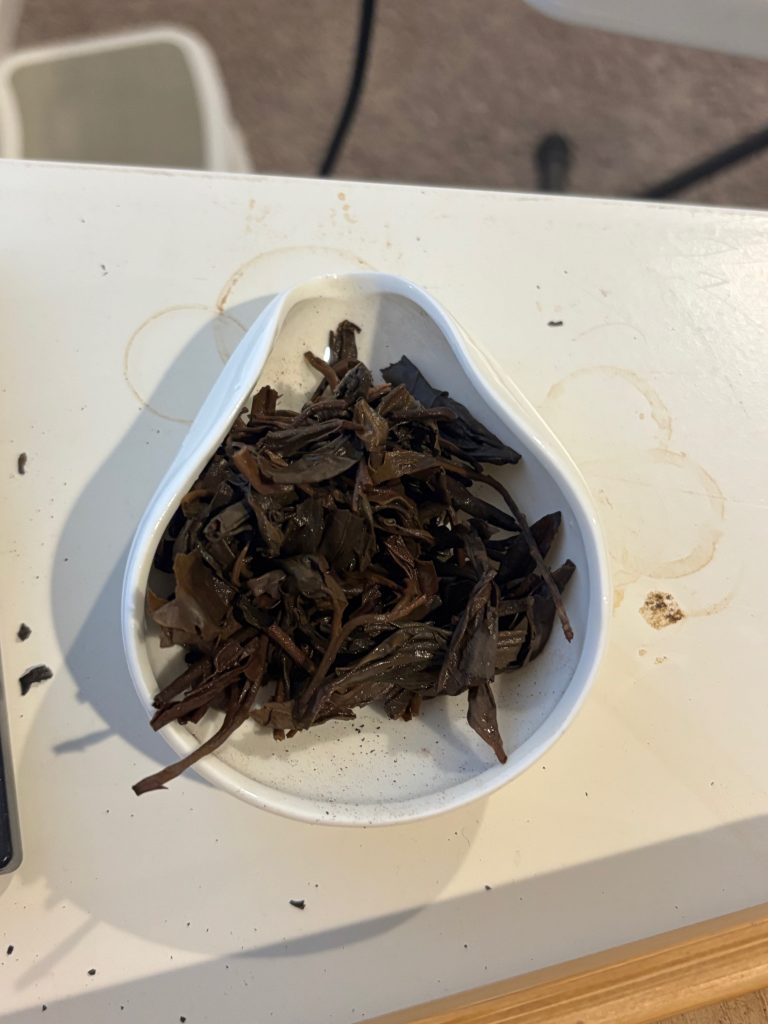
    I do not detect much evidence of oxidation. The leaves are thick and plump, not brittle. The wet leaves indicate that these were significantly rolled, especially compared with what is often sold by boutique operations these days. The rolling is something that Linda had also mentioned to me. This tea hints at a couple aged oolong vibes in its brightness if you look closely, but mostly feels like a 20 year old boutique pu’erh with solid strength.
    Most Similar Teas & The Next Chapter

    Of the teas I had ahead of time, it’s really not too similar to any of them. Due to the drier storage, it is actually a bit less matured than most of those 20-25 year old boutiques that have been aged predominantly in Taiwan. I think the biggest hints I have are a previous session I had with the unofficial 2000 Zhenchunya Hao made by Chen Huaiyuan (CYH boss, who was mentored by Lv Lizhen) and perhaps the 2003 Chenyuan Hao TQH Reproduction. The 2000 tea was much less bright and more mellow than the 1996 and had moved into very woody territory without the brighter notes that the 1996 ZCYH sometimes had. I think it is plausible that this tea moves in that direction. The depth and lasting sweetness remind me a bit of Zipin but that’s not an uncommon Yiwu characteristic either.

    One note that is not present here is zhangxiang, something that is missing from quite a few Taiwanese boutique productions. I don’t know if that necessarily signifies a negative, but it is a difference between many of the standout factory productions I’ve had.

    Final Thoughts

    This tea easily exceeds my expectations. Perhaps I have been too trained on the softer boutique teas that came later, but the strength and density of the tea should not be underrated. While it isn’t the 1988 Qingbing in strength this isn’t just a delicate boutique and has a strong backbone behind it with high quality aftertaste and depth. I would not be comfortable saying this is way better than the highest rated teas I had in my Yiwu Mega-Report but it is definitely amongst the best teas featured there. The tea is also very lively and I think could certainly be aged more. Big thank you to Linda for your generosity!
  • Non Mainland Pu’erh Vendor Guide

    Non Mainland Pu’erh Vendor Guide

    This post was original planned as an update to the Pu’erh Vendor Guide which was published over a decade ago and is now hopelessly out of date. However, politics, tariffs and the back and forth trade war made me give that more all-encompassing article a (hopefully temporary) delay. If the tariffs do continue, importing from mainland Chinese sources will be more expensive and likely more difficult. It will also have trickle down effects felt further down the line, specifically with vendors who are based outside of the mainland but source their pu’erh directly from China. This should impact almost every pu’erh vendor to some degree, but not equally. In particular vendors who commission and press their own pu’erh and sell a lot to the US will be hit the hardest, places like White2Tea, Essence of Tea, and Yunnan Sourcing.

    Which types of pu’erh should I buy?

    Asian, Non Mainland Chinese Based Pu’erh Vendors

    TeasWeLike (link)

    Taiwan based hobbyist vendor. Teaswelike has a very high level of curation and a strong track record and high batting average. They source from everywhere, but have a strong Taiwan and Malaysia focus. Good for mostly semi-aged and aged pu’erh with a variety of boutique and factory tea.. Also a very good Liubao vendor. Their selection has drifted mid to higher-end over the years but you can definitely still find well priced budget tea. The downside is no samples and they frequently run out of stock. Their restocks are mini-events with teaware and some teas selling out quickly. TeasWeLike has had a large influence on the niche tea scene, many of the previously unknown to the west brands they sold are now regularly sold by other vendors.

    TWL is also one of the few vendors I’d trust with sourcing more aged teas (pu’erh, Liubao), which can be a bit of a trap for less savvy vendors.

    Quiche Teas (link)

    A new merchant dropshipping Taishunhe (a Taizhong based pu’erh merchant) and some boutique teas. The markups are low so the prices are quite good if you know what you want. Taishunhe is good for mostly Taiwanese stored factory tea and there’s now a portion of the site that has more boutique teas, primarily Chenyuan Hao. In general Quiche Teas cover the whole spectrum of budget friendly tea to more expensive offerings. Like TWL, no samples.

    The Jade Leaf (link)

    Ran by Taipei based potter, Emilio Del Pozo. The Jade Leaf was originally more of a teaware and Taiwanese oolong hub but has gradually ventured out into selling a wide variety of pu’erh. Sells a lot of Taiwanese boutiques (BYH, CYH, YYT) as well as factory tea with Taiwanese storage. One big advantage over TWL or Quiche is The Jade Leaf sells samples.

    Teapals (link)

    Malaysia based vendor who sells mostly semi-aged Chenyuan Hao but also some other semi-aged pu’erh. No samples and a relatively small selection.

    Xizi Hao (link)

    Tainan based boutique vendor, that has always been somewhat popular in the west. XZH was originally brought to the west by Houde about two decades ago and have started selling online. XZH is usually on the pricier side of pu’erh.

    The Guide to Puerh Tea (link)

    Thai based collector who sells mostly older, expensive pu’erh and heicha.

    North America Based Vendors

    Since pu’erh is not grown in North America, these vendors will be hit unevenly by tariffs depending on how their supply chain is setup. A place like Yunnan Sourcing who sources directly from the mainland is far more likely to be impacted than someone like Yangqing Hao, a Taiwanese boutique.

    Yunnan Sourcing US (link)

    Remains one of the largest, widest selections of pu’erh. Fortunately their US site makes them a viable option. These tariffs unfortunately are likely to have a big impact on their ability to restock tea. YS teas are well priced and their selection is huge. They also have several years of producing their own line of raw and ripe pu’erh. For these YS products, the best value is almost always something made in the last couple years. They do annual price hikes around March which can add up after a few years.

    Liquid Proust (link)

    Ohio based vendor who sells a variety of tea, but usually has a very healthy selection of semi-aged pu’erh stored in Taiwan, Malaysia, and Hong Kong. LP has historically sourced from a pretty wide ranges of places, and the selection rotates regularly. He’s a good vendor to subscribe to for his monthly drops, in case there’s something that piques your interest. Because LP’s sources are diverse and not mainland dominant, I’d anticipate small shifts rather than drastic changes.

    Bana Tea (link)

    A curated, often underrated, long running California vendor. Similar to TWL, a very high batting average. There’s a wide range of pu’erh from younger teas to much older ones. Generally their teas are on the higher-end. A handful of their teas offer experiences that are very difficult to find in the west (Evening Fragrant Jade, Kunlu). Bana does sell samples which helps to make some of their higher-end stock accessible. They have close ties to Hong Kong, specifically Best Tea House, so I’m not sure how well they’ll be able to restock.

    Yangqing Hao USA (link)

    US based Yangqing Hao store run by Emmett Guzman. Yangqing Hao is a Tainan based boutique pu’erh label that’s been pressing pu’erh since 2004. Emmett originally started coordinating group buys about a decade ago and his operation eventually grew into being Yang’s distribution partner in the US. Like XZH, YQH generally sells higher-end products and while they initially focused on Yiwu tea in the mid 2000s, YQH has pressed tea from all over Yunnan. Unlike YS or Bana their connections are entirely Taiwan-based, so they should have less issues restocking.

    The Steeping Room (link)

    A Texas based reseller of a variety of popular Asian based vendors. They source regularly from Taishunhe and Yee On. The Steeping Room sells samples and their markups are generally reasonable making them a good, accessible choice to try and sample teas. Their ability to restock from Hong Kong, might be restricted.

    Chensheng Hao (link)

    A well known mainland pu’erh producer that lies somewhere between factory and boutique. CSH was created in 2008 and most of their tea is sourced from Menghai area, with a lot of Banzhang productions. They famously signed a contract to monopolize LBZ tea in 2008. CSH does also press some Yiwu tea and make a number of regular blends (Bawang/Emperor, Yihao). While they are mostly mainland focused they do have an outlet in Canada. CSH regularly raise prices on older stock so most of their better value tea are younger.

    Crimson Lotus Tea (link)

    Washington-state based vendor who presses their own tea. Although they have their footprints in the mainland, they keep a good sized stock state-side so they should be able to sell for a while before running out.

    Hou De Fine Tea (link)

    Long running Houston based vendor with Taiwanese ties. They sell a variety of mostly US stored factory teas and Taiwanese boutiques (XZH, YQH, CGHT) from the 2000s. They don’t restock their shelves often, but because they’re old players in the game they have teas that are not commonly available when they do.

    NWPuerh (link)

    Idaho-based collector who ended up with nearly 5,000 cakes of pu’erh!

    Yunnan Sourcing Xiangming

    European Based Vendors

    Tea Encounter (link)

    UK-Based pu’erh vendor selling mostly tea from the 2010s and 2020s, with a focus on Zhensilong productions as well as Tea Encounter’s own commissions. Both ZSL and Tea Encounter productions tend to be Yiwu focused and have drier storage.

    Pu-Erh.sk (link)

    Long running Slovakian vendor that sometimes presses their own tea, but also carries a decent stock of tea from the 2000s and 2010s.

    Puerh Guy (link)

    Newish UK based vendor who sources tea from a wide range of sources from Taiwan, Malaysia and mainland China. Puerh Guy sells a lot of boutique as well as some factory tea. Boutiques include CYH, BYH, XZH, YQH, YYT, BHYJ, etc. A lot of overlap with Teaswelike, Liquid Proust, and Puerh.uk. Most of the tea is semi-aged, ranging from 2000s to 2010s.

    Puerh.uk (link)

    Sells a range of younger boutiques to older more anonymous aged pu’erh. Mostly Taiwan and Malaysian stored tea. A particular emphasis on CYH. They also run the official Chenyuan Hao distribution for the west.

    Moychay (link)

    Russian/Dutch vendor that used to be compared regularly with Yunnan Sourcing. Their selection isn’t as big as YS anymore, but they do still sell some pu’erh.

    My Top Picks

    It is very difficult to go wrong with Teas We Like. The other two Taiwanese based vendors (Quiche and The Jade Leaf) also would be amongst my top recommendations. Not to be mercenary, but many vendors sell a lot of the same boutiques, so you can shop around if you want something specific. A place like Yunnan Sourcing remains good for stocking a variety of teas while LP is definitely amongst the most interesting domestic US vendors. For the tea type that will probably become somewhat harder to find (young pu’erh) you can still go to places like Yunnan Sourcing US, Crimson Lotus Tea, and Tea Encounter.

  • 2016 Vesper Chan’s Red Sunset Ripe Pu’erh via Bana Tea [Inbetweenisode 168]

    This episode, James brings on a boutique ripe pu’erh, under Vesper Chan’s (Best Tea House) label. This is a thick, elegant, very tasty ripe pu’erh.

    7.2 Rating.

    Shoutout to Oolong Owl for turning me onto this tea.

    https://www.banateacompany.com/pages/puerh_teas-Red_Sunset.html
    http://oolongowl.com/

  • 2004 Heshihua Jingmai via Bana Tea [Episode 219]

    This episode Denny and James drink a Jingmai semi-aged pu’erh from Bana Tea. A well-balanced brew with a really nice huigan.

  • Extended Episode LA vs. HK Dry 2011 Treasures from Five Mountains Storage Comparison [Inbetweenisode 121]

    A storage comparison of LA vs. HK dry stored Treasures from Five Mountains.

    Thank you to Linda Louie of Bana Tea for sending in these samples!

  • 2007 Kunlu via Bana Tea [Episode 184]

    A premium, smooth, and generally very nice tea from Bana Tea. The 2007 Kunlu is very solid base material.

  • 1998 Evening Fragrant Jade via Bana Tea [Episode 179]

    A very relaxing, subtle older pu’erh from Bana Tea.

  • 2015 Red Yiwu Seasonal Comparison (Bana Tea) [Episode 157]

    Spring vs. Summer vs. Autumn comparison of Bana Tea‘s Red Yiwu. Material is all from 2015.

  • 2012 Denong Lao Banzhang (Bana Tea) [Episode 156]

    Tea from the uber-hyped Lao Banzhang region. Thanks to Linda Louie over at Bana Tea for the sample.

  • 2009 Sanhehao Yiwu via Bana Tea Compression/Storage Comparison [Episode 148]

    In episode 148, Denny and James compare the same base material stored in loose maocha form (California) vs. the caked China-Stored version. Very interesting comparison and big thanks to Bana Tea for providing the materia (the 2009 Sanhehao)l