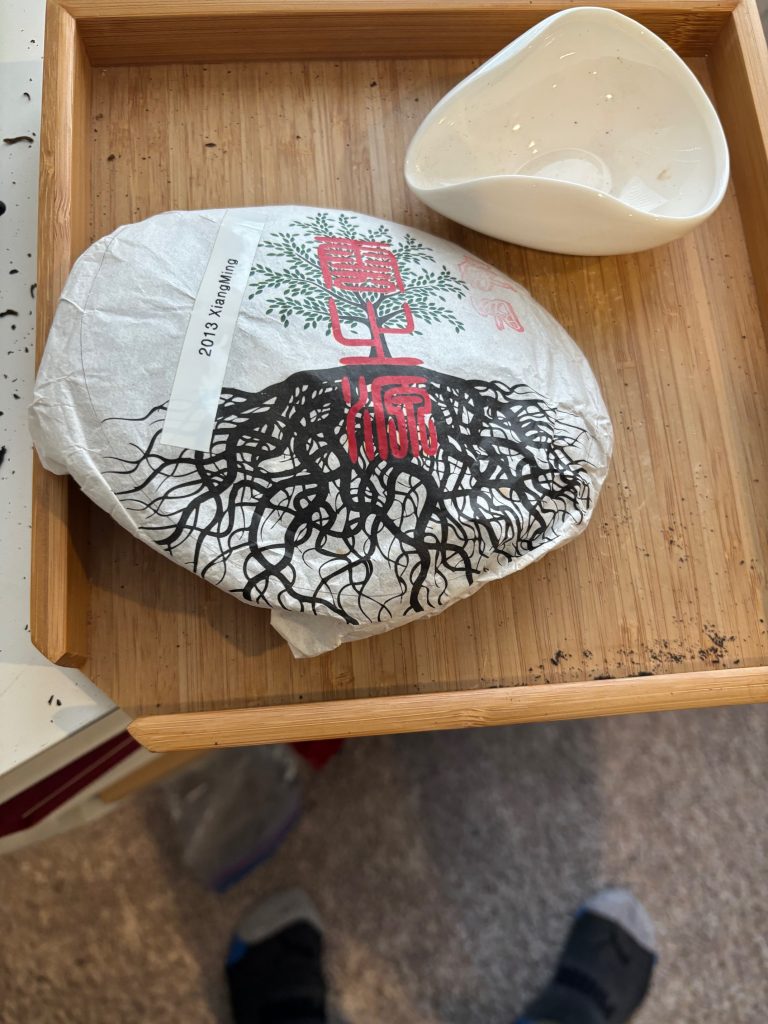
Like the Yiwu Megareport this is a return to a couple reports I did in the 2010s. The first focused on Bulang and the second on Menghai County tea. The initial Bulang report had teas ranging from fresh to 12 years old with an average age of maybe 3-5 years. Coming back to the Bulang theme a decade later there’s a large chunk of teas at the 15-20 year mark, with just two teas being produced since 2020. The maturation of these teas has tamed the famed Bulang bitterness and made for a much more enjoyable drink through.
Banzhang is in Bulang so it is shoehorned in as are some teas that are Bulang adjacent.
Bitter to Sweet Conversion
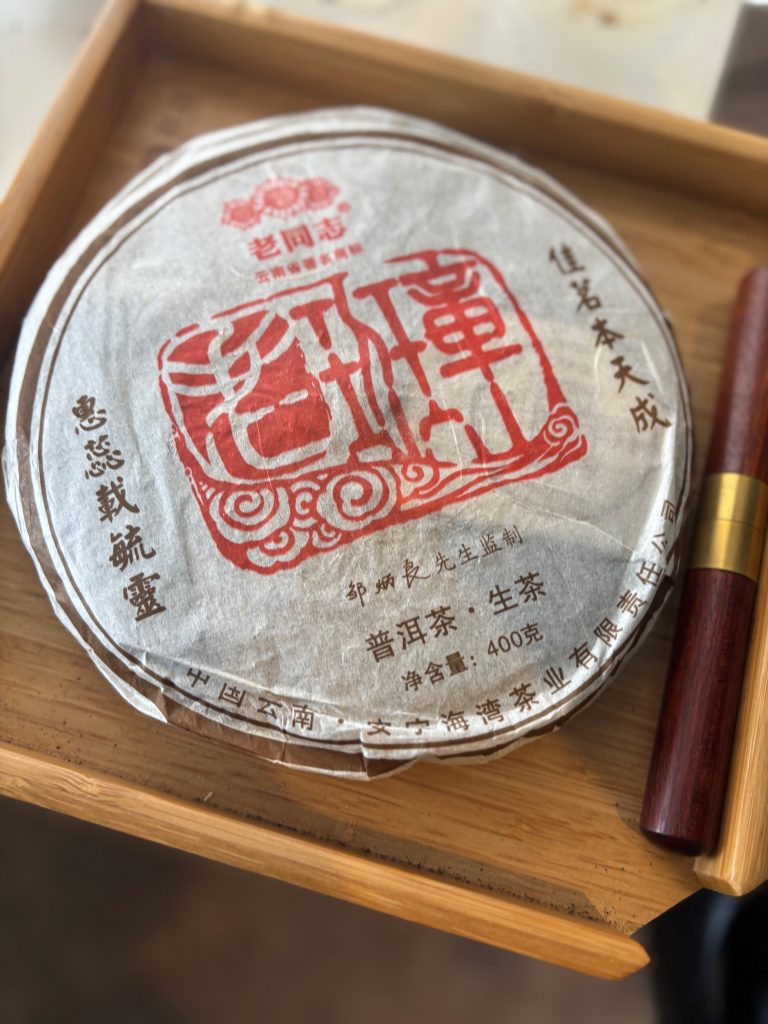
Classic Bulang and Banzhang tea are famous for a punchy and potent profile with a quick conversion of bitterness into sweetness. A characteristic that is also oft cited for classic 7542. It’s a classical pu’erh note and not hard to spot in both factory and boutique versions of these teas. The speed of the conversion is another trait to note. Something like the 2002 Menghai TF Bok Choy had a very quick returning sweetness. There are also other teas that are much slower to convert or don’t convert at all which results in a pervasive lingering bitterness, something I’m not really a fan of. In ripes I’ve come to appreciate it on occasion or when it is well integrated into the tea.
Bulang Structure & The Value of Blending
There’s a fair deal of repetition in the profiles dealt with. I did enjoy most of the teas, but Bulang has a more narrow profile compared with the 6fm on a whole, which is why expanding it to Menghai County and Menghai area blends makes sense. After all these areas have a history of being blended together. When a factory or producer moved outside of Bulang for more of a blend, like many of the Dayi teas which don’t specify geographical provenance it can fix this problem by creating more dynamism.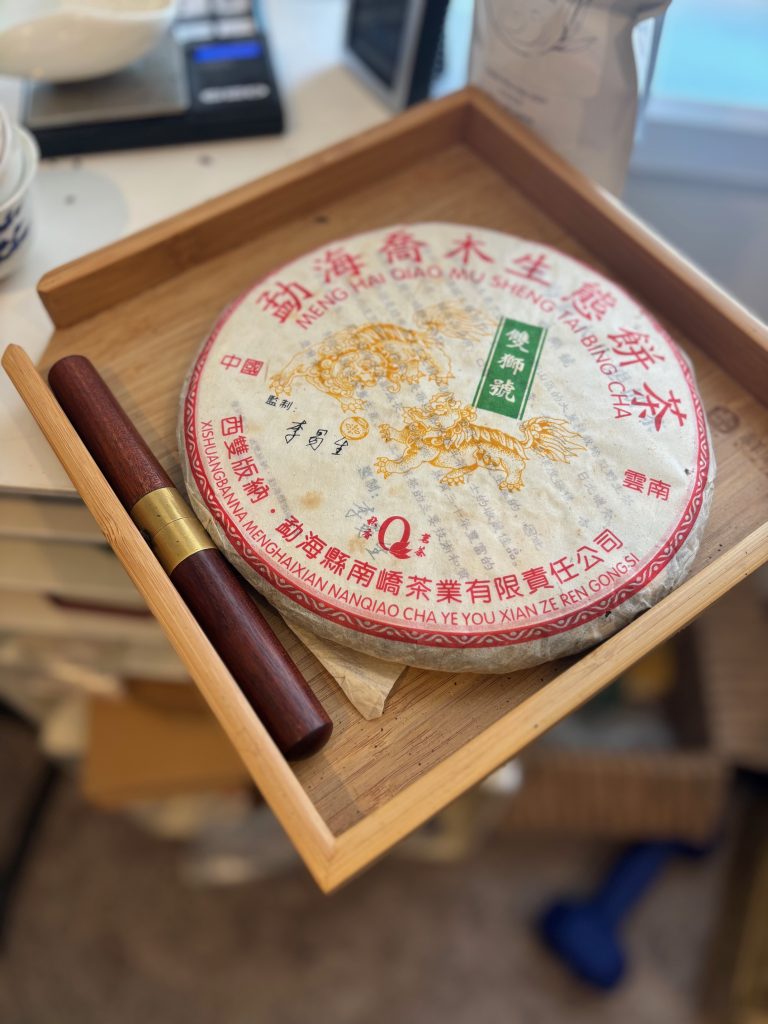
Slower Storage Hasn’t Been Awful
In past reports I’ve talked about the importance of storage. For factory teas this absolutely matters. In particular something like Xiaguan really needs good storage to smooth it out. For Bulang teas while I would definitely prefer storage in Taiwan, southern China or the tropics over the US the slower storage hasn’t been nearly as awful as I anticipated. Something like the 2010 Gumingxiang Banpen has clearly mellowed especially when I look back at my notes from a decade ago.
Boutique vs. Factory
Western Xishuangbanna doesn’t have the same boutique prominence that Yiwu and eastern Xishuangbanna does. My Yiwu report was dominated by mostly boutique teas, with very occasional factory toss ins from the turn of the century. In Menghai County it is a different story. You have the factory (Dayi) based in Menghai County, cranking out different blends many of which could be roughly grouped with teas here. While I almost included a bunch of Dayi teas, most are not explicitly Bulang, and I decided to save some ammunition for 2026 where I’ll be doing my best to cover more of Menghai TF teas.
In my TeaDB 2.0 phase I’ve leaned a more towards factory than boutique, having done the vast majority of boutique buying 7-10 years ago. I think this preference holds true for most of the teas here. Another advantage to the teas I sampled a decade ago is that there is simply way more 15-20 year old tea available. The teas from 2005-2010 were about 5-10 years old when I tried them back then and now have reaped the benefits of time.
Goals:
- Stash check.
- What should the average (VOATO) and benchmark teas be? The Malaysian stored 502 Double Lions probably has the biggest reputation of any overtly Bulang tea. Is this deserved?

Ratings
As has been the case for previous reports I am rating purely on my own appreciation of the tea at the moment I drank it and the ratings are not a reflection on the potential of the tea.
Nanqiao/Liming
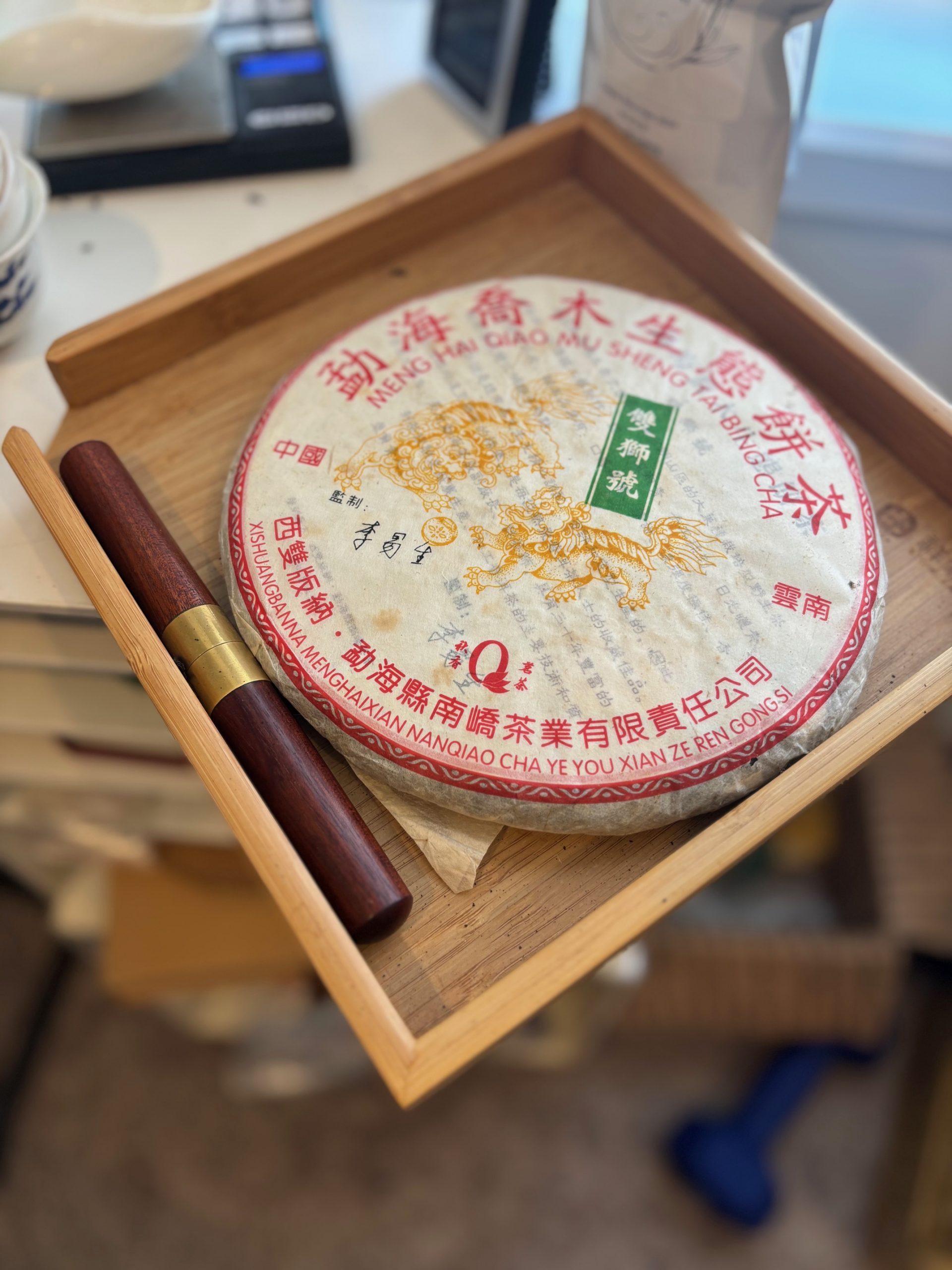
Nanqiao ended up being the benchmark for this.. Famously in the western scene they have the Double Lion whose Malaysian stored version remains a very solid benchmark and one of the better teas of the report. It seems like the one remaining state-run factory Liming (which I’ve always thought of as B-tier Dayi) made quite a bit of tea from this area.
Amazingly Liming has never been featured on a TeaDB video. It’s not really a factory I hold in high regard (B/C level Dayi) but some of their teas in this era are decent.
2008 Liming Yayun (A/B)
Sold by Quiche but also available on Taobao from a number of vendors for much less. Solid tea. The bitterness is mild, but the bones are strong. Thick, oily resinous. Retired smoke. Leaves a nice aftertaste on the back of the mouth. Very classical and I think this is entering a state of being drinkable. Perhaps reminiscent of the 7742 except more ready.
2007 Nanqiao Early Spring Tribute (C)
Decent overall. It isn’t as potent as most of the other teas here and instead leans more heavily into flora, sugarcane, and grassy notes. Still it is thick and hints at some past smoke. I’d say that this needs more time, heat and humidity, but for the price it’s a reasonable value.
2006 Nanqiao Double Lions (A/B)
I don’t know exactly what version this was, it might be the smaller 250g cake. Regardless it is a solid, often overlooked tea. Wood, oily. Takes a bit of time to open up. Definitely not as punchy and only lightly bitter. It has good aftertaste and coats the mouth nicely. The sessions on it are a bit varied with some being a little less satisfying and others feeling like the real successor to DL.
I also was able to session a CN stored one, which was also pretty good. Retired smoke, wood, incense, oily. Almost as good as the MY version. The 2006 is well worth pursuing if you want a great PQ ratio.
2006 Liming Arbor Wild Arbor King (B)
Pretty good tea, with a very classical Bulang/Menghai profile. Smoky, heavy BBQ, needs a lot more time but it has good bones. Decently oily with a good aftertaste. Wood, pine, resin. Needs heat/humidity but Kunming has chipped away at it.
2005 Nanqiao Double Lion 502 (A)
A very good standard. Woody, incense. The bitterness isn’t as strong as you’d think. Maybe for boutique bros. But it is very intense and concentrated. Good, booming aftertaste. I’ve struggled with how to rate teas like this in the past but the Malaysian stored in particular holds strong in a lot of aspects and I’ve risen in my own enjoyment of the tea over the past 7 or 8 years.
2005 Nanqiao Double Lion 501 (A/B)
For a tea I almost never heard about this was shockingly good. It does a very good impersonation of the 502 with just a bit less strength. Wood, incense, protracted mouthfeel, strong immediate aftertaste. Need to SbS with 502 to more fully parse out differences.
2005 Nanqiao Banzhang Tuo (C)
Unfortunately not everything Nanqiao made in 2005 was great. This one isn’t awful but doesn’t really impress either. In contrast with something like DL it is thinner and more narrow. Some light fruit and the aftertaste does resolve well but it’s not that pleasant to drink. It needs quite a bit more time and even then I don’t think this will get close to the NQ DL.
2005 Nanqiao Purple Peacock (A/B)
Southern Chinese stored. This tea is in a nice place to be consumed. I don’t think it is quite as Bulang heavy as other teas in the report or perhaps it is just more tamed. Thick, wood, leather. Mouthcooling early. Not too bitter but can get astringent. Goes down easier than Double Lions but with a little less potency.
2005 Nanqiao Liming Impression (B)
This one isn’t as good as the 2006 Liming Arbor but is a little more aged. Oily, woody, has a bit more depth but a little less oomph than the Arbor. Good thickness overall.
2005 Nanqiao Blue Peacock (A/B)
This is a good tea and undercovered compared to other Nanqiaos from this era. Very concentrated and oily. Still has some BBQ-like smoke. Good throat coat. Still pretty drying and not quite ready but this has good expansiveness and is aging well. I don’t quite agree that this is better than the best of DL, but it is operating on the same playing field.
2004 Nanqiao Double Lions (A)
I suspect most would put this above the 2005. I’m a bit more split and to me this feels like it is in a smoother state but also lacks the intense concentration and pungency that makes the 502 so memorable. It still has very similar notes, oily, woody, some incense. In particular those who prefer boutique over factory will go for this as it has certain refined characteristics the 2005 502 lacks.
2004/98 Nanqiao SEA (B)
A weird one. In some ways this looks like an extremely stellar tea. It is very oily, with heavy retired smoke, incense, and camphor notes. I don’t love the aftertaste as much as other Nanqiaos from the era. It is also less dense and just a touch hollow compared with things like the 502 Double Lions or even the Blue Peacock. There’s also some curious black tea type notes to it, although it mostly can be ignored. A decent enough brew but I don’t like it as much as some of the other Nanqiaos.
Dayi/Xiaguan
I probably could’ve included a lot more Dayi and it probably made sense as the primary benchmark here. But I wanted to avoid having this get way too big so as a result so I included those that are overtly labeled Bulang (7742, Bok Choy) and a couple versions of the famed 7542 recipe.
2011 Xiaguan Laobanzhang (C)
From Puerh NW. The tea is reasonably strong but I’m otherwise unconvinced about it. It has some thickness and oiliness early, but is eventually overcome with a lot of drying and bitterness that doesn’t convert very quickly. I think this tea probably would’ve done better with more heat/humidity but it’s not very close to being ready as of now.
2010 Dayi 7542 (C)
Not terribly impressed. It is somewhat oily and thick. It is not particularly punchy/bitter, although it does get astringent. Perhaps it is my expectations but I find this lacking. Due for deeper exploration next year.
2009 Xiaguan DX 7223 (C)
Commissioned by Dehexin who was partly responsible for the Double Lions and drew my interest. It is just OK. It is sweeter and more narrow than the other teas here. Way too little of a punch to really grip me. Tastewise woody, a bit of fruit.
2006 Dayi 7742 (A/B)
Supposedly aged Bulang material. This is good but needs more time. Actively smoky, BBQ, woody, oily, and pungent. This is a straightforward tea with a classical profile. Quite different from the 7542. Not going to be for everyone (I suspect I wouldn’t have liked this 10 years ago) but it is solid tea.
2006 Dayi Bulang Peacock (B)
Shockingly mediocre considering the price. Body is medium. Taste is wood, apple, a bit creamy. Doesn’t really have the big expansiveness of the better teas here. Does get a bit sour and somewhat astringent but the aftertaste is much worse than the 7742. Probably more of a collector’s item than a drinker’s drink.
2005 Dayi 7742 (A)
Really good and a bit different than the 2006, probably on account of storage. Much less smoky it does have a bit of a recently retired tobacco taste. Very refined wood, antique furniture like. Aftertaste is very quick and coating.
2005 Dayi 7542 502 (A/B)
Mine compared with Dennys is a bit further along. Smooth, not a ton of bitterness but still a fair bit of astringency. Wood sweetness, creamy, resin, leathery.
2002 Menghai TF Xiao Bok Choy (A)
From Houde. Good tea. Needs more time. Still pretty sharp but the aftertaste converts very quickly. Depth is pretty good without being great. Some resin. Longevity is OK. There’s some factory tea I like more than this, but I think some of that is the drier storage that this has gotten. I think if western storage may eventually be able to get some of these teas to a drinkable state but it takes a while.
Chensheng Hao
A Banzhang focused producer. They occupy an interesting space where they market themselves as a premium, luxury brand but are clearly operating at a fairly large scale. They are also a producer who really started to hit their stride in the 2010s rather than earlier like Nanqiao and Liming and their teas feel relatively less traditional than the aforementioned teas.
2022 Chensheng Hao Lao Banzhang (B)
I suspect this is getting into a bit of a more muted awkward stage as it is not as rich as it was a year or two ago. It is young, but I appreciate its clean, clear profile. It is relatively thick, has a moderate bitterness, and comes through with a nice but not super intense sweetness. Good longevity as well.
2017 Chensheng Hao Yi Hao (C)
Pretty good tea, but is still quite green in a way I don’t love. Oily, floral, nutty. Good intensity of aftertaste. There is some bitterness although not as much as the Bawang when pushed. Unfortunately this needs some pretty significant age, but I think this could be pretty decent.
2013/2016 Chensheng Hao Bawang (C)
Lumping in 2013 and 2016 since I feel the same about both. Very bitter tea with thick oiliness. The bitterness is slower to convert. I do have three of the 2019 aging away, but I see it as an extremely long term aging experiment.
2013 Chensheng Hao Jin Yin (Gold Mark) Banzhang (B)
This also needs time but it is closer. I’ve had this tea three or four times and my opinion has slowly risen. I think a good chunk of the enjoyment is it because it has been stored less dry than the other semi-aged CSH I’ve had. Like those it is very oily and has some strong bitterness. However, it’s considerably less green and starting to lose that sharper edge. It has a decent concentration of flavor. Tastewise brown sugar, wood.
2013 Chensheng Hao Organic Banzhang Arbor (B)
More standard and in my opinion likable than the CSH Jin Yin. Good body. The aftertaste resolves quickly it has a nice deep slightly heavy feeling to it. Good aftertaste. Tastewise it is around what you’d expect, florals becoming woodier.
2012 Chensheng Hao Yin Banzhang (B/C)
Measures up a bit worst compared to the Yee BZ. Partly because its been stuck in Seattle for longer. Still maintains green, floral notes. Has nice thickness. A bit bittersweet as a lot of younger CSH is. Similar to the Yee BZ the bitterness is a little slower to convert.
Western Boutiques
These are interesting to visit and revisit and predictably ended up being a bit of a mixed bag.
2024 White2Tea Astro Kittens (D)
Smells nice. Floral, nutty, sugar. The most bitter tea of these, pill like at times. Very protracted mouthfeel. The bitterness was quite slow to convert. I’m curious what this will be like later, but it is not something I would enjoy drinking anytime in the next 20 years.
2018 White2Tea Lucky Puppy (A/B)
My favorite of the boutique products. Has aged pretty well and is now simpler but pretty tasty. Wood, light fruit.. Very thick, moderate bitterness, sugarcane. Some mouthcool early. Very quick and good aftertaste that coats the mouth. Very sweet after that. Despite being young this is enjoyable.
On potential negatives, as one would expect from a modern production the rolling is on the lighter side of things. Perhaps this is why the tea is entering into such a nice phase so quickly.
2016 White2Tea Untitled 02 (B)
Thick, a bit oily. Moderate body, herbal, moderate bitterness. Lightly sweet and decent depth. Some resolution on the bitterness but it also has a lot that lingers more than preferred. This has fared OK enough and I like it, but I think it needs more time and I am ambivalent about the nature of its bitterness.
2012 Essence of Tea Bulang (C)
Malaysia stored and preferred over the 2010. It has a moderate body, is a bit herbal and gets quite bitter. Like the 2010 it doesn’t convert to sweetness much, which is more striking because this tea is much further along than the 2010.
2010 Yunnan Sourcing Jieliang (B/C)
Still pretty green, nutty. Thick, but not as much as the best teas in this report. Resin, strong mouthfeel. The conversion isn’t super fast, but it is there. This is getting there but still needs longer. Not bad.
2010 Essence of Tea Bulang (D)
Pretty dry stored. Antique wood. Fairly bitter, not a ton of conversion into sweet. Still quite burly, tart. Not a big fan of where this is right now.
Other
2013 Yee On Banzhang TFC (B)
Very thick, oily. Some mouthcooling. A touch of citrus. It is more bitter than most here. I think this will be quite a good tea at some point but still needs quite a bit of time. Has a strong protracted mouthfeel. The one hesitation is the nature of the bitterness which is a bit slow to convert although not overwhelming. Nevertheless I generally trust operations like Yee On to know what will age. Some solid potential.
2012 Hailang Hao 16th Anniversary (D)
The leaves here are clearly good, but I’m just not a fan beyond the first two steeps. Starts out nice, oily, syrupy texture. Still quite green, grassy. After that the session goes downhill fast. It gets somewhat bitter, but it also doesn’t resolve and the greener aspects really linger.
2010 Gumingxiang Banpen (B)
I have a much better handle on this tea than 2014 or 2015 where I gave it negative and mediocre reviews. On the negative it does feel relatively less blended and a bit more single faceted, which is what I think confused me when I’d had this tea before. The tea has a big body, it’s oily, and at this point only mild to moderate bitterness that converts. The conversion is a bit slower, but the tea is substantive enough that I feel decent about its future.
2008 Haiwan Lao Banzhang (A/B)
My only Haiwan. Picked up from Wilson at Adventure in Every Cup back in 2016. It isn’t quite as bitter as you’d expect and has more of a subtle power to it. Softer and a bit less resinous than other teas in this report. Less pine and more of a dark oak/cedar. Nice coating of the mouth. Soft, oily, good depth.
2006 Banzhang Laoshu Green Peacock (C)
Same cake as sold by TWL but a different storage, probably drier. This is stronger, has a big mouthfeel and more penetratingly bitter than the majority of other teas. The aftertaste is slower to convert. It is also not as oily and has a thinner focus. I am not a big fan of it.
2006 Zhongcha Six Side 8081 (B)
An overall decent tea that just lacks the intensity and expansiveness to be truly great. Nevertheless it has good structure/balance, oiliness, above average bitterness that builds, and some retired smoke. There are some light camphor notes and the aftertaste all resolves in a pleasing way. Just not quite as big as I want my Bulang tea to feel.
2005 Yunhai Banzhang (B)
This was sent by HappyGuy over on Discord. Thank you!
This is still a bit green and could use time but tastes proper to me. Dry wood, slightly oily. Pushed gets a bit sour. Has a decent enough aftertaste. Leans a bit towards the fruit/sweet direction but has strong enough bones.
2005 CNNP Big Yellow Mark (C)
I reviewed this almost a decade ago and it hasn’t really changed too much. The smoke is mostly in the past now. Has a bit of a softer perfume, pinewood, resin. Oily.. I’m a bit cooler on this than I was back then, partly because the aftertaste isn’t as good as some other teas and I’m not a huge fan of the softer perfumey (Nannuo?) aspects of this tea.
2005 Farmer Banzhang (B/C)
An interesting tea. Has a good amount of sweetness and is far more fruit forward than a lot of other teas here. It is also pretty astringent and drying, but it mostly all resolves. Despite being pretty oily and thick it also has a softer side to it. I’d take the 2002 Bulang brick that YS sells over this but it is respectable.
2005 Yuanyuan Tang Laobanzhang (A/B)
Taiwanese boutique ringer alert!! Thanks to Peter for sending this in. Apparently there’s some sort of relationship between CYH and YYT LBZs, although the details are hazy to me. Either way this is one of the better YYT I’ve had. The taste is mildly bitter and sour. A little oily but not as much as the NQs. The aftertaste is quite sweet and has a decent amount of depth. I’d originally put this at B tier but ended up upgrading it as it has significant appeal now. As you might expect from a TW boutique version it is a bit sweeter and a little softer than the other Bulang teas being made at the time. Still it retains a decent amount of thickness. Solid tea.
2005 Chenguanghetang Menghai Yesheng (A)
The Malaysian stored version. Amongst the most enjoyable teas in this report. Herbal, incense. Some mouthcooling. Very sturdy and thick. Strong mouthfeel. It is mildly sweet and if I had this after an Yiwu it might be a bit too strong. Good depth. Despite its strength I am pretty OK drinking the MY stored version semi-regularly now.
2004 Hualian Laobanzhang (B)
Decent enough tea. Still a little green and has some sourness. It has the proper Bulang structure (bitter then sweet, oily) and is a somewhat enjoyable tea. The downside is it’ lacks the potency and expansiveness to be more than decent.
2004 Mengyang Guoyan (C)
A bit dank. This feels closer to traditionally stored. Very mellow, creamy, woody. It’s an alright enough brew, but does not provide the Bulang thrills I seek.
2002 Bulang Brick (B)
This is solid old tea. Burly wood. Smells of smoke early but it quickly dissipates. Really not too bitter. Oily, rustic, quite sweet, very old school pu’erh. Has a good body throughout.
2000 Hailang Hao Bulang Mushroom Tuo (C)
This has good structure to it but its Kunming storage hasn’t done it any favors. Oily, hay. It’s aging fine but too slow.
VOATO & Benchmarks
Not sure I own enough tea to make the VOATO (Value Over Average Tea Owned) a decent metric here. The cakes I do own are the CGHT Menghai Yesheng, the 502 Nanqiao Double Lions, the Nanqiao Purple Peacock, and the Chensheng Hao Bawang. Those are amongst the best teas of the month and I think the average tea would be the Purple Peacock, IMO a solidly reliable tea. A reminder to keep standards high for future pickups. The teas here are also in pretty direct competition with good old Dayi teas, especially from the mid 2000s.
Thanks to Pedro and TeasWeLike, the 2005 Malaysian Stored Double Lions 502 has probably the largest reputation in the niche pu’erh scene, a reputation that seems well deserved. Like most teas that get some hype, it’s not a value budget banger but it is a very appropriately potent Bulang that I think deserves its place and should be experienced.
Final Thoughts & Why No S Tier?
I prefer the top end teas in my Yiwu report more than the top end teas here. I think there is the potential for some teas, like the 2002 Menghai TF Bok Choy to rise but it’s not there for me at least not yet. If you think the top should always be S, just add a grade scale up to every tea, making the 2005 NQ DL 502, 2004 NQ DL, and the 2005 CGHT Menghai Yesheng the top teas.
Although the brasher Bulang style often takes a bit of a backseat to my Yiwus I do enjoy drinking most of the teas in this report. Many of them are also decent enough value. The sweet spot falls in that mid 2000s range where many of these productions are still relatively attainable and smoothing out. I did not include many Dayi products here which would probably be in direct competition with these teas like the standout Nanqiao and Liming products.
| Tea | Tier |
| 2008 Liming Yayun | A/B |
| 2008 Haiwan Lao Banzhang | A/B |
| 2007 Nanqiao Early Spring Tribute | C |
| 2006 Liming Wild Arbor King | B |
| 2005 Nanqiao Double Lions 502 | A |
| 2005 Nanqiao Banzhang Tuo | C |
| 2005 Nanqiao Liming Impression | B |
| 2006 Nanqiao Double Lions | A/B |
| 2006 Banzhang Laoshu Green Peacock | C |
| 2004 Nanqiao Double Lions | A |
| 2006 Dayi 7742 | A/B |
| 2005 Nanqiao Blue Peacock | A/B |
| 2006 Zhongcha Six Side 8081 | B |
| 2005 Yunhai Banzhang | B |
| 2000 Hailang Hao Bulang Mushroom | C |
| 2005 CNNP Big Yellow Mark | C |
| 2002 Bulang Brick | B |
| 2005 Farmer Banzhang | B/C |
| 2004/1998 Nanqiao SEA | B |
| 2009 XG DX 7223 | C |
| 2010 Gumingxiang Banpen | B |
| 2004 Hualien Laobanzhang | B |
| 2011 Xiaguan Laobanzhang | C |
| 2005 YYT Laobanzhang | B |
| 2013 Yee On Banzhang | B |
| 2012 CSH Yin Banzhang | B/C |
| 2002 Menghai TF Xiao Bok Choy | A |
| 2017 CSH Yihao | C |
| 2013 CSH Bawang | C |
| 2016 CSH Bawang | C |
| 2013 CSH Jin Yin Banzhang | B |
| 2010 YS Jieliang | B/C |
| 2012 HLH Anniversary | D |
| 2011 EoT Bulang | D |
| 2012 EoT Bulang | C |
| 2016 W2T Untitled 02 | B |
| 2024 W2T Astro Kittens | D |
| 2022 CSH Lao Banzhang | B |
| 2005 CGHT Menghai Yesheng | A |
| 2018 W2T Lucky Puppy | A |
| 2005 Nanqiao Purple Peacock | A/B |
| 2005 Menghai TF 7542 | A/B |
| 2005 Nanqiao Double Lions 501 | A/B |
| 2004 Mengyang Guoyan Bulang | C |
| 2005 Dayi 7742 | A |
| 2006 Menghai TF Bulang Peacock | B |
| 2013 CSH Organic Banzhang | B |