Tag: Dayi

  • In Debt for Dayi!!! Report

    In Debt for Dayi!!! Report

    In 2025, I compared Xiaguan to 1970s Toei a Japanese B-Movie studio, reeking of cigarettes and asphalt. Dayi is more elevated than Xiaguan. Perhaps like the Golden Age Shaw Brothers films of the late 1960s and into the 1970s. Polished, colorful, amazing sets, and often following effective formulas. Similarly for a certain period Dayi had generally good standards and represented the gold standard of factory pu’erh. While many lower-end or poorly stored Xiaguan products probably belong in the gutter, there’s usually a higher floor for Dayi products.

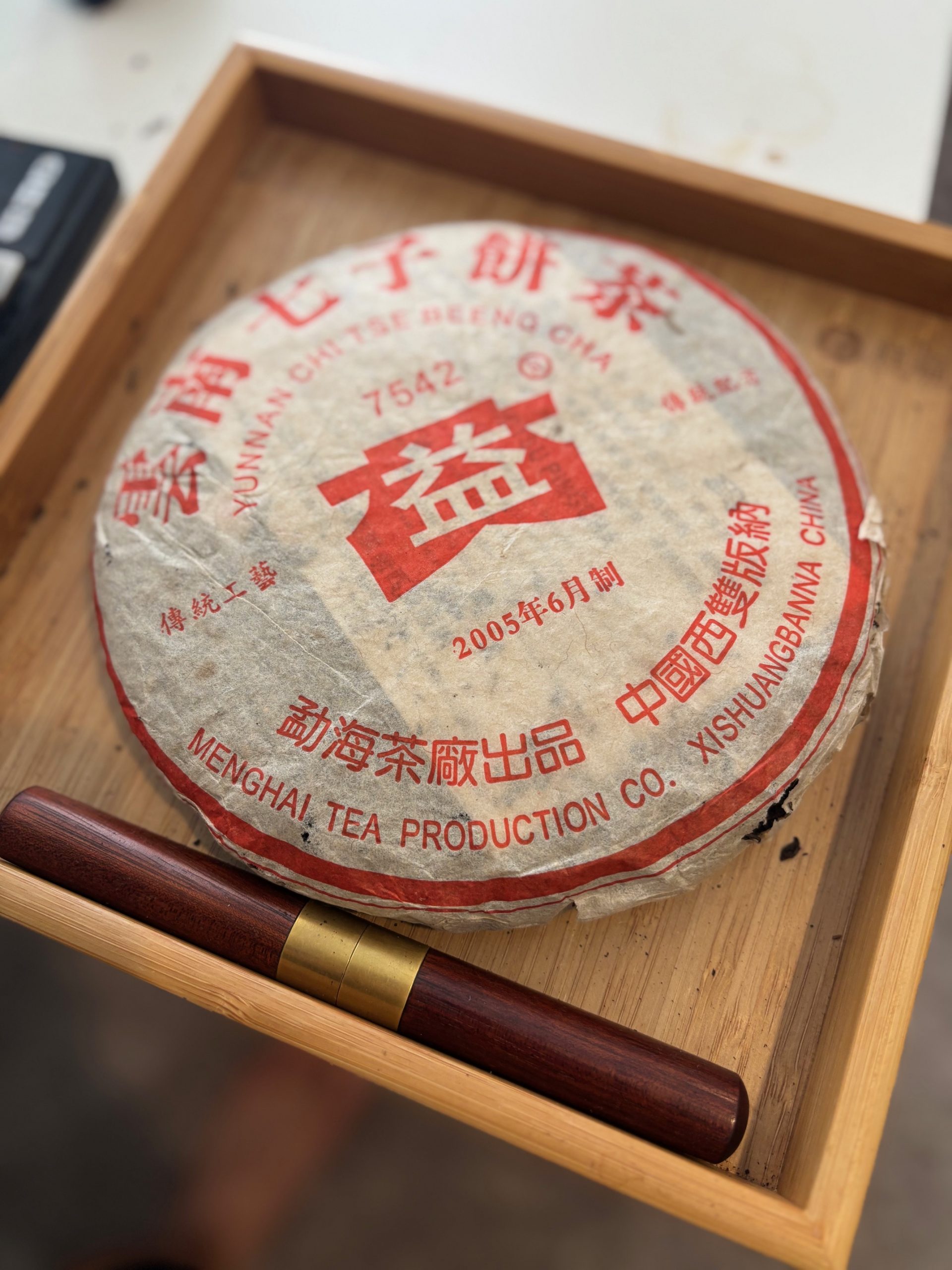
    After dipping my toes in with the four digit 7542 report, I am back for some more Dayi. Last year I intended to do Xiaguan at the beginning and Dayi at the end but I ended up getting sidetracked and put off Dayi until 2026. It’s a pretty good time to be a Dayi fan. Quiche makes it all too easy to order and the Taobao options have opened up over time. One reason I ended up with so much Xiaguan was that it was easy to order from a reliable place like MX Tea, and now similarly reliable options exist for Dayi.
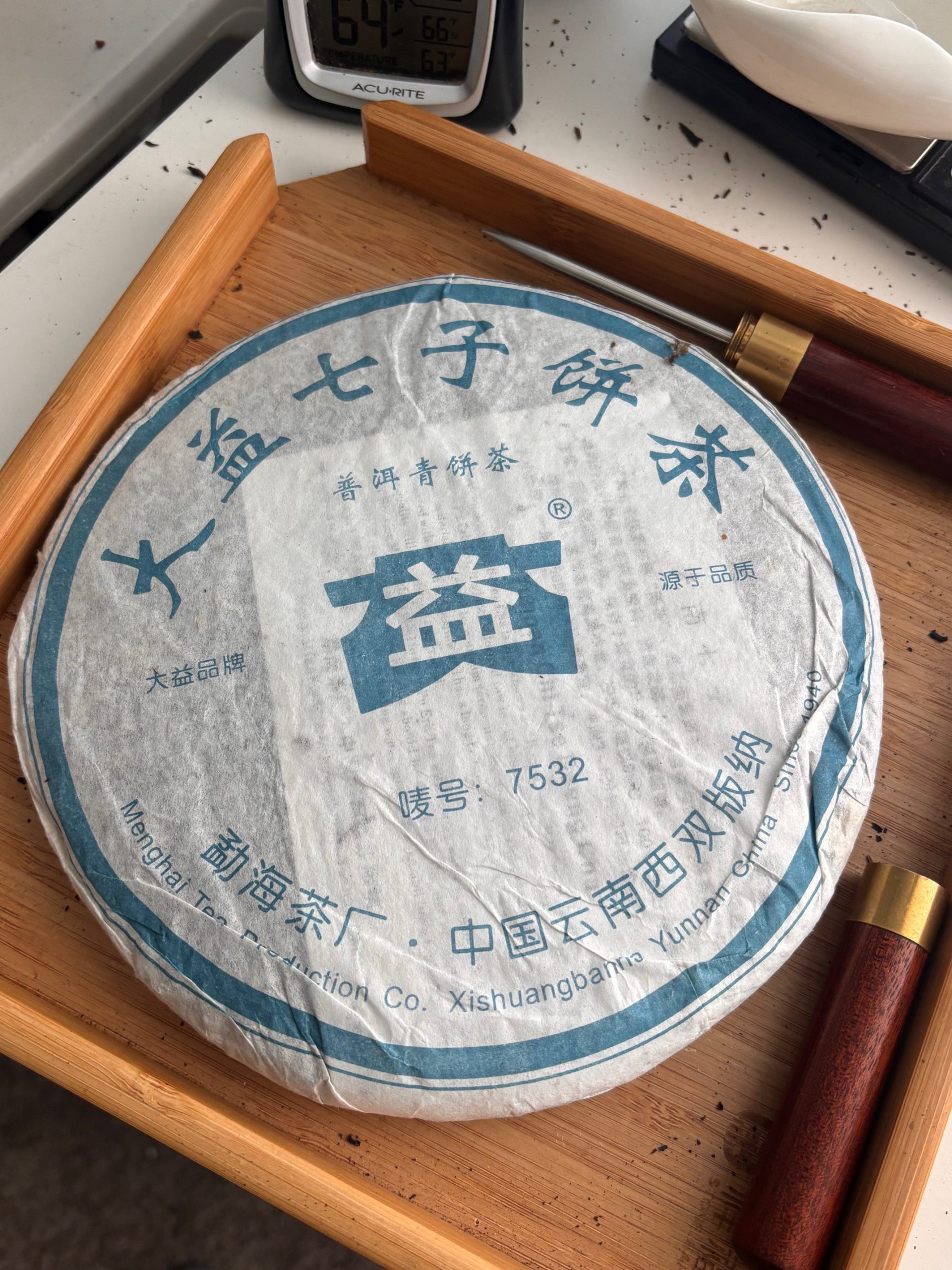
    2006 Dayi

    Goals

    1. Update my own understanding of Dayi. I’ve already cleared out most of the lesser Dayi last year, so it’s more getting a feel for what I do have and what other teas are around the open market. There are also some Dayi I’ve had in deeper storage that I picked up from Geraldo about 10 years back that I wanted to test to see if they’re ready (they’re not).
    2. Test and update benchmarks.
    3. Getting in rhythm and getting more of a feel for older Dayi. On one hand this is not so hard because Dayi is my most consumed brand of tea, but I don’t know the older teas as well as I could.
    4. Map out some territory. Dayi has made a ton of tea. I think we’ve reviewed something like 70ish Dayi teas on the main show in the last 13 years. With this and the 7542 report we can add a lot to the list.

    Tea Selection

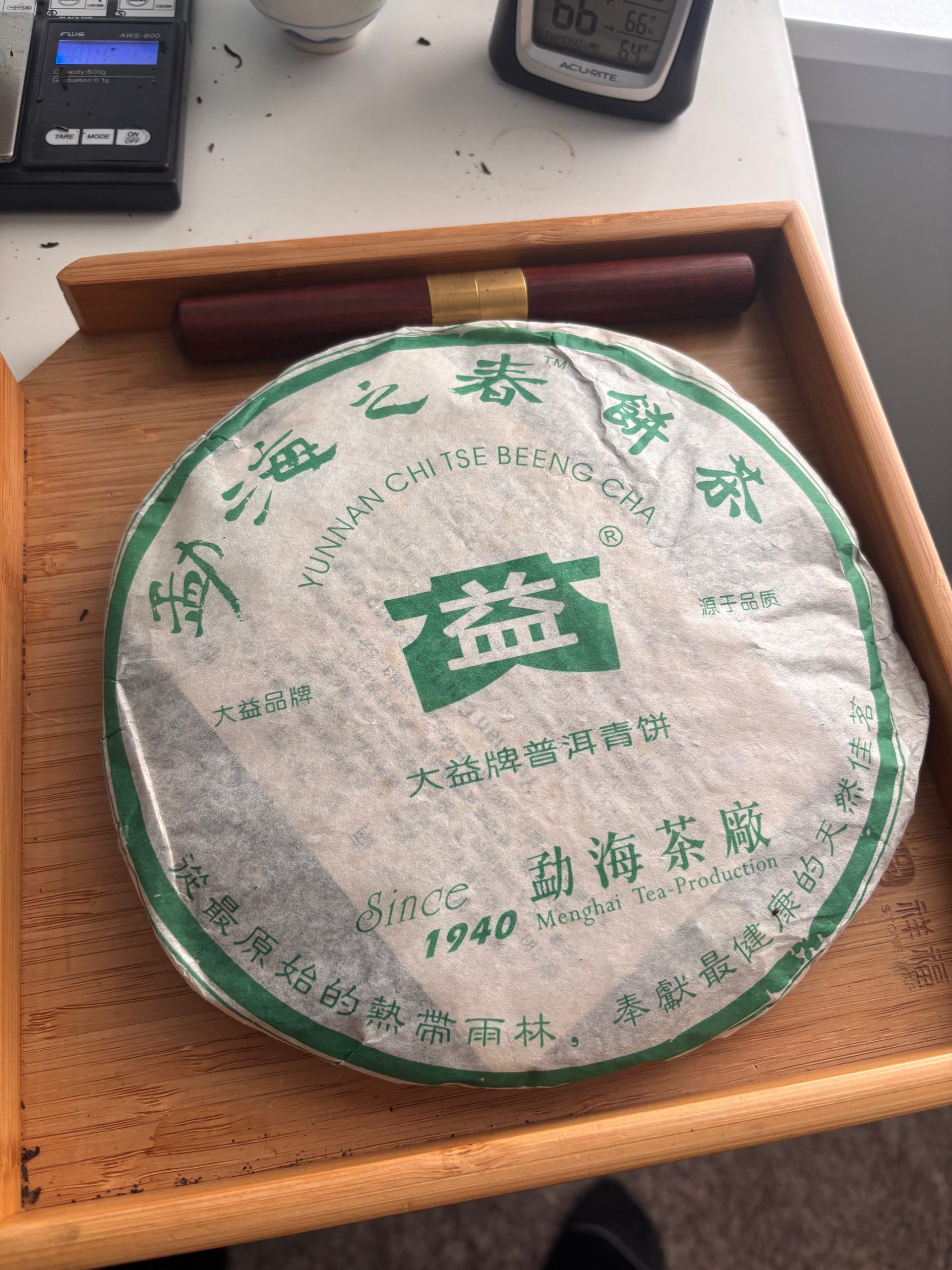
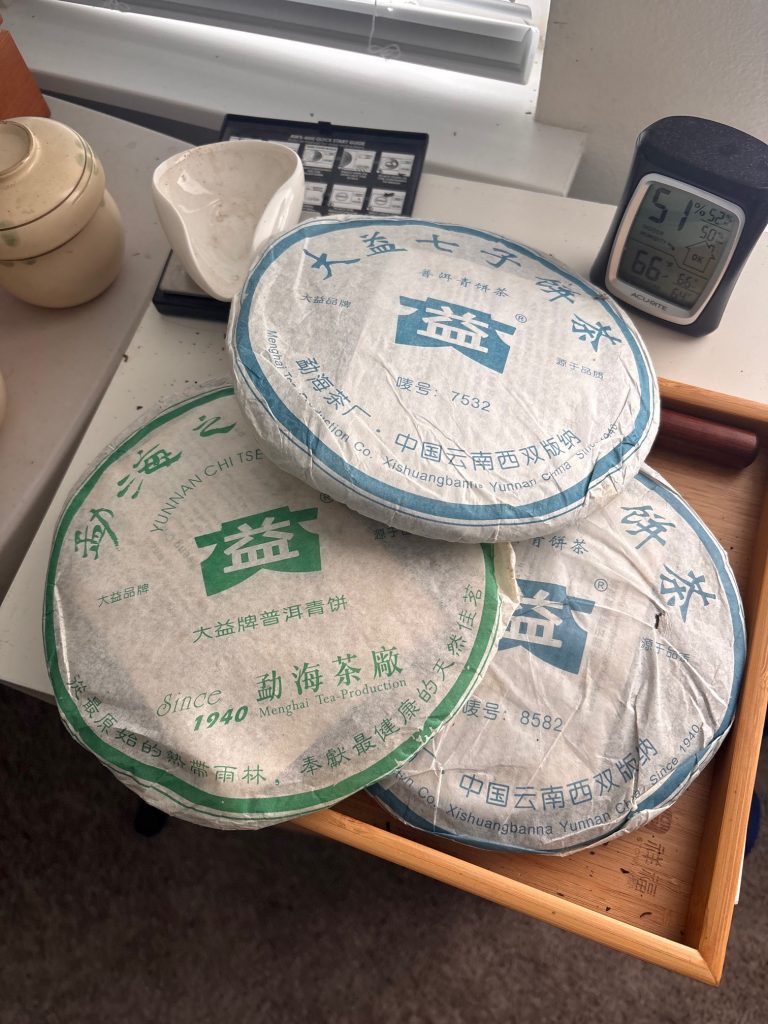
    Many of these teas are not particularly expensive and it’s not really desirable to try everything. So I mostly tried to select teas that were at least (a) 15 years old and (b) stored in a hotter/humid place (GD, TW, MY). The exceptions are teas that I bought earlier on. I tried to include at least one year of major and semi-major recipes (8582, 7532, 7742, 0622, Spring of Menghai), but this is mostly a smattering of non 7542 teas. If I’m being honest I also filter out lower priced teas by cost frequently on Taobao (<$30). Dayi is well-traveled ground, and I’d prefer the hit rate to be a bit higher at perhaps a somewhat higher cost.

    The Teas

    I am working with a tier system now, S/A/B/C/D/F. It is in line with how I view the tea at this moment, not the potential. In theory I could reserve the S spot for just really amazing teas like 88 Qing Bing, but I believe in using the actual top ratings if a tea stands out and not leaving them as some sort of empty gold medal spot. Since it is on my own views/enjoyment the B ratings are a mix of more lofty teas that I don’t feel quite meet the moment, teas that need more time, and teas that are humble and get the job done.

    Numbered Recipes + Repeated Recipes

    2012 8582 (C)

    From Denny via Quiche. 2012 8582 is pretty nice and better than expected. Good body, quite approachable now. Some sweetness in the aftertaste. Hasn’t been darkened much with storage. but I think this blend needs less time than the 7542 of same year.

    2008 8582 801 (B)

    I had two versions here, one from Malaysia which I liked a bit less and another from Taishunhe which was actually further along and hit the spot more. Herbal, grassy, thick. Good conversion on the aftertaste. This is one of the core recommendations for factory tea to start with and I don’t really have any disagreement. Of course not everyone will love it, but it is inexpensive, decently aged, good enough quality and hits one of the big two Dayi recipes. Malaysian storage is also not always better. It still depends.

    2012 Spring of Menghai & 2006 Spring of Menghai (B/C)

    These are solid enough and feel roughly the same quality. The 2006 is a little darker, but otherwise feel like the same recipe. Florals, tobacco, aromatic, resin, the grassiness has aged a bit. Reasonable body, good Dayi base, mild bitterness, the aftertaste is not particularly deep or penetrating but it’s a solid daily drinker and priced as such. The profile can also be a bit narrow in what it is doing. I’m OK to drink this although there’s other Dayi core recipes I prefer.

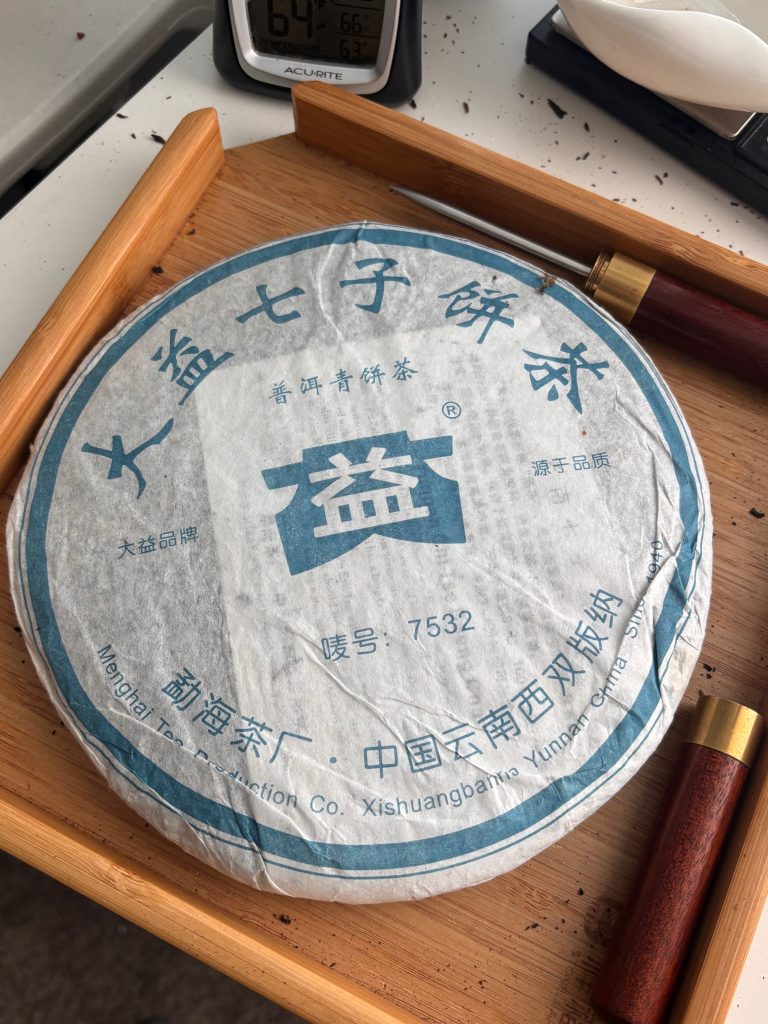
    2007 7532 (C/D)

    Not a fan. A bit sweeter, richer, a bit brassy. Some resin and it’s still a bit green and thin. It’s nothing great, for me barely drinkable.

    2006 7532 (B/C)

    I don’t think the 7532 is my type of recipe at least not in this age range but I do like this considerably more than the 2007. It is still pretty green and features similar notes (grassy, florals, brown sugar), but feels a bit more whole and less thin than the 2007.

    2006 0622 200g (B)

    I’d bought about 10 of these small cakes from MX about a decade ago where it has been in and out of my rotation, and ordered one from Chen Tang to compare. These are darker than the 7532 and a bit brassier and richer. There’s a date like sweetness and a good enduring aftertaste. Holds up pretty well and I still like this as a daily drink. I do think the aftertaste is not as good and it is a bit slighter than other Dayi of the same era, which probably explains a lot of the modest price tag.

    2006 8582 601 (B)

    I bought a bunch of this from Taishunhe right before the pandemic and its basically been my Dayi daily drinker since then. Sweet, brassy, raisin. Woody, resinous, reasonably full. For me a tea that goes down quite easy, although it does not live up to the 2005. It also feels like it misses a bit of the herbaceousness of the 2005 and 2008.

    2006 7742 (A/B)

    Acquired from Mr. Jin in 2025 in a group buy. This got blown out when compared with the 2005 but on its own it’s quite nice. Still smoky and can use time. A bit sharper and rougher than the 2005. Pretty straightforward tea but the aftertaste all resolves in a pleasing manner. I blinded this against a couple other recipes from this era and it holds up quite well, especially in the aftertaste department. For something that still has a lot of calming down to do, I drink this a lot.

    2005 8582 501 (A)

    GD Stored. Thanks to Spice for the sample. Simpler and easier going than the 2005 8582 504, although a similar structure. Nice body. Wood, fruit, lots of sweetness. I do think these 2005s are a significant step up from the 2006. Goes down very easy.

    Then I had a separate version from TSH that reminds me a lot of the 504. Very active and pungent. Maybe not quite as herbaceous.

    2005 8582 504 (A)

    Impressive tea. Very dark, strong, sturdy, resinous. Easily one of the highlights  8582s I’ve had. I think both a bit more potent and harder to drink than the 501. Much better than the 601.

    2005 8582 505 (B)

    Thanks to Hanji for this sample. After the 504 I was prepared to be disappointed but this isn’t bad. It’s mostly fine and the basic structure of the 504 can still be detected here. It is woody, herbal, resinous. Far sweeter up front but lacking a bit of the body and overall potency of the 504. I think this is probably better than the 601 but not by too much.

    2005 8542 501 (B)

    Brigmbg sent me a huge chunk generously. I’ve had multiple people tell me this is kind of a mix between 7542 and 8582 and I can understand that. It lacks the extreme pungent strength of the 501, 502 or even 601 7542. This version is still fairly green with some room to grow but it has an astringency and bitterness that resolves and a solid structure to its bones. Wood, resin and comparatively fruitier compared with the other 2005 7542s I’ve had.

    2005 7742 (S/A)

    I really like this tea and it is very much made my style. Thick, oily, potent. I side by sided with the 2006 which I know decently well and it pretty much blows it out of the water. Starting to move past the smoke and is satisfyingly deep and full, leaving a nice aftertaste in the throat and mouth. In blinds its beaten the 2003 Purple before, and while its semi-rustic profile isn’t for everyone for me it’s a very well rounded Dayi tea.

    Yiwus

    While Menghai TF has always been associated with teas grown in Menghai (duh), they have a number of well known Yiwu productions released around the turn of the century. And they still occasionally dabble in eastern Xishuangbanna tea. I’ve had limited but positive experiences with their early Yiwus, which represent a very different sort of tea than the boutiques that would come to be heavily associated with the area.

    2011 Yiwu (C)

    Kind of gets the worst of both factory and boutique worlds. Too weak compared to better Dayi and doesn’t have that great of material to compete with boutique Yiwus. Taste wise some resin, honey. It’s not an awful tea but one that immediately bored me. Does not succeed at being an Yiwu tea or a Dayi.

    2009 Yiwu (C)

    Had two versions and found them both underwhelming. Brown sugar, slightly oily, pine resin. Like the 2011 it suffers from being in no man’s land. It isn’t nearly the tea that early Dayi Yiwus are and lacks the fireworks of boutique and does not have the typical Dayi appeal. Not a very good tea and one that I’d find difficult to fit into the rotation.

    2006 Yiwu (A/B)

    This is quite a bit better than I expected after drinking the 2009 and 2011 first, but unfortunately priced accordingly. Somewhat boutique like with a nice heaviness to it and a good aftertaste. It feels both much higher quality than the younger Dayis and quite distinct from earlier Dayi productions, lacking that resinous, old school style. Nevertheless it’s clearly good material and still pretty enjoyable. Lots of sweetness. Foresty, pine. Not sure it’s worth the price but it is a solid tea.

    2005 Yiwu (A)

    Thanks to Alex for the series of Yiwus (2005, 2002, and 2001)!

    Despite being a year apart it couldn’t be more different in style than the 2006, it resembles the older Dayis, especially the one leaf and feels like it has considerable upside and room to age. Very full, resinous. A tangy woody pulp quality that reminds me a lot of my prior experience drinking through a chunk of the Dayi One Leaf. Good aftertaste and presence in the throat. Unfortunately feels like this was the last of a now extinct pu’erh subtype.

    2003 Yiwu One Leaf (A)

    Good deep aftertaste and concentrated strength. I had this after the 2002 and it seems fairly similar. Good and getting better.

    2002 Yiwu One Leaf (A)

    Had a couple versions. One from Alex and another from the same Shenzhen vendor that sold the 2003. I like this just a touch less than the 2005 Dayi Yiwu. It is softer, thicker, and also a bit more dryly stored. It also has that tangy, wood pulp quality but a bit less amplified. A good aftertaste in the throat. Some drier notes, like potpourri. Still quite satisfying, good depth and aftertaste.

    2001 Ivdashu 103 (S/A)

    Somewhat similar to the prior Yiwus but bigger and better. Wood, resin, sour. Having this a couple times, there’s a strong camphor note especially in the early steeps. Great throatiness and expansiveness. Thick, and very satisfying tea.

    Other Special Products

    As time has passed, the special productions have been promoted as the superior product over the more daily numbered recipes. Of course, some take off in popularity and price while others stay more modest.

    2017 Xuanyuan Hao (B)

    The youngest tea in the report. Feels quite modern, especially for Dayi. Thanks to Tuna for sending it. Nice, substantive tea. Still very young, some florals and hay. Quite thick and it has a healthy bitterness but good conversion and expansiveness, especially in the aftertaste. Nice throat feel. There’s a heaviness to the liquor that is rare for a factory productions. Since I haven’t had very many Dayi from this age range it’s a bit tricky to compare. To me it feels closest to some of the better Chensheng Haos I’ve sampled from, and not too similar to the traditional Dayi style. Drinkable for its age. It’s probably obvious, but I would not pay the asking price but it is a good tea to try.

    2015 Purple (B)

    In a vacuum this is a pretty good tea and it’s actually pretty drinkable now. It has many notes you’d associate with good aging, resin, tobacco, a decent aftertaste.

    However, I encourage people to compare this with some of the earlier Dayis from a few years before and some of its weaknesses start to become a little more exposed. I’ve heard 2014 cited as a year where the processing changed for Dayi and you can see it in this tea. Both the rolling and compression are lighter than something like the Jin and while I like the tea I’m not sure it’s ever going to age as well as earlier teas. Perhaps it should even be slightly concerning how drinkable this actually is at just 11 years of age. Nevertheless I think it’s a very reasonable buy at the prices it is available now and I could absolutely be wrong.

    2012 Yanyun (B/C)

    Unusual Dayi tea. The tea is fairly floral and I’d initially read that as more youth, but it feels central to the character of the tea. It is mineral heavy, A bit lemony, floral. Very nice aftertaste. Material quality is clearly good. I do not love this one for the price but it’s one I’ll need to play around with a bit to get a decent feel for.

    2012 Longyin Dragon Seal (B)

    Exceeds expectation. Resin, wood, tobacco, a nice strong pungent mouthfeel that reminds me a bit of some of the earlier, good 7542s as well as the 7742. It also really tastes like a Dayi, which not all their more “premium” products do. Apparently this is an aged maocha production, I think it still could use considerable time but this feels strong and the bones feel sturdy.

    2012 Yin (B)

    Decent but not great. For a youngish Dayi I could drink this comfortably. Fairly standard Dayi taste, resin, wood, tobacco, mild bitterness. Medium but significant body.

    When Marco reviewed this it cost something like $300. Thankfully the prices have come down quite a bit and you can get it for around $70 now. The problem is this is just a bit better than 7542s and not close to the quality of the Jin a year earlier which is a much stronger tea. You are basically paying for a marginally better tea in a fancy wrapper.

    2011 Mengsong Tuo (B/C)

    Thanks to Anna for sending the tea. Not a bad tea, but not one that quite does it for me.

    I think it’s an atypical Dayi that is thankfully not priced as high as some of their other special productions. This one has a nice soft entry point with a  good body. Very mild bitterness, resin. Pretty smooth and ready now in a way that feels more modern than the Dayis that came before it. I’m not sure if it’s due to the less overall blending but this tea is not one that makes me super excited. Good value though.

    2011 Jin (A/B)

    Decent body, starts with a kind of grapey, muscatel sweetness paired with more of a Dayi wood/resin vibe. Becomes pretty tobacco heavy with a strong pungent mouthfeel. Stronger than the Dragon Seal with a better aftertaste. It’s not peaking but honestly not bad to drink now.

    This has quite a bit of potential in my opinion. How good will it be and will it live up to its price tag? I’m skeptical but it probably has the best shot of any post 2006 Dayi I’ve tried.

    2010 Golden Years (B/C)

    From Taishunhe. Solid tea albeit a bit generic. I had this late in the game and perhaps I had drank too much Dayi at that point as it failed to stand out. Smooth, honey, a bit of resin/smoke. Good sweetness, but it is young for my preferences and doesn’t have enough depth or a distinct enough character.

    2008 Chunshui (B)

    From Anna. Thank you! Relatively straightforward good intro to Dayi/daily drinker category. Decent honey sweetness, body, some resin. Has the characteristic Dayi taste without ever getting too strong.

    2007 Hou Qing Bing (B)

    From the Penang Dayi store and presumably MY stored. This is not great but the storage lifts it up towards something more palatable.. Antique wood, spice. The storage makes it thick but the material isn’t that great and it can be felt in a relatively lackluster aftertaste.

    2008 Qiuxiang (B)

    Nice elegant, daily. Soft wood, honey, not too much bitterness but nice and thick. For me this is a little boring and does not match the potency and brutality I want from Dayi but it definitely has some nice qualities to it. Still, if you are in the market for smoother, drinkable Dayi this one should work fine.

    2008 Gaoshan Yunxiang (B)

    Atypical Dayi. Plum, a big body, oily, has some nice pungency on the initial mouthfeel. Brown sugar. Low on bitterness, resin or Dayi taste in general. Reminds me a bit of the Mengsong tuo with a superior body. Good material. Salivation. Perhaps because I have certain expectations with Dayi this does not quite work for me. Not a bad tea, but for me this is missing something.

    I was pretty shocked when I saw the substantial price afterwards. Would not recommend it for the cost.

    2007 Anxiang, Raw (B, A/B)

    From Taobao, where it was stored pretty dry. Good body, gets quite bitter. Has quite a strong mouthfeel to it that leaves an anasthetic like feeling on the palate of the mouth for a few steeps. resin, brown sugar. for an almost 20 year old tea this is notably very sharp, very astringent, and not close to being smoothed out. it does remind me a little bit of some of the spring teas (SoM) that Dayi does but is both a bit different and significantly souped up. It also isn’t as broad a tea as something like 7542, feels distinctly different than that (maybe due to having more tips?). A tea i need to study a bit more, but definitely needs more time and I don’t think its the style of tea I’d go for anyways.

    Then I got it surprisingly sent to me by Alex of TTO. TY! This one coming from Taiwan is considerably more appealing. It maintains a pretty nice concentrated strength, predominantly woody with some fruit. Pretty characteristic Dayi, but the material is above average and significantly above average for a weaker year like 2007. It starts out a little tart, but the aftertaste lingers well and there’s a nice depth especially when contrasted with more of the Dayi regular line with a nice throaty sweetness lingering. Not nearly as sharp as the previous sample was.

    2006 Chazhilu (B)

    Via Tuna via Quiche. Thank you!

    Very sturdy Dayi feels mostly in the 7542 mold, lots of nice bitterness with good conversion and salivation. Wood, plum, resin, mostly retired smoke. Good aftertaste. Definitely more bitter than astringent in this session. Quite satisfying. More or less what I want from my Dayi. Might be better than 601 7542 but gotta compare more closely for that.

    2006 Yanyun (B)

    Like the 2012, an oddball. Very mineraly, not nearly as floral as the younger tea but has a lot of unusual notes, like plum. Some brightness to it, the florals of the 2012 are replaced with wood. Seems pretty good but it’s hard to evaluate this as a Dayi pu’erh.

    2006 Bulang Peacock (A/B)

    This has a very strong mouthfeel and pungency. There’s good thickness and strength. So why just a A/B? Personally I don’t love the slower conversion on its aftertaste. It does have nice texture and resin. I think a lot of people would rank this significantly higher but it doesn’t quite do it for me.

    2005 Early Spring Grade A (B)

    Acquired a sample via MX. Not sure if there’s a relation to Spring of Menghai but it definitely feels stylistically similar. A bit better than the 2006, but in the same relative ballpark. Pretty dry-stored. Nice sweetness. Moving beyond what feels like former grassy notes. Still quite aromatic. A decent body and aftertaste but not as dark as my preference. Pretty smooth overall.

    2005 Zaochun Tuo (B)

    Also in the Spring of Menghai family. Better than I anticipated. This is an early spring production and a lot of those have a similar profile that leans towards more aromatics, aged florals/grass, honey, resin, and a bit of fruit. I’m not sure I’d say this tip heavy profile is my preferred Dayi but this is far more ideal than something like the thinner, greener 2007 7532.

    2005 Elephant Mountain (C)

    This is from Geraldo and stored by me since. Unfortunately 21 years of Washington state storage does not move the needle that much. The tea is still quite green. One difference between this and the Menghai Peacock is this appears on the softer side of Dayi. There’s more perfume, sugarcane, some light nuttiness. The aftertaste is also pretty good. I think if you are OK with drier stored tea this one is fine enough, but I’ve always leaned the opposite way now.

    2005 Menghai Peacock (B)

    The same storage history as Elephant Mountain. 21 years of too slow and the tea is similarly green. However this tea is built different. This tea on the other hand is more of the brutish needs time variety. It is thick and oily and quite smoky. Very classical and not at all close to ready. Definitely gets me a bit amped drinking it.

    Pre-Reform

    Where quality goes up and value goes down.

    2004 Kongque Fujin (A/B)

    Supposedly a Bulang tea and it feels a bit like one of the random Bulangs from this period rather than a Menghai TF tea. Decent tea but not a huge standout. Leather, fruity, wood, resin, honey. Fairly bright. Where does this tea fall short? I think it mostly just does not quite have the depth of superior teas. It is satisfying but not quite as full as something like 7542 from a few years earlier and I’m not even sure I’d take it over the 2005 7542s either.

    2003 7212 One Leaf (A/B)

    Found this a little underwhelming. Still pretty green and can get a bit sour. Hay, dry wood, sour, post florals. There’s some promise in the throaty aftertaste. Best brewed attentively as it can get quite astringent and drying. An interesting slightly unusual example. This is probably a pretty reasonable price but there’s not really enough there for me to call this a standout.

    2003 Dayi Nannuo (S/A)

    Really nice tea. Good brightness, strong resin and mouth activity. I’m not typically a big fan of Nannuo teas and this one certainly fits the Nannuo stereotype but the dark leather, fruit brightness works well with the strong bones of the tea. Compared against the 2002 Liming Nannuo, this easily defeated it.

    2003 Jiaji Tuo (B)

    Dryish stored, still somewhat green but advanced enough to be drinkable. Sturdy tea, antique wood. It has a decent aftertaste and averageish depth. This is a good, but not great tea and probably amongst the more cost effective ways to get pre 2004 Menghai TF.

    2003 Jiaji Daqing Tuo (B)

    Nice storage that’s pushed this tea decently along. Unfortunately I think its profile while decent just does not stand out. Roughly on same level as the 2006 7542.

    2003 Jiaji Red Ribbon Tuo (B)

    Similar level to the normal Jiaji but maybe a bit smoother, creamier. I think differences here could easily be explained with storage as well. Pretty easy drinking without incredible upside.

    2002 Jiaji Red Ribbon Tuo (A/B)

    These are supposedly better than the normal Tuos but to me it seemed along the same lines (mine is also missing the Red Ribbon). Wood, incense. Decent bitterness, classic taste. I think it doesn’t feel overtly stronger than the non Red Ribbon tuos, but has a nicely expansive mouthfeel and aftertaste ranking it solidly above the 2003.

    2001 Jiaji Tuo (A/B)

    Darker and better than 2003, but not significantly so. Less of the green resin, and more of a dark wood. Feels slightly bigger, smoother and better. These are a narrower form of Dayi, but do have some pretty good material and make a fairly decent brew.

    2001 Simplified Yun 7502 (A/B)

    I’ve had varied sessions with this one. Some pretty good and others just OK. I currently think it’s mostly a decent tea, with lots of wood and incense notes. Not sure it stands out as much as other teas and I’d take most of the other 2001 Menghai TF I’ve had over this. Still, not a bad baseline with a pleasant well rounded profile and a nice aftertaste. I served this to a group of non tea drinkers fully expecting them to hate it, but to my surprise they liked it significantly more than the 2005 Nanqiao Double Lion.

    What is Ideal Storage

    Dayi is more forgiving in the storage department than Xiaguan. I think this is mostly because the tea is on average better. Still good storage definitely helps and Dayi is no exception. For instance, the 2005 Menghai Peacock featured is probably at minimum a decent tea, but due to its very dry storage in Washington State it needs at least another decade. Most of the teas in this report could use longer periods of time to age.

    So what is ideal? Like Xiaguan, good storage in a very hot place like Malaysia probably hits closest to my ideal. In the Xiaguan Masochists report I wrote about an age score. Over the past year revisiting teas in my own storage I sadly have to say the drier storage is maybe closer to a third of the speed rather than half as fast (as was projected in the XG report). It’s definitely not terribly precise but I find it useful for rough calculations. Teas that have been exclusively dry stored in the west like the Menghai Peacock or Elephant Mountain cake are decidedly still green, 7 years old sounds unfortunately about correct.

    Formula: AGE SCORE =  3x(years of aging in humid place) + 1x(years of aging in non-humid place)

    Dayi Portfolio Management Firm Recommendations

    Many of these teas are significantly less than their peak price from 3-4 years ago. Some are only about 20% of the peak price while others are 70%. Regardless many are at a pricepoint they were 10 years back when they were much younger teas. With Dayi you can certainly aim low and get pretty reasonable value or go a bit higher for more of the special productions.

    Dayi being such a well known commodity means teas are mostly combed over. Not going to get any true unknowns, although there’s so many teas that inevitably there’s some perfectly decent tea that are simply outshined by other products.

    I’m not going to recommend teas not featured in this or the 7542 report, besides ripe. This assumes about a 10 gram per day pace. The tea price listed is also relatively low price but attainable via Taobao with some associated hunting + logistics costs.

    Dayi for All! Value MaXXing

    • 3x $25/200g – 2006 0622
    • 2x $50/357g – 2008 8582
    • 2x $35/400g – 2006 Spring of Menghai
    • 2x $10/357g – 2021 8592
    • 2x $15/357g – 2021 7572
    • Total: $295/3542g.

    Five sufficient Dayi teas. Not a very exciting diet for the year but a way to drink 20ish year old Dayi on a tight budget. This costs under a dollar per day for two sessions of 5g. Feel free to insert a number of other teas in here Chunshui, Mengsong tuo, etc.

    Four Digits Only Daily Dayi

    • 2x $50/357g – 2008 8582
    • 2x $30/357g – 2010 7542
    • 2x $50/357g – 2006 7532
    • 2x $10/357g – 2021 2x 8592
    • 2x $15/357g – 2021 2x 7572
    • Total: $280/3570g.

    If you want more of a classical approach with the most well known raw and ripe numbers only recipes. This is somehow even cheaper than the Value MaXX budget.

    Post-Reform Classics

    • 2x $225/357g – 2005 7542 502
    • 2x $225/357g – 2005 8582 504
    • 2x $50/357g – 2006 7532
    • 2x $65/357g – 2007 Anxiang Ripe
    • 2x $50/357g – 2021 Golden Needle White Lotus Ripe
    • Total: $1230/3570g.

    A bit fancier, but this is still just a little over $3/day. You’ll notice that you have to spend up and we are already running into diminishing returns. These are on the whole more difficult to find, but do pop up now and then. This list is also a bit top-heavy with the 7542, 8582 being pricier. If you want to be a bit more value conscious, the 2006 7542 and 8582 are less than half the cost.

    Menghai Mortgage. Pre-reform

    If you can afford it. Just buy whatever you can find. Their pre-reform tea is not for the value hunters nor is it for material maxxers but it has a strong reputation for good reason. There are usually not many of these from western facing vendors at one time. The cheapest teas in this category is a bit under $/g, but expect to pay $/g+ for the majority of productions. Buy samples from Quiche. Don’t buy the first pre-2005 7542 you run into. Make sure it was actually made for Menghai TF and just not some rando thing labeled as 7542. Also well worth checking out pre 2004 Dayi Yiwu if you can find it and have the means.

    Dayi for the Kids (aging)

    • $115/357g – 2012 Longyin
    • $265/357g – 2011 Gold Dayi

    Unfortunately, like the Shaws, Dayi has fallen from their former heights. Rather than shutdown and pivot to TV like Runrun did, Dayi continues on. I focused on the higher-end teas here because if I want to devote time to aging something it’s not going to be something cheap. Having not tried their extensive lineup, these are the two that stand out from the few I have tried. I think the Jin Dayi is the surer bet and it is also closer to being ready whereas the Longyin needs considerably more time but impressed me with its pungency and strength.

    Rapid Change: Dayi By The Years (2003-2007)

    A decade ago you used to see people talk about Dayi as falling in quality around the reform (2004). While this does have some truth behind it, the decline was not quite precipitous or immediate. These days I see post-2005 and pre-2006 mentioned more than the 2004 year mark, marking 2005 as the last all around decent year for Dayi. The 2000s were an important and wild decade for the pu’erh industry. For the most prominent factory, this meant a steep ramp up in production. Each year within this time period you’ll see a step up in quantity and a step down in quality. 2003 is much more expensive than 2005 which is on average much more expensive than 2007. By 2007 and the bust, this pricing dynamic goes away, with 2008 Dayi not being markedly differently in price than 2007. While I think some later Dayi products are still pretty good, I think the numbered recipes in particular have gotten worse while the better material has shifted into special productions. For instance, the 2005 numbered recipes like 7542 and 7742 are often significantly better than the later equivalents.

    In practicality this means on average if you go for the 2007 option versus the 2006 you are likely buying an inferior product in the bust year that had significant overproduction.

    2003 Purple Dayi

    Different Profiles of Dayi & Special Products

    At its most classic level, the two big raw recipes 7542 and 8582 represent classic Dayi profiles. But one thing drinking all this Dayi has made me realize is that they have a lot of range. This shouldn’t be a complete surprise as they’ve had a long list of products for a number of years. Still there’s a few teas here that legitimately took me by surprise, sometimes in a good way and others more in a huh sort of way.

    Good versions of the 7542 are more up front. Strong mouthfeel, resinous, denser but a nice aftertaste. Woody but also some plum/fruit depending on the age and storage. They’re often bitter and punchy especially when young.

    The 8582 is more herbaceous, broader, and leans more into a thick wood profile with larger leaves that give it a nice big body. You also have finer, more bud-heavy blends like the 7532 or Spring of Menghai or on the higher-end Anxiang Raw. There’s also the punch-heavy profile that pops up in something like the 501 7542 and Bulang Peacock. With these, there’s bitterness but also a strong protracted mouthfeel, that seems to be prized.

    There are also some that fall somewhere in between. The 7742 uses aged Bulang material and is quite punchy like 7542 but also smokier and distinct. I was also occasionally surprised by a completely different profile, for instance the 2008 Gaoshan Yunxiang, 2012/06 Yanyun. You could put the Yiwus in there too, but I kind of knew those would be pretty different than standard Dayi.

    Where To Buy Dayi? King Tea Mall Pricing Dynamic

    The most accessible place would be a shop like Quiche/Taishunhe, who sells a good deal of Dayi teas. The lowest prices would likely be Taobao where there are a number of authorized Dayi dealers. Unfortunately neither of these offer samples for the majority of their teas. A shop like King Tea Mall slots in nicely here since they sell samples. However, many of King Tea Mall’s prices are out of date, meaning they are much higher than they would be. Dayi prices peaked a few years ago and if a vendor does not adjust their prices down they will generally be inflated. How inflated depends on which production and how it was priced. So you have the odd situation where the price of some KTM teas is priced laughably high compared with the current market conditions.

    What Do I Actually Own & Would I Do It Again?

    I am a fan of Dayi and they will likely continue to be one of my most consumed brands. Many of these teas are not expensive and are simply good brews. Things like the Chunshui cost like $0.12/g and are perfectly fine for regular consumption. I did not do a good enough job early on with factory tea. My most consumed teas here were also some of the most basic: 2006 8582 (from TSH) and 2006 0622 (from MX). Decent and functional teas but not exactly outstanding. I did manage to snag some good teas from Geraldo about a decade ago, but due to our shared unfortunate WA State Storage those still need time. In retrospect I think I would’ve tried much harder on these teas to develop an in-depth understanding of the core factory recipes rather than being distracted by boutiques in my first few years of drinking. In fact, a decent chunk of my buying and dumping has been with Dayi teas, in an attempt to improve what I own and drink.

    Tea Tier VOATO
    2012 8582 C -1
    2008 8582 801 B 0
    2012 Spring of Menghai B/C -0.5
    2006 Spring of Menghai B/C -0.5
    2007 7532 C/D -1.5
    2006 7532 B/C -0.5
    2006 0622 B 0
    2006 8582 B 0
    2006 7742 A/B 0.5
    2005 8582 501 A/B 0.5
    2005 8582 504 A/B 0.5
    2005 8582 505 B 0
    2005 8542 501 B 0
    2005 7742 S/A 1.5
    2011 Yiwu C -1
    2009 Yiwu C -1
    2006 Yiwu A/B 0.5
    2005 Yiwu A 1
    2002 Yiwu One Leaf A 1
    2001 Ivdashu 103 S/A 1.5
    2017 Xuanyuan Hao B 0
    2015 Purple B 0
    2012 Yanyun B/C -0.5
    2012 Longyin B 0
    2012 Yin B 0
    2010 Golden Years B/C -0.5
    2008 Chunshui B 0
    2007 Hou Qingbing B 0
    2011 Mengsong Tuo B/C -0.5
    2011 Jin A/B 0.5
    2006 Chazhilu B 0
    2008 Qiuxiang B 0
    2008 Gaoshan Yunxiang B 0
    2007 Anxiang (Raw) B 0
    2006 Yanyun B 0
    2006 Bulang Peacock B 0.5
    2005 Early Spring Grade A B 0
    2005 Zaochun Tuo B 0
    2005 Elephant Mountain C -1
    2005 Menghai Peacock B 0
    2004 Kongque Fujin A/B 0.5
    2003 7212 One Leaf A/B 0.5
    2003 Nannuo S/A 1.5
    2003 Jiaji B 0
    2003 Jiaji Red Ribbon B 0
    2002 Jiaji Red Ribbon A/B 0.5
    2001 Jiaji A/B 0.5
    2001 Simplified Yun 7502 A/B 0.5
  • Factory Options Have Significantly Improved

    Factory Options Have Significantly Improved

    In the last two decades the western pu’erh scene has grown significantly. We’ve always had a fraction of the teas available being at least one or two steps removed from China or Taiwan, our little niche has been often at the mercy of whichever teas vendors choose to sell. When Denny and I started TeaDB in 2013, the landscape (both accessibility and chatter) looked dramatically different than it does today in 2026. When I reflect back on the past decade I believe that general accessibility has improved (people have access to better tea), and factory options in particular have significantly improved.

    2006 7562

    A Brief Timeline (as I see it)

    Early Ebay 2005-2008 – While there was a pu’erh boom and bust during this period in China the pu’erh scene online is just starting to boot up in the west. People bought from places like eBay, where Yunnan Sourcing got their start. The drops of the year came from Hou de Asian Art which sold some of the early boutique pressings from XZH, YQH, and CGHT. A lot of the chatter was on LiveJournal and TeaChat. Much of the initial focus is on factory tea and young boutiques during this period.

    Birth of Boutiques 2008-2013 – Essence of Tea and Yunnan Sourcing started pressing their own lines of teas in 2008, with more western-facing vendors like Tea Urchin and White2Tea slowly joining in. During this period I believe there was a slow push towards more boutique operations. This period was highly influential for me as a drinker.

    One Boutique After Another 2014-2018 – At this point it felt like every new vendor followed the same mold in starting their own boutique pu’erh line. White2Tea had a large role in the aesthetic and branding of pu’erh. Countless vendors start joining in the boutique parade. Some westerners start participating in the pu’erh facebook auctions which sell both boutique and factory teas, planting the seeds for the next evolution of vendors. Taobao is available through agents but remains sparsely used.

    Re-Balancing 2018-Present – Teas We Like opens at the end of 2018, an important trend setter of the last decade. While TWL also focuses on boutiques like other vendors the boutiques are more semi-aged Taiwanese centric operations like BYH and CYH. They also have a wide range of more factory and factory style productions (Malaysian Storage becomes popular). From the mainland King Tea Mall also opens up reselling mostly Taobao factory pu’erh tea.

    Factory Pu’erh in 2016

    If we look back a decade, at the viable factory pu’erh options in 2016. It simply wasn’t great. In order to buy something basic like a semi-aged Dayi 8582 with good storage and age it was not straightforward.

    Beyond some minor afterthought vendors, for factory tea people still went to eBay or Yunnan Sourcing who sold a limited amount of factory pu’erh. There was also Taobao which was very much around in 2016 just unexplored in the west. Like many things in the western market, it comes down to ease of access. Taobao was possible, but certainly not easy and those traversing its waves were few and far between.

    A helpful part of being a part of a community is the chatter and discussion. It is difficult to get far in a hobby all alone. Chatter is essential both for generating interest but also having discussions on teas, whether positive or negative. It allows people to express opinions and turn them onto different teas. Chatter is also important in determining which vendors are reliable and have reliable goods and decent storage, especially when fakes are very much around. The lack of activity, guidance and chatter on Taobao did not help the already difficult to navigate on Taobao.

    During this period boutique new releases were the talk of the town with some discussion on the Taiwanese boutiques which were slowly becoming available. Teas by Dayi or Xiaguan recipes were very rarely discussed. Someone like Toby who did curated boxes of tea, helped to keep the scant chatter alive. My own buys of factory pu’erh were not great.. I actually bought less of those teas but my buys were not targeted enough and I ended up with lower quality teas than I would’ve hoped.

    2006 Dayi 7532

    Factory Pu’erh in 2026

    If we compare access now versus then, factory pu’erh is in a much better spot. A few reasons.

    There are now known productions that are well tried and well liked. In 2016, people knew what the big recipes were, but if you were drinking T8653/7542/8582 you were in the minority. A W2T product like Bosch would be a more popular discourse point than 2006 7542. Now there is a much larger group of people with experience and breadth of knowledge around these factory recipes that can help newer drinkers improve their experience and deepen their understanding of the core recipes. In other words there’s still a ton of chatter about boutiques, but there’s also a lot of talk about factory tea now. And in a niche community, building some form of consensus can be a powerful form of quality control. Discord aids this by creating a forum for a higher volume of discourse than the cozier LiveJournal/TeaChat, despite some obvious drawbacks (poorer archive/search, dumb drama).

    Better Access.

    • Teas We Like – Teas We Like established the favorite recipes before the existence of Quiche and remain the gold standard as far as curation. They also started the quarter caking trend and normalized the expectation of good storage. They are not the cheapest option but remain the most reliable and a great place for heavy vetting of tea quality and storage.
    • Taishunhe/Quiche – Quiche is a Shopify store that dropships Taishunhe (a Taizhong based Teashop). It cannot be overstated how this has opened factory teas up in the past year. It is one of the easiest places to simply order from. Rather than linking and teaching people how to use Taobao or use a Taiwanese shipping agent/auctions, Quiche makes things easy. The ability to sample higher-end cakes is also a huge plus. Quiche does not replace Taobao but you can get good enough examples of the factory staple recipes for a reasonable cost.
    • Taobao – Taobao degens are still a small minority but we are growing (there’s dozens of us!). Individual Discord channels have helped to centralize chatter which I’ve personally found very helpful. Taobao has also improved in many ways. There are more samples available than in the past and Dayi is significantly easier to source.
    • King Tea Mall – Mostly great for samples. As a mainland reseller they are fairly hit or miss but selling samples is a huge plus when the three options above have limited samples at best.

    Prices aren’t even necessarily much higher than a decade ago. Dayi prices have been bottoming out and Xiaguan prices remain more or less stagnant. As an example. In 2016 if you wanted to buy a 2008 8582 you’d have to look to somewhere like eBay or Taobao, gambling on the legitimacy and storage. In 2026 it’s simple, just go to Quiche and you’ll be drinking a reliable benchmark sold at a reasonable price. The tea is now a decade older, easier to buy and only marginally more expensive considering the higher associated cost (shipping, storage, inflation). Taobao is also easier, which gives factory enjoyers the power of choice. The community has also matured. We’ve moved from a trust the vendor’s story model to a collective community one that is more sophisticated. People can debate whether factory tea is the ideal entry point into pu’erh or not and which periods are the best (post-reform, pre-reform) but I think it is much easier now to dip your toes into the water of factory tea.

  • 7542!!!! The Most Famous Digits in the Pu’erh World!

    7542!!!! The Most Famous Digits in the Pu’erh World!

    Maaaa. The pu nerds are citing four digit again!!! This time with the most famous recipe of them all, 7542. One of my regrets early on in my pu’erh journey was the heavy focus on more boutique teas. I got some exposure to factory tea and more traditional pu’erh, but the pathway wasn’t open towards many different avenues of pu’erh like it is now. I could’ve forced my way into more, after all Dayi isn’t some unknown quantity, but frankly did not prioritize it. Since the return of the blog, I’ve had an occasionally controversial but deliberate focus on more factory-related content.

    7542 502

    My History w/7542

    Prior to 2026, I’d had a number of 7542s, including a handful of the more famed versions. Teas like the 1988 Qing Bing (1989-1992 Dry Stored 7542), the 1997 Shuilan Yin, the 2001 Jianyun (Simplified Character) and quite enjoyed it. Despite all this, 7542 has never been in my regular rotation and I don’t think I had a firm grasp on the recipes evolution throughout the years. For instance, before drinking the recipe repeatedly I don’t think I would’ve been able to place a 2010 7542 vs a different generic Dayi. The famed ones I’ve tried were mostly out of the price range and impractical for regular brewing. The famed ones are also not really representative of run of the mill late 2000s or early 2010s 7542. I bought a tong of 2010 7542s during the pandemic but I never found it inspiring enough to really drink regularly. My goal with this was to dive deep and get a better feel for what is likely the most famous pu’erh recipe.

    Storage & Batch

    This is important enough I wanted to stick it high up. Storage is extremely important! Especially for factory teas. The conception of this drinking report originally started out as a blind, but I found it to be such a mess that I decided to release this as a more conventional report. A big cause of the chaotic mess is that storage is a big ingredient for why a tea takes a certain profile. Without holding storage constant, it’s much trickier to get to the bottom of something like 2010 7542 vs. 2011 7542. At that point, the storage can be a more powerful factor than the actual tea material.

    Dayi teas change hands a lot. Even from Taobao, the same vendor can have a variety of storage. In the end, I opted for the brute force method of trying teas. The blinds were not without purpose but I found I was getting a bit lost in the sauce and constantly trying to guess the tea (and not particularly well). I’d often get the caliber of tea about right but the specific guess wrong. The blinds are something I might revisit now that I feel I understand the recipe somewhat better.

    The batches add an additional element. In some years they seem to only matter a little, in others they seem to matter a lot (see 2005 or 901 7542). I think in general the storage is more important than batch, although both can be quite important. And batches almost certainly do matter especially in the mid 2000s and for famous batches like the 901.

    I only had the stomach to bring on teas that are at least a dozen years old. Sorry.

    In a year there are often multiple batches, especially of a popular recipe like 7542. These are usually signified by an 01 (first batch) or 02 (second batch) or 03 (third batch) at the end of the tea name. For instance a 2006 7542 601 is the first batch of 2006.

    2003 Purple Dayi

    The Teas

    2013 Xiaguan 7543 (C)

    Starting out with a Xiaguan. What a betrayal! The tea is featured because it is XG riffing on Dayi. Thanks to ghostinthetoast for sending it my way.

    Diesel, tobacco. Fairly dark. There’s some texture here that makes it feel non standard. Good resinous activity, moderately bitter and the body is mostly just moderate. This does not really feel like a 7542. If you are a taobao enjoying value maxxer, this may be worth a pickup. I do think it punches a bit above its weight.

    2011 7542 (C)

    From a GD taobao vendor. This is OK. Has a decent body and some grape/sugarcane sweetness that might indicate a bit of oxidation. Not a ton of bitterness. It evens out to a bit more of a standard profile as it brews out.

    2011 Jin/Gold (B)

    I’d had this described to me as a superior 7542 and to some extent I get that, but this also feels quite different from the 7542s of 2010/2011 and frankly would benefit considerably from more time. Perhaps it is closer to some of the more acclaimed batches such as the 2005s. This has a darker base, like the Xiaguan. Has some wood and grain but becomes very tobacco dominant as it brews. The tea feels bigger and a bit sharper up front. It’s really not bad, but needs a lot of time even compared with the rest of the set. Decently strong mouthfeel and presence. This has the potential to rise in my rating but I grade based off how the tea is now not its future.

    2010 7542 1001 (B/C)

    This has gotten quite a bit of circulation in the west, mostly thanks to Teas We Like and more recently Quiche. The tea sort of like the 2011 has a grape like, sugarcane sweetness in the initial steeps. It becomes a bit more properly what you’d expect from a 7542 as it brews out. Sturdy body, fairly mild bitterness. Due to the crazy prices of Dayi in 2020-2022, I do see why something like this would stand out as an affordable, good-enough tea, although I think there’s virtually no chance this reaches the levels of even something like the 601 7542.

    2009 7542 901 (B)

    This is an interesting one. It demands a significantly higher price than later batches from 2009 as well as the surrounding years. Alex of Taiwan Tea Odyssey compared this with other 7542s and found it was a bit more boutique feeling. And drinking these in close succession, I agree that it is different than the other years. The tea offers better pungency and more texture that become quite obvious brewed side by side.

    Is it worth the price difference? If you are remotely value oriented, not in my opinion. But it does seem like a more likely bet than the 2007-2008 or 2010-onward 7542s. I’d also say it is a different beast than the Jin.

    2008 7542 807 (C)

    From Taobao. Teas like this are extremely inexpensive right now (under $30 on taobao) although you’ll need to suffer through potentially drier storage. It has a sturdy body but is still pretty green. More sugarcane, florals, nutty. Sort of like the 2007s it feels a bit shallower than the 2005-2006.

    2008 7542 802 (B)

    Can post-reform Dayi hold up to good old traditional storage? Yee On decided to find out. While the tea is nothing special the answer is mostly yes. It offers more or less exactly what you’d expect. A  pungent tea that has been smoothed out by age. There’s a relatively low amount of sweetness but there’s good body and a strong textured mouthfeel.

    2007 7542 704 (D)

    Rough rough rough! This was from TSH a few years ago and was frankly just too green and feels too weak and thin. 2007 has a pretty awful reputation and I can see why. The 704 7542 has a sugarcane like taste accompanied with sourness. Very unimpressive. I do have a hard time attributing blame to storage and material but it’s likely both in this case.

    2007 7542 701 (C)

    Sent by Mr. Green who got it from Taishunhe. Thank you! It feels shallower than 2005/2006 other teas with a smaller body. A bit less sweetness on this one as well, but does feel at least stronger and in a bit better spot than the 704. The woody pungency does remind me of the earlier years, just lacks more of the expansive feeling. Certainly weaker, thinner, more taxed material in this one.

    2006 7542 603 (B)

    Pretty similar to the 502 and 504 in structure. There’s a strong pungency up front that gives the tea a really strong mouthfeel before it starts to level off. This one is a little drier stored than those two, so it gives a little less wet wood and chocolate and a bit more incense.

    2006 7542 601 (B)

    From Taishunhe. Relatively dry stored. The profile of it is a bit clearer and better than the 603, but not enough for me to raise its rating. Still has a bit of plum, antique wood resin. A decent enough aftertaste. Solid tea. It isn’t quite as big as the 502, but the there is some resemblance. I’d easily take this over the 2007, 2008, and 2010 I’ve tried. Although maybe the 901 could beat it. Not sure.

    2005 8542 501 (B)

    From brigmbg on Discord, and previously from Mr. Jin. Thank you sir! This is a bit drier stored than the 502 and 504 7542s I own. Tobacco, wood, a bit sharper, grassier, with a narrower profile. It’s still pretty classical and I’d definitely take it over some crappier 7542s. This particular one needs some more time but it has nice enough structure and I think it’s a pretty good value for the price.

    2005 7542 501 (A)

    The fancy white thread one. Thank you Toby! This is nice, nicer than the 502 and priced accordingly. Basically it offers a somewhat similar structure to the 502, but is more potent. While it isn’t necessarily overwhelmingly bitter it has a stronger mouthfeel, resinous activity and an impressive intensity with more mouth coating. It almost leaves an anesthetic numbing feel by the end of the session. Absolutely a tea that would be hard to follow in a session. The depth of the aftertaste is also good and it coats further into the throat than the 502. It’s interesting because it is clearly a very good tea but I’m not sure it is quite the same as the earlier era too. I can’t quite put my finger on it, but the strength of it is quite unique.

    2005 7542 502 (A/B)

    I am quite happy with this one and have quickly drank down a good chunk of a cake. Thick, textured mouthfeel. Woody, chocolatey, antique, slightly wet wood. It has a strong taste to it and is quite straightforward. I’ve always been more of a 8582 guy, but part of it is the lack of availability of teas like this, which unfortunately remains hardish to find.

    2005 7542 504 (B)

    How is the 502 better? It is simply stronger, richer compared with the thinner 504. Otherwise these teas are pretty similar. This has also undergone a bit danker storage. Pretty ready to drink now.

    —-

    2003 Purple Dayi GD 7542 (A)

    Guangdong stored. I really like this tea. It has good strength and I think it’ll continue to age well. Probably stronger than the traditional Yun, good bitterness that all converts. Great, engaging texture. Lots of sweetness and salivation. Depending on the session can have some incense. I had this alongside the 1999 Dawen and it holds up pretty well. I also blinded this with the 2001 Traditional Yun 7542 and I think it is roughly the same level.

    2003 Purple Dayi TW Natural 7542 (A)

    Taiwan natural storage. Foresty, thick, oily. Very healthy body, and a more mild bitterness than the GD stored one. The GD stored tea (in my opinion) has a greater clarity of character with a more focused intensity. That being said there is still much to enjoy here.

    2003 Purple Dayi 7542 via Houde (A/B)

    This is my least favorite of the three Purple Dayis but I still find plenty to enjoy even if it does not come close to passing the speed test. It is definitely green and needs time. It starts out a bit thin but builds up in the first few steeps crescendoing to a healthy amount of bitterness and a nice mouth coat. It has a bit of that candied powdery texture throughout that is in the TSH version as well.

    2003 Blue Dayi 7542 (A)

    Roughly on par with the Purple. Maybe a bit stronger, although storage is a confounding factory. A bit drier stored than the GD . Not much smoke, but a good strong density here. Can feel its strength in my cheeks. Moving a bit beyond hay into more of a refined antique wood. Can feel the depth and sweetness coating the mouth. Great stuff and too bad it is quite expensive compared with other options.

    2003 HKH Serious Formula “7542” (B)

    I kind of knew what would happen here having this in sequence with 7542s. This is a decent tea that is not really a 7542 at all. It lacks the strength and pungency of any of surrounding year 7542s. Never quite found a spot for this in my pu’erh rotation, but I would not fault anyone for buying this as a good drinker that hits a nice age to quality ratio.

    2001 Traditional Yun 7542 (A)

    Very classical. Antique wood, resin, incense. Good thickness. Moderate, healthy bitterness throughout. There’s some light fruit going on here, maybe a darker plum sort. The aftertaste is also the sort you want, expansive reaching down into the throat. I’ve had alternating excellent and merely good sessions with this, although I’m inclined to blame myself for some of that. In recent sessions this hits the spot.

    2001 Simplified Yun 7542 (S)

    Very nice Malaysian stored version from Max of Teas We Like. I think this represents the pinnacle of this report and somewhat better than the other pre-reform 7542. Has that distinctive Malaysian spice aroma. Resin, tobacco, some mouthcooling. Leaves quite an impact on the mouth. Can get a bit sour. Moves into a bit more of an antique wood (as opposed to the more humid, darker wood of the Dawen). Overall brighter, stronger, and deeper feeling than that. The storage combined with the raw tea strength make for a dynamic and complex experience.

    When I had this with Max it was the winner of the blind taste, even when put up against four pretty heavy hitting teas.

    1999 Dawen 7542 (A)

    I had this with Max of Teas We Like when I visited Hawaii where it sat amongst a number of good Malaysian stored 1999-2001 teas. This one has been mostly Taiwan stored and even with the storage it maintains a high degree of strength. Having it on its own I quite like it. I do see the lineage here from this tea all the way up through the 2005 versions. It’s a slightly wetter antique wood taste with mushroom. Quite strong and the aftertaste extends into the throat. Causes a good amount of salivation. Very satisfying tea.

    Dayi Go Bag

    Takeaways & Changing Over Time

    The 7542 blend has changed significantly throughout the years. This can be attributed to two primary reasons (a) production quantity ramped up, watering down the leaf quality + overtaxing the tea plants and (b) demand for more quickly drinkable tea that does not need to be traditionally stored. Dayi has also shifted towards the numbered recipes representing more of their lower-end material, something that I don’t believe was as true in the 1990s or earlier. This has all resulted in the 7542 blend getting demonstrably weaker. Depending on the storage (a huge factor), 7542 can have a few different profiles but one I associate with 2005 and earlier is a strong, pungent mouthfeel that almost feels too strong for the initial steeps that eventually softens as you get into the mid steeps. This is not something that I find for the majority of the post 2006 products. Maybe the 901, but even if you don’t consider price I’m still uncertain on its future.

    Teas like 2007 and 2008 7542 (despite being nearly 20 years old) are very inexpensive (like $0.10/g), partly due to crashing Dayi prices (they were more $$ 5 years ago) but also because they aren’t great teas and never will be. At one point these were like stocks but now these are seen (correctly) as overproduced, humble, greenish factory tea. Another confounding factor is storage standards which have gotten drier as time has passed, with notable changes in the 2000s.

    There’s also a bit of a shift during the reform period. I like the 2005 7542s (502 and 504) I’ve tried but they don’t quite capture the power and expansiveness of pre reform 7542 like the 2003 Purple Dayi or Traditional Yun.

    7542 Timeline as I see it:

    • Pre-2004 – Expensive but good if you can find real Menghai TF. At some point before dry storage became more common in the late 1990s and early 2000s, the recipe was almost certainly intended for the more intense traditional storage.
    • 2004-2006 – Dayi reforms in 2004. Rather than a complete drop off a cliff the quality remained decent for at least 2005 and to a lesser extent 2006.
    • 2007-2008 – Pretty bad. 2007 in particular many of the teas are just not that good.
    • 2009-Onwards – The famed 901 is seen by some as a return to form. Otherwise there are some functional but not great teas in this range.

    Recommendations

    The pu’erh market is certainly not completely efficient in matching tea quality to price but when it comes to the most famous factory and recipe, it’s not exactly unknown ground so I do think quality will at least somewhat correlate with pricing especially when we are comparing Dayi to other Dayi. The fakes remain a problem if you are picking up tea. Certainly do not trust unvetted vendors peddling the cheapest version you can find. Storage is also important. Make sure you’re vetting the storage before going too deep in the water.

    • Value Pick – The 2010 7542/2011 7542 remains a good value at $50. 2009 7542 is a better tea, but not really worth the 3-4x price difference. I don’t think this will ever be that great of a tea, so I wouldn’t bother buying a huge amount for aging and I still don’t get very excited in the morning if this is on the tea schedule but it’s mostly fine. These two give a decent idea of what 7542 is about at a very modest cost.
    • If You Can Afford It – Honestly anything pre-reform (pre-2004) is worth trying if you can get it from a verifiable source, assuming it is reasonably stored and you can afford it. One of the criticisms I got of my pro-factory propaganda in recommending mid 2000s teas is that they don’t necessarily represent what makes the earlier era of factory tea special. Especially if you aren’t very price sensitive this is fair enough. So why not go for the good stuff? These are not value picks but there are qualities to these teas that are hard to find in post-reform Dayi. Quiche is probably currently the best place to sample them. If you want to talk yourself into it these are about $1.5-$2/g. So you are still talking sub $10 for a nice factory session. Again, it struggles a bit against other options but if you want a good 7542 these are it.
    • The Moderates2005/2006 7542. There is some ground in between these two. By 2007, the quality of the 7542 had degraded significantly and 2007 7542 is a fraction of the price of a decent batch of 2005 despite being barely younger. These teas (with the exception of 501) represent an area where quality wasn’t quite as good as earlier but still solid enough. Even within this narrow window, 2006 tea is significantly cheaper (and also lower quality) compared with most batches of 2005 7542. And within an even narrower window, the 2005 and 2006 batch quality differs significantly (i.e. 502 > 504). Things were changing quickly in this period. You can find a later batch of 2006 7542 for around $60-70 from a reliable Dayi seller on Taobao.

    VOATO & Which 7542 Make it Into My Rotation?

    Over the past year I’ve drank a fair bit of 502 7542 and I do think there’s a spot in my rotation for some of these teas. The 502 hits that mid point of being not too expensive but still pretty tasty.. There is a bit of a hard cut off as most of the post 2006 teas I do not think would pass the speed test and find a spot in my rotation.

    My Average Factory Tea Owned would be a solid B rating (say 2006 Dayi 8582) so, something like the 502 would be a +.5.

    Stay tuned for even more Menghai Tea Factory propaganda in 2026!

    Tea Rating VOATO (Dayi/Factory)
    2013 XG 7543 C -1
    2011 7542 C -1
    2011 Jin B 0
    2010 7542 B/C -0.5
    2009 7542 901 B 0
    2008 7542 807 C -1
    2008 7542 802 (Yee) B 0
    2007 7542 701 C -1
    2007 7542 704 D -2
    2006 7542 601 B 0
    2006 7542 603 B 0
    2005 8542 501 B 0
    2005 7542 501 A 1
    2005 7542 502 A/B 0.5
    2003 Purple 7542 TX A 1
    2003 Purple 7542 GD A 1
    2003 Purple 7542 Nat TW A 1
    2003 Blue 7542 A 1
    2001 Traditional Yun 7542 A 1
    2001 Simplified Yun 7542 S 2
    1999 Dawen 7542 A 1


  • Where To Buy Big Factory Tea? Menghai or Xiaguan

    Where To Buy Big Factory Tea? Menghai or Xiaguan

    I don’t buy as much tea as I did in my peak years.. But last year bought a few cakes of 2008 Dayi 8582 off of taobao. I also had a local tea friend traveling home to Malaysia buy a few cakes of 2008 7542 when he was there. In the case of the 8582, I’ve always liked the recipe and the tea meets a lot of my drinking criteria. And 7542 is classic.. But why now? As those that follow pu’erh know, Dayi prices have been falling. The past couple years have been a particularly good opportunity to buy good enough factory tea for a reasonable price. A significant added bonus for those of us in drier climates is that 2005-2009 tea are now over 15 years old. The 8582 was a little over $50 and while of course there’s forwarder fees, even when included the price is still less than $60.

    Note: There’s also inflation to consider, which would make the pricing of tea today even more favorable if it’s around the same $$ as 2020 or before.

    Xiaguan 8653

    15 Year Old Factory Tea Recipes Used to be Expensive

    When the first episode of TeaDB was released (2013), 15+ year old well-known factory tea was hard to find and very expensive if you could. That would be teas like the 1997 Menghai TF Water Mark and 1998 Xiaguan 8653 Cakes or Tuochas. Today in 2025, it’s easy to find and not that expensive. Even before Dayi recently dropped in price, it was still far less. Obviously the fanciest productions of the year are not cheap, but well known benchmark recipes like the 7542 and 8582 are attainable. Compared with Dayi, other factories are usually even more inexpensive.

    In the US there are a decent amount of teas to choose from, even amongst just the two big factories. This is due to a few factors. Most significantly – production ramped up significantly during the 1990s and into the 2000s, leading to increasing abundance of pu’erh. Along with the higher quantity came complaints that the quality of material and/or processing doesn’t live up to the 1990s or earlier standards (also true).

    Still.. Even with lower quality material, I think these teas are worthwhile and do fit into my own tea diet assuming they are properly aged.

    Where to Buy Factory Tea?

    Here’s how I breakdown the buying options.

    Big Online Store that sells all sorts of tea and is Western Facing.

    The two most obvious of these are:

    1. King Tea Mall
    2. Yunnan Sourcing

    Pros:

    • Reliable.  I’d strongly recommend you buy from these over a random local shop or Amazon. While there’s occasionally a complaint of a bad sale, these are prolific sellers with a mostly satisfied customer base. You get what you buy and storage is usually accurately described. If you bought from a smaller retailer or a local shop, the cake vetting and storage may or may not be on point.
    • Markup isn’t extreme.
    • Sampling might be possible. A big advantage if you just want to try.
    • Simple. Will ship straight to you.

    Cons:

    • Selection is limited to what they have in stock. If you’re just looking to try a few different teas, they should be good enough but if you’re looking for something specific you may or may not find it here. King Tea Mall (basically a taobao-reseller) probably has the widest selection of any western facing store.
    • Price is not the cheapest possible. These are marked up more than if you had full access to the Chinese or Taiwanese market.

    I do this option from time to time, particularly for ripe. It’s often not worth it to spend that much time optimizing for the lowest price on a $20 ripe cake. The convenience of buying from Yunnan Sourcing US here outweighs the slightly higher price for me.

    A related option – you can also buy Dayi from a  curator like Teas We Like or The Jade Leaf or more recently Quiche Teas. The pros and cons are fairly obvious, the main negative being selection and sampling are limited. One major pro if you trust the curator is that they’ll have potentially tested the specific batch and storage and removed some of the risk.

    Taobao / Dayi Authorized Taobao or TMall Store

    This is what I did in purchasing the 2008 8582, I bought from an office Dayi Retailer.

    Pros:

    • Price. Good way to get tea fairly directly. With prices having fallen slowly, these are often the best place to get the best deal. Even comparing the 2008 8582 cake price with King Tea Mall, there’s a large difference in the pricing.
    • Reliable. These are big stores and if you order from an authorized store they should be perfectly fine.
    • Ordering from Taobao and using a shipping agent is easier than it’s been in the past.

    Cons:

    • Samples are almost never offered.
    • You’ll need to use google translate as these storefronts are not intended for a foreign audience.
    • Shipping agent. To get the tea, you’d first order on Taobao and have the tea shipped to a 3rd party agent who will then ship it internationally to you. I’ve used a few agents, the latest being shipforwarder. I’ve also been satisfied with Super Buy. Alternatively you can have the agent order for you, but you may miss out on vendor discounts and specials that are offered directly from the vendor. i.e. Tong discounts. In the end this option is still likely significantly cheaper than KTM or YS.

    Taobao

    Other Taobao Vendors & Non-Dayi Factories

    Seven or eight years ago you could find Dayi tea from a lot of different vendors including unauthorized dealers. At some point they tightened the screws and Dayi tea became a bit harder to get outside of the authorized retailers. Xiaguan never did this, so you can still use taobao search function to find Xiaguan fairly easily. I’ve ordered from MX Tea for 8 or 9 years now, and they’ve always been fine with reliably decent storage.

    To order from other taobao vendors you’d follow the same protocol as a Dayi authorized taobao.

    Taiwanese Vendors (or Auctions)

    One of the bigger changes in the last 7 or 8 years is the amount of people buying from Taiwanese-based pu’erh vendors. I’m sure from the vendor’s perspective it’s an insignificant number, but for a small niche community it feels like there’s more commerce directly from vendors who aren’t specifically trying to sell to the west.

    The popular shipping agent here is EZStar, who primarily uses facebook to communicate. This works the same way as a Taobao agent. You can use them to send money to the tea vendor and as a ship forwarder. Occasionally vendors will be able to ship direct to the US, but you may need to wire money, which is something an agent can also help with.

    Taiwanese auctions are exactly what it sounds like. An auction for pu’erh cakes. It takes place on facebook. Some cheap, some expensive. My advice: try to get some idea what you’re doing and setup the agent before bothering vendors. Talk to people who have used auctions before. Don’t bid on something cluelessly and try to figure it out later.

    MX Factory Teas.

    Is The Price Good? Using Donghe For Reference

    Finally, how do you determine if the price you’re about to pay is good. Donghe is a good reference point for Dayi tea. It’s important to note that Donghe is a wholesaler and you can’t reasonably expect a vendor selling a cake or even a tong to match the price. What Donghe is good for is to get a quick look at if the price is reasonable or not. For instance, if Donghe is telling you that a jian costs 10,000RMB you can translate that to a cake price of around $33 (divide by 42 cakes). If you are about to buy it for $250, you’ll know you might be able to find a better price elsewhere.

    Donghe is also based in mainland China. The Taiwanese market may be a bit slower to react to pricing changes on the mainland.

  • Bad Value. High-End Boutique Ripe Report

    Bad Value. High-End Boutique Ripe Report

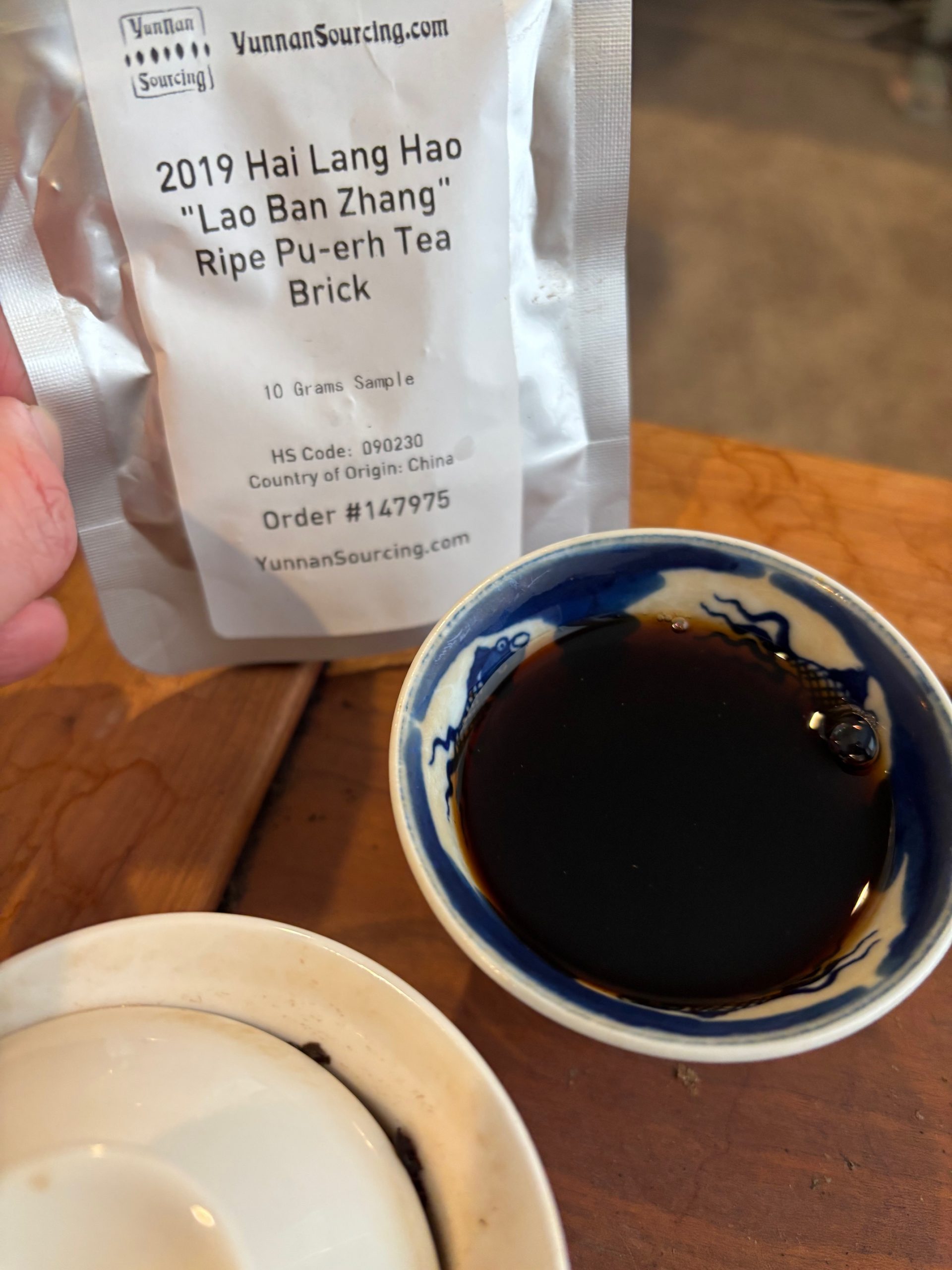
    High-end ripe was an afterthought when I started drinking tea in the early 2010s. There wasn’t easily accessible fancy ripe to do a tea drinking report and ripe was mostly a cheap thing for daily drinking. When White2Tea released Pretty Girls in 2015, I remember a grumpy murmur from the tea community for having the gall to sell $0.20/g ripe. Absurd! But in the past 10 years these sorts of productions have become normal and part of a larger trend towards higher-end ripe. The $0.20/g ripe looks quaint compared to some of the $/g ripe W2T puts out now.. These teas still get less attention than raw, but as evidenced by the large increase in productions there’s clearly a market for higher priced ripe productions made by boutique brands. We now have several years of products done by the usual suspects, enough to have a drink through. The goal of this report is to sample and get a better feel for the landscape of these higher-end ripes made by boutiques. I’ve dabbled and sampled a few but overall this hasn’t been a major area of focus for my own drinking/sampling. Drinking in close succession allows me to place them more accurately and try to understand the different profiles.

    I am well aware that boutique ripe existed before 2015. My assertion is that the boutique ripe movement has picked up quite a bit more steam in the last 10-15 years.
    As usual with a tea of the month report this grew in scope. I originally only wanted 10 teas, but ended up with nearly 20.
    I did most of the drinking in February before BFZC ripes showed up at LPs. Next time.

    The Two Profiles

    In drinking through these, I feel they generally fall into two different categories.

    1. The Asskicker. More bitter, highly punchy material. This ranges from different punchy Bulang sorts with Bitter material that easily persists through the ripening process (think Lao Man E). I think the concept is that these are highly dense, thick and substantive teas that get partly smoothed out through the ripening and will further smooth out over time.
    2. Refined tea.. These could come from wherever but tend to focus more on texture and aftertaste and lack the bitterness of the more asskicking type.

    Of course these categories aren’t perfect and a vendor like W2T who does heavy, somewhat experimental blending, has some that are more challenging to place. Even for more conventional blending there is a spectrum as there are teas that will have a smaller touch of the asskicking material and balance it with more typical material.

    Both types will generally have much better base material than you wouldn’t normally see in a ripe production.. Most vendors also seem to prefer to keep their boutique ripe on the lighter fermented side of things, although there are some exceptions (W2T Reading Room). The lighter fermentation gives a bit more room for the tea to evolve and change than it would under a more standard fermentation. You can also taste the base profile a bit more clearly. The lighter fermentation also means teas that have a few more years under their belt have softened and evolved a bit.

    Small Pot/Gaiwan Gong-Fu Brewing

    These teas uniformly do not pass the speed test. I brew a lot of ripe, but most of it fits into cheap stuff for daily drinking. My usual ripe brewing is not well suited for this month. As followers of my inbetweenisodes know, I usually have my ripe in my big blue pot in the morning with my wife. This works fine as most ripe is a forgiving and easy brew that does not require an especially meticulous hand. But for this report I mostly brewed gong-fu. Why? For the asskicker types, this makes it much easier to have a good session as the long pour time can lead to extreme overbrewing and some frankly nasty brews. That could be adjusted, but I’d rather just do gong-fu where it’s easier to respond to the tea than hear my wife complain about the bitter tea she’s drinking in the morning. For a few of the more refined ripe I did brew them in both fashions, to see if there was any performance difference. But even in these cases I defaulted to the gong-fu type brewing.

    The Teas

    White2tea

    For the past decade, White2tea has gotten a lot of attention for their “outrageously” priced ripe. I admire the experimental nature of many of these and do enjoy trying them. They are especially well suited for regular TeaDB episode material with Denny, where we can admire the dynamic, engaging nature of the teas together. White2tea’s teas are probably the most complex and interesting to analyze of the lot.

    On the flip-side none pass the speed test for myself. The teas aren’t casual or cheap enough for daily drinking and I’d usually rather drink a Liubao or a raw with some age, even with less dynamism. That all being said, from a sheer let’s talk about tea the fancy W2T teas are fun and interesting..

    2024 W2T Machine of Loving Grace (6.6)

    Decent, but unexciting tea. Rich, creamy, with some bitterness. It reminds me of a fancier Bawang with a bit more texture to enjoy. Hints at some citrus. It’s kind of stuck in no man’s land, where it is expensive for what it is but not as interesting as W2T’s more expensive ripes.

    2023 W2T Reading Room (7.5)

    Interesting in the sense that this is far more fully fermented than a lot of the other high-end W2T ripes. As a result, this feels a bit more settled and is indeed quite tasty. Rich, full flavors. Perhaps some sort of Menghai/Bulang blend made of good strong robust material. It feels like a very good version of  classical ripe. Rich, vanilla cream. Throat leaves a good aftertaste. There’s a lot of fun complexities to this but this is ultimately an easy tea to understand and enjoy.

    2022 W2T Lich Tears (8)

    Probably the most interesting W2T ripe and definitely an asskicker. Very complex. It is quite tasty now, but also should get even better. Unlike Reading Room, this is clearly a lighter fermented ripe. It has a very active protracted mouthfeel and small amount of silk texture. Flavor is coco, rich, vanilla cream. A lot has been made about this tea’s bitterness and it definitely has a sturdy vein of pill bitterness flowing through it, but I don’t find it overwhelms the other flavors. It’s definitely not the most bitter tea of the month. The bitterness is most pronounced in steeps 3-5, before fading away. It is also accompanied with some nice sweetness. Very hard to rank as it clearly hasn’t hit its potential.

    2021 W2T Reckless Daughter (7.8)

    This was the surprise hit of the W2T batch for me. Had it once and liked it a good amount and subsequent sessions cemented it as a very solid and promising ripe.

    Reckless Daughter is clearly lighter fermented, but feels cut from a different cloth than W2T’s other ripes. Lighter leaf and brews a dark red hue. It is more regal and refined than the more rambunctious asskicker types. There is bitterness but it’s not the pill sort. Very dynamic, thick, satisfying. Good aftertaste. Set aside a session for Denny later. This is good stuff and different from something like Lich.

    2020 W2T The Nameless One (7.2)

    Vanilla cream, some bitterness. Coco. This seems to fall in the fancy Bulang (Lao Man E/Banzhang) blend. I initially liked this a bit more, but in the context of other high-end ripes it stands out less. It is still complex and a very good tea, just not as gripping as I originally thought when I recorded an inbetweenisode a few years ago. I would personally pick Lich Tears or Reckless Daughter over this.

    Yunnan Sourcing (& Hailang Hao)

    Compared to W2T, Yunnan Sourcing and Hailang Hao lean a bit more conventional with their fancy ripe cakes. They aren’t as wildly blended or as dynamic, but have more straightforward easier to understand profiles. Generally speaking, this is my preference even if it might not generate the Thinking Denny memes quite as effectively. They also generally fit neatly into the two popular boutique ripe profiles, asskicker (Lao Man E, Xin Banzhang) and refined (Yibang).. I’d also say, that YS current year or last two year cakes are easily the better value (the HLH cakes get expensive quickly!).

    2024 YS Lao Man E Old Tree (7.1)

    This fits exactly the image I have of Lao Man E ripe. Pill-like bitterness. Thick vanilla cream. A bit of citrus. Gradually it gets even more bitter before it tapers off. I braced for this profile and found it thick and satisfying. Sometimes tea is helped by certain expectations. That is the case here. If I expected a more conventional ripe, I would hate this. Bracing for the bitter, allows me to appreciate this quite a bit more.

    I think this is just a little too bitter for my tastes currently but I do get the appeal. Probably would brew way too strong in my big blue pot (did not attempt).

    2024 YS Xin Banzhang Offering (6.8)

    One of the less expensive teas of the month. Basically the budget ass kicker profile. Has a nice bittersweet profile, its bitterness is definitely a bit more balanced with other material. Decent amount of tips. My memory of the 2023 is that it got a bit more bitter.

    Second session with this had it performing a bit more like a slightly less bitter version of the YS LME/Chawang. Sturdy profile, expansive mouth feel, pill-like bitterness. It’s not overly strong but has a clear and if you’re ready for it pleasing profile. Probably the lowest cost way to get this sort of profile of the teas featured .

    2023 YS Lao Man E Old Tree (6.7)

    I think I may’ve had a slightly off session. The session lacked the clarity of the 2024 or the Chawang which I’d had the day before. Definitely hints at the profile of the 2024 or 2023 Chawang, but feels a bit different in a way I can’t quite put my finger on. Gets a bit bitter, but not to the level of the 2024 or the Chawang.

    2023 YS Chawang (7.5)

    Basically should be treated like a LME ripe-base. Greener nose than expected. Hints at fruit, but is sturdily bitter. Definitely of the pill sort.  Light wood, vanilla cream. Strong, thick mouthfeel. I knew it was coming and I very much enjoyed it. In my limited experience, this is my favorite of the YS asskickers.

    2021 YS 5 Villages Bingdao (6.6)

    The charms of Bingdao and northern tea are somewhat lost on me. I’ve yet to be enchanted by many raw tea from there. Sadly this ripe falls into the same camp. It is decent enough and essentially presents as a very clean and decent ripe with nice texture and some mouth cooling. Compared to the asskickers it isn’t particularly potent and its charms don’t live up to my more preferred refined tea.

    Hailang Hao

    2019 HLH Lao Banzhang (7.5)

    Fits very neatly into the asskicker category. It is a very solid and sturdily made tea. Not quite as bitter as the Chawang or some of the LME. Thick, vanilla cream, protracted mouthfeel, very potent brew. It also lasts for quite a while.

    2018 HLH Gaoshanzhai (7.4)

    I probably enjoy this equally to the HLH LBZ. Caramel, brown sugar, antique wood, nice throat aftertaste. It is also sufficiently thick and oily. After getting through quite a few high-end ripes, this one still managed to stand out. It’s not as textured as the Dragon Brick, but has a greater depth that is very appealing.

    Despite being more in the refined category the GSZ is notably lightly fermented. In a mug in my normal morning parameters it packed more of a punch than I anticipated. If we compare this with other of the more refined teas there’s a sharper edge to it than something like the 2012 Xizi Hao Dragon Brick which was likely lightly fermented but aged longer and partly in Taiwan.

    2017 HLH Junai (7.2)

    Rich, sugary aroma. Vanilla cream, decently heavy pill bitterness. Solid, clear profile. Nothing too dynamic and wild.

    I like this just a touch less than the LBZ. The longevity isn’t as good and it feels a bit less thick. Still if you want to get the gist of that tea, I think this is a reasonable substitute and doesn’t cost over $1,000!

    Other

    2024 CSH Lao Banzhang (6)

    Smells of Wo Dui. Thinner and watery compared to the other teas. It does thicken up. I am definitely drinking this too young, and overall it’s OK, but it is fairly disappointing for such an expensive ripe.

    I had this as a big mug brew the next day and unfortunately it still didn’t impress. Perhaps it needs to settle. I gave the rest of my sample to Denny who said it was fantastic. Tea is inconsistent sometimes.

    2016 Denong Commemorative (6.4)

    This is an OK enough tea, but a disappointment as a higher-end ripe. I find this to be perfectly decent, but kind of dull. I don’t doubt there’s quality material here but it doesn’t seem to have a clear purpose or the cohesion like the better teas.

    Tastewise it is lighter fermented, has a slight silk texture and a decent body. Otherwise a fairly standard ripe profile. Brewed in the big blue pot it more or less confirms what my gong-fu session. Maybe a bit cooler than a standard ripe. I would guess, likely not Menghai County material..

    2012 Xizi Hao Dragon Brick (7.3)

    Brighter nose. Complex, antique wood. Very nice texture. Not super thick. Definitely a more refined sort of tea despite having that familiar vanilla cream taste. I’ve heard that some people think this is small leaf varietal, which is believable for me. Compared to something like the HLH Gaoshan Zhai this offers more texture and a bit less depth.

    Overall pretty enjoyable and assuming the 2013 is similar, one of the better value buys.

    2007/2008? Chenyuan Hao (6.4)

    Only had a sessions worth left. Sweet, has a nice antique wood aroma and a moderately oily body. It’s not watery like the CSH, but doesn’t really stand out that much when put against other fancy ripes. We liked this quite a bit when we had this for an episode, so maybe I just got a lesser session at the bottom of the sample bag.

    2008 Xizi Hao Xishangjiaxi (8)

    A late addition as I had forgotten about its existence, but I own two mini-cakes of it which I discovered while clearing out my old shu cabinet. In my memory this was a good tea, but didn’t remember much else.

    In the end, it’s amongst my favorite brews of the month. Definitely in the refined category of shu. Far more of an aged taste than anything else this month, with menthol, antique wood notes. Coats mouth and throat very well and has better depth than most other teas here. In my previous sessions I had noted berries, which have aged out. Flaw-wise it is not ultra thick, but that is nitpicking as this was a perfectly satisfying session.

    CYH/XZH must’ve been pretty early on these special products. I haven’t seen many more as early as this.

    2007 Dayi Anxiang (8)

    We got a big factory RINGER!!??? What’s a ripe report without some Dayi! Bought a cake recently from taobao. The cakes from the Dayi store came drier stored than I had expected. For the raw this was not exactly what I hoped, but for this cake I think it’s pretty ideal as it maintains a good deal of complexity.

    Complex, thick, light mouthcool, antique wood. Coats the mouth nicely. Moderate thickness. It’s tip heavy and falls off a bit fast. This is great stuff. It confuses me how this is still relatively affordable! Perhaps there’s just not too many pu-heads into more serious ripe and the ripe drinkers would never spend this amount on a cake? Either way, this is worth a buy if you are a ripe drinker who wants the good stuff.

    Recommendations

    If you really want value for your buck. I think the older teas are better. The serious tea world has never seemed to take ripe as seriously as raw, and the prices haven’t risen as fast as raw has. I am surprised at how cheap you can find things like the Anxiang (I bought mine for around $100, $0.25/g). Similarly the XZH Dragon Brick is also a good ripe and can be bought in the US domestically from Liquid Proust for $0.40/g ($400/1000g). This is also a very good price when you put it up against anything made in the last few years.

    I haven’t really had any asskicking type ripe older than the 2017 HLH Junai so it’s harder to find this type for less. This is too bad as I think these probably significantly improve with age. For those on a budget the 2024 YS Xin Banzhang offers the basic profile without being too expensive. Probably the best bet here is something like the 2023 YS Chawang, which I preferred over YS LME products and I find to be reasonably close to the more expensive HLH products.

    In terms of overall recommendations, I think Reckless Daughter and Lich Tears represent their respective categories of modern boutique ripe very well. They are markedly pricier than the value recommendations but if value is less important I think they’re worth checking out.

    Buying these is of not the only way to buy pricy ripe. You could also buy older factory tea from the 2000s or 1990s. These teas are often thought of as superior to their more modern cousins, mostly due to the factories having access to better material.

    Value Recs:

    • 2012 Xizi Hao Dragon Brick
    • 2007 Dayi Anxiang
    • 2024 YS Xin Banzhang
    • 2023 YS Chawang (not really cheap, but significantly less than HLH/W2T)

    Other Recs:

    • 2021 W2T Reckless Daughter
    • 2022 W2T Lich Tears

    Takeaways

    It is nice to drink pu’erh without considerations about processing and aging. Drinking ripe tea is more straightforward compared with the vigorous debate about which raw teas are better and will age. Perhaps it’s because all the oxygen is sucked up during those debates, or there’s just less to discuss on the more gradual transformation of ripe.

    Is there space in my tea diet for these teas? Frankly I’m not sure. In the past, I’ve historically reached for something older or traditionally stored when I want something in a darker, fermented profile. That being said, the selection we have available now is better than it has been in the past. I do indeed like most of the teas here. So perhaps I’ll report back in a couple years. At worst, for the more refined types I can drink them up in the big blue pot in the morning as an overpriced casual brew.

    Ripe narrows the bandwidth of teas compared with raw. In typing up these notes I realized how similar each tea sounds to one another. Even teas that are fairly divergent from one another like the HLH LBZ vs. HLH GSZ will have a fair bit of crossover on notes. I also think I’d burn out of these faster if I drank too many of them. Now… Before I type vanilla cream for the 155th time and am forced to add Masochist to another tea report, I will move on.

    Tea Maker $ Size $/g Rating
    2022 Lich Tears White2Tea $238.50 200 $1.19 8
    2023 Reading Room White2Tea $178.00 200 $0.89 7.5
    2021 Reckless Daughter White2Tea $148.00 200 $0.74 7.8
    2024 Machines of Loving Grace White2Tea $125.00 200 $0.63 6.6
    2020 Nameless One White2Tea $155.00 200 $0.78 7.2
    2024 Lao Banzhang Chensheng Hao $379.00 200 $1.90 6
    2007 Anxiang Dayi $110.00 400 $0.28 8
    2023 Chawang Yunnan Sourcing $133.25 200 $0.67 7.5
    2024 Lao Mane Old Tree Yunnan Sourcing $88.00 200 $0.41 7.1
    2023 Lao Mane Old Tree Yunnan Sourcing $102.00 250 $0.26 6.7
    2024 Xin Banzhang Yunnan Sourcing $93.00 357 $0.26 6.8
    2021 5 Villages Bingdao Yunnan Sourcing $109.25 200 $0.55 6.6
    2012 Dragon Brick Xizi Hao 1000 7.3
    2008 Xishangjaixi Xizi Hao 100 8
    2008 Ripe Chenyuan Hao 6.4
    2016 Denong Commemorative Denong $68.00 100 $0.68 6.4
    2021 Gaoshanzhai Hailang Hao $374.00 500 $0.75 7.4
    2017 Junai Hailang Hao $566.50 500 $1.13 7.2
    2017 Lao Banzhang Hailang Hao $1,155.00 500 $2.31 7.5
  • 2006 Dayi 8582 601 [Inbetweenisode 212]

    This episode I talk a bit about pu’erh I’ve bought in the last few years and drink a relatively recent purchase, 2006 Menghai Tea Factory 8582. The tea is stout, resinous, and enjoyable.

    Rating: 6.3

  • 2005 Dayi Ba Ji Pu Bing Ripe Pu’erh via YS [Inbetweenisode 216]

    This episode, I bring on another ripe I’ve been storing for several years. Unlike the previous two Dayi episodes, this tea has larger leaf grade (size 8) and features a very different profile. I really enjoy this tea.

    Rating: 7.3

    https://yunnansourcing.com/

  • 2011 Dayi Jade Dew Ripe Pue’rh via YS [Inbetweenisode 215]

    This episode, I drink another tippy, premium ripe blend, the 2011 Jade Dew. The tea like the Golden Needle is made by Menghai Tea Factory. Shoutouts to Carl for turning me onto this tea.

    Rating: 6.2 .

    https://yunnansourcing.com/

  • 2018 Menghai Tea Factory 7572 Ripe Pu’erh via YS [Inbetweenisode 210]

    This episode I review one of the classic and frequently produced Dayi recipes, their 7572. The tea is the definition of reliable and solid. It is essentially what I want in a regular session of ripe tea, when I am typically looking more for a consistent product than something that wows me into submission.

    A solid, well-blended tea from a factory known to make good-quality ripe.

    Rating: 6.1

    https://yunnansourcing.com