
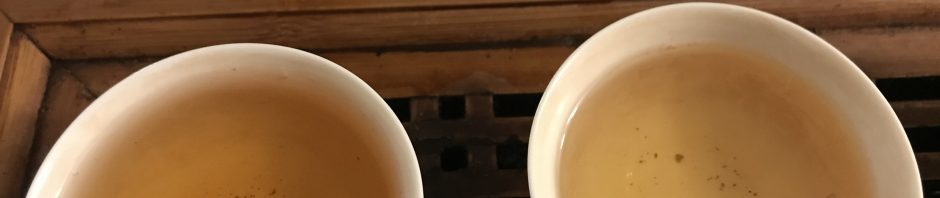
Like Baichatang, Baohexiang is a boutique brand that caught my eye. Unlike BCT, Baohexiang has history rooted in tea I very much enjoy. Their founder Li Wenhua was the master blender in the 2004-2008 period for Menghai Tea Factory and Baohexiang focuses on Menghai County (like Dayi) aiming for smaller, presumably higher-quality products. Baohexiang being formed in 2011 and having mostly younger tea it never quite checked enough boxes to sample in the late 2010s. Now in 2026, with some of its productions getting into the semi-aged category I decided to do some sampling. The goal being simple: get a feel for Baohexiang and how it lines up with operations like Dayi and Chensheng Hao.
Mapping Out Baohexiang
Looking at Baohexiang’s flagship and the teas that Yunnan Sourcing/Pu’erhNW have sold, there’s a clear emphasis on Menghai County tea, with teas like the Peacock series featuring both a generalized Menghai Peacock blend and more specific mountains (Nannuo, Mengsong, Bulang, etc.). There’s also a surprising amount of younger Yiwu area on their flagship that I have not seen much chatter about. Other products like their Yanyun and Wujin Hao, have a Dayi equivalent (Dayi made both during Li’s tenure at the factory). Baohexiang also seems to have a decent reputation for ripe, something that is worthy of exploration at a later date.
My Evaluations
I am rating the tea how I enjoy it now and not its future potential. Because my general baseline for semi-aged sheng is rooted in the 2000s many of these teas present younger than my current preferences.
The Teas
2025 Jianrujiang (D)
Very sturdy, bitter and green. Some coating but nothing too deep. Don’t want to push. Maybe this is good eventually, but it’s hard for me to tell.
2025 Huer Maoer Ripe (A/B)
From Happy Guy and consumed after drinking through most of the raws. Fairly promising ripe. Feels sturdy and decent. Good sweetness. The material and punchiness seems significantly stronger than baseline ripe.
2022 Yanyun (C/D)
The Dayi productions of this have been head scratchers for myself. Odd qualities in pu’erh and not their standard line. This one feels similarly different than the baseline Baohexiang raw. Straw and significantly more sweetness than the Jianrujiang but still far too young. Sugary, minerals. Reasonable body. Needs time.
2022 Wujin Hao (B)
Much easier to judge than the Yanyun. I think this has very good potential. Extremely sturdy, resinous, pine smoke, and good expansiveness in the aftertaste. This reminds me a bit of 901 7542 when it was young back when we had it in episode 6. I can also see some resemblance with the pine, smoky character to the 7742. Supposedly there’s a few years aged maocha in this which might make it easier to take in now. I enjoy this even though this is clearly made to age.
2017 Laoshu Yuancha (C)
On initial take this seems a bit uneven. It hints at a more aged taste with camphor and aged wood. But then after a couple steeps it smacks you with a really pungent mouthfeel. Like a lot of Baohexiang this needs more time. In the end, I do think this has some odd qualities being mixed with older and younger material. It may sort out overtime, but it’s not my favorite of the batch now.
2016 Jingmai Peacock (C/D)
Jingmai in general is not really my sort of tea and this is no exception. It feels slighter and lacks the bigger, expansive structure that I enjoy of teas further south. Florals, a light bitterness, but narrower than what I would prefer.
2025 Menghai Peacock (C)
Easy to see the potential in this and quite simple to understand. Nice strong, concentrated taste with a solid aftertaste. Supposedly a lot of Bulang makes the base and that makes sense. To me this peacock is preferred over the Nannuo or Jingmai.
2021 Menghai Peacock (C/D)
This one is awkward. Hasn’t really developed aged flavors yet and feels a bit less concentrated than the 2025. I don’t really think it’s worst than the 2025, probably just the stage and the tea is fine.
2015 Menghai Peacock (B/C)
From their flagship store as well as Pu’erhNW. Very reminiscent of dayi. Nice base to it, needs time but sturdy with a good balance. I think compared to the Wujin Hao this is more conventional Menghai area tea with less pine smoke. It can build up a similar level of strength if pushed. Some sweetness, wood, fruit. Coming along.
2014 Nannuo Peacock (C)
Very sturdy Nannuo. When contrasted with other teas it does have a bit of the perfume tart but on it’s own I’m not sure I’d peg it as Nannuo. Not a super impressive aftertaste and a bit slower to convert. I think this is probably going to be a pretty good tea, but isn’t really close to ready.
2013 Yanyun (C)
Pretty interesting contrast to the younger. I can see the resemblance as well with the Dayi Yanyun. I suspect some of the notes are similar but this feels stronger. More florals, minerals, sugarcane. Easier to drink than the Nannuo. Still decently strong. I like the aftertaste a bit more but still not super impressive.
2014 Mengsong Peacock (B/C)
Pretty good and easier going down than the Nannuo. It has a softer, more mild bitterness and less big feel than the Nannuo. Conversely it has more depth and a nice balance to the sweetness which leans fruit/sugar. Nice juiciness, and not overall too astringent.
2013 Year of the Snake (B/C)
Decent and easier to drink than most of the other teas here, but not a huge standout. Has nice fruity sweetness with a woody background. Straightforward and pleasing.
2012 Gaoshan 1700 (C)
I’m not really a fan of the special production high-elevation Dayi teas. While the material often feels decent they feel relatively less blended and I think they move a bit away from the reliable blended factory base that Dayi does well. This similarly feels more singular than many of the other Baohexiang teas and while it starts out kinda soft and easy it picks up quickly and does have a stronger backbone to it. Nonetheless I find the aftertaste a bit slight and it’s only mildly more interesting than some of the high-elevation blends Dayi does.
2011 Yiwu Qiulan (B)
This was my initial exposure to BHX and turns out to be an outlier in the teas. Nice sweetness, relatively smooth. Acidity, apple. It’s probably the easiest going down, but I also have a number of teas I’d choose to drink before this.
Takeaways
First the positives. Baohexiang makes solid, sturdy, and strong teas. I’ve been impressed with the backbone and strength of even the teas I like less here. Buying from an operation sourcing an area I’m unfamiliar with like Baichatang, I don’t really know what the aged tea will be like exactly. That concern does not exist to the same extent with Baohexiang. Their teas seem well made and I think will follow aging trajectories in the same vein as Menghai Tea Factory tea. How good they will be? I’m not totally sure but I think they’ll largely fit neatly into that same category and profile.
What We Value, Replacement Tea & Are They Worth It?
Everyone has slightly different values when it comes to tea. Some value material over all else, others value storage and age. One exercise I find valuable is considering the replacement tea or what I would buy instead that might fit a similar profile. For myself, the obvious replacement tea is Dayi. Will these teas be better than the 2011-2015 Dayi line? It would certainly not shock me. I’ve done relatively little exploration of tea during this time period compared with the 5 years before but the teas here do stand out as strong, vibrant, and sturdy.
However, to make their way into my rotation they also need considerably more time and heat/humidity and I can choose from Dayi a few years older. With earlier Dayi available (2006-2010) cheaper and nicer to drink, it puts the BHX line into a less appealing position and my metric of value over replacement tea of these are pretty much all negative. Five years ago when Dayi prices were oftentimes 20-500% higher than they are now the value proposition on these Baohexiang products likely seemed more reasonable. Similarly for someone who is more tolerant of younger tasting, drier stored teas these Baohexiang may be perfectly fine but I am skeptical I’d ever drink them in their current state.
If I were to pick individual teas it’d likely be the Menghai Peacock and Wujin Hao blends. To me these have suitable strength, density and I like the aftertaste and structure behind them. They’re also both blends with a clear purpose which I think ensures a reasonable amount of dynamism and profile.
| Tea | Rating |
VOATO (Factory)
|
| 2025 Jianrujiang | D | -2 |
| 2022 Yanyun | C/D | -1.5 |
| 2022 Wujin Hao | B | 0 |
| 2017 Laoshu Yuancha | C | -1 |
| 2016 Jingmai Peacock | C/D | -1.5 |
| 2025 Menghai Peacock | C | -1 |
| 2021 Menghai Peacock | C/D | -1.5 |
| 2015 Menghai Peacock | B/C | -0.5 |
| 2014 Nannuo Peacock | C | -1 |
| 2013 Yanyun | C | -1 |
| 2014 Mengsong Peacock | B/C | -0.5 |
| 2013 Year of the Snake | B/C | -0.5 |
| 2012 Gaoshan 1700 | C | -1 |
| 2011 Yiwu Qiulan | B | 0 |